



- Home
- /
- High Courts
- /
- Allahabad High Court
- /
- Make A Contempt Reference If...
Make A Contempt Reference If 'Browbeaten' By Police Over Uncomfortable Investigation Orders: Allahabad HC Advises Magistrates
Sparsh Upadhyay
18 March 2026 9:52 PM IST
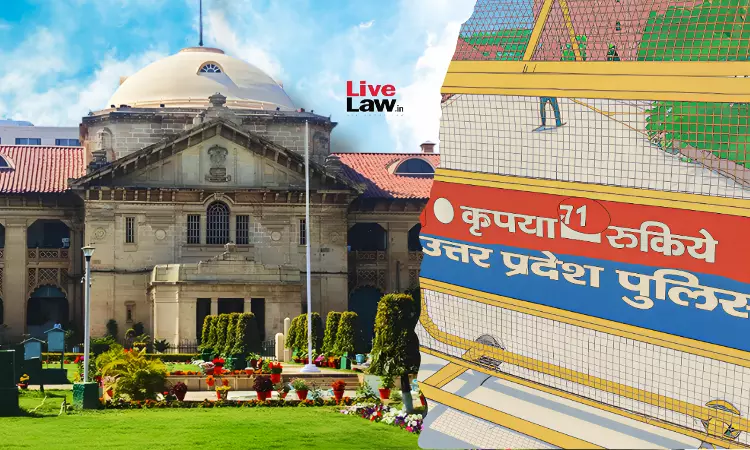
In a significant order passed recently, the Allahabad High Court noted that superior police officers sometimes resort to measures to 'browbeat' Magistrates when orders directing investigation of particularly 'uncomfortable' cases are passed by them. A bench of Justice JJ Munir and Justice Vinai Kumar Dwivedi firmly advised Magistrates that if any such embarrassment or pressure is faced from...
This is a premium content
Available exclusively to
Our subscribers
Subscribe Premium 
INR 1099+GST
Your support helps us to bring you more content at
an affordable subscription scheme !!!
All payment options available
In a significant order passed recently, the Allahabad High Court noted that superior police officers sometimes resort to measures to 'browbeat' Magistrates when orders directing investigation of particularly 'uncomfortable' cases are passed by them.
A bench of Justice JJ Munir and Justice Vinai Kumar Dwivedi firmly advised Magistrates that if any such embarrassment or pressure is faced from any police officer, it is always open to them to make a contempt reference to the High Court.
"The Magistrate also should not feel hesitant in passing necessary orders, merely because at some point of time, a highhanded police officer has caused some inconvenience to the Magistrate. If, in fact, any kind of embarrassment or pressure from any police officer is faced by the Magistrate, it is always open to him/her to make a contempt reference to this Court", the bench remarked in its order.
The observation came from the bench while summarily dismissing a Criminal Writ Petition in a matter concerning the registration of an FIR in the Farrukhabad district of Uttar Pradesh. Essentially, the petitioner sought a direction to the Superintendent of Police, Farrukhabad, to decide his representation dated August 19, 2025, (for lodging of an FIR) in a time-bound manner.
Expressing its displeasure over such requests, the Court observed that prayers seeking directions to authorities to decide representations render the Court "virtually powerless", as authorities assume the Court can only ask them to take decisions instead of deciding the lis itself.
The Bench noted that this leads to a "deluge of writ petitions" in which the Court is not required to decide anything.
The Court noted that in those cases, where the officer-in-charge of a police station refuses to record an information relating to the commission of a cognisable offence under Section 173 (4) BNSS, it is open to the informant to send substance of the information in writing and by post to the Superintendent of Police concerned.
The bench added that the SP is obliged, upon receipt of such information, if it discloses the commission of a cognizable offence, either to investigate the offence himself/herself or direct investigation to be undertaken by any police officer subordinate to him in the manner prescribed under the BNSS.
The division bench further clarified that if the SP is also derelict in the sense that he/she does not pass orders on an application under Section 173 BNSS, the remedy is before the Judicial Magistrate under Section 175 (3) BNSS.
The Court clarified that the Judicial Magistrate may, if he receives an application supported by an affidavit under Section 173(4) BNSS, after making such inquiry as he/she thinks necessary and after the submission of a report by the police officer, order an investigation by the Police.
In such circumstances, the Court concluded that the remedy for the petitioner in the present case is to move the Judicial Magistrate concerned through an application under Section 174(3) BNSS.
Importantly, the Bench acknowledged that in some cases, it so happens that when such applications are made to Magistrates and investigations are ordered, particularly uncomfortable ones, it leads to "frowns by what are called 'superior officers of the Police" who resort to measures to browbeat Magistrates.
The Court further advised the Magistrates not to hesitate in passing necessary orders, "merely because at some point in time, a highhanded police officer has caused some inconvenience" to the Magistrate, and to make a contempt reference to the HC, if needed.
In this view of the matter, the petition was summarily dismissed in view of the availability of a statutory alternative remedy. The HC clarified that the petitioner's remedy to seek registration of the FIR by moving the competent Magistrate remains open.
Case title - Sandeep Audichya vs. State of U.P. and others 2026 LiveLaw (AB) 115
Case citation: 2026 LiveLaw (AB) 115
Tags

Sparsh Upadhyay
Sparsh Upadhyay is an Associate Editor with LiveLaw.

