



- Home
- /
- High Courts
- /
- Allahabad High Court
- /
- Oral Statements U/S 200 & 202 CrPC...
Oral Statements U/S 200 & 202 CrPC Can't Cure Material Omissions In Protest Petition, Rendering Allegations Doubtful: Allahabad HC
Sparsh Upadhyay
20 Jun 2026 7:19 PM IST
In a significant order on the scope of inquiries by a Magistrate under Sections 200 and 202 CrPC, the Allahabad High Court has held that material facts omitted from the protest petition cannot ordinarily be supplied later through oral statements of the complainant and witnesses. The bench added that the introduction of such facts for the first time during the inquiry/examination by...
This is a premium content
Available exclusively to
Our subscribers
Subscribe Premium 
INR 1099+GST
Your support helps us to bring you more content at
an affordable subscription scheme !!!
All payment options available
In a significant order on the scope of inquiries by a Magistrate under Sections 200 and 202 CrPC, the Allahabad High Court has held that material facts omitted from the protest petition cannot ordinarily be supplied later through oral statements of the complainant and witnesses.
The bench added that the introduction of such facts for the first time during the inquiry/examination by a magistrate amounts to a material improvement and raises "serious doubts" regarding the genuineness of the accusation.
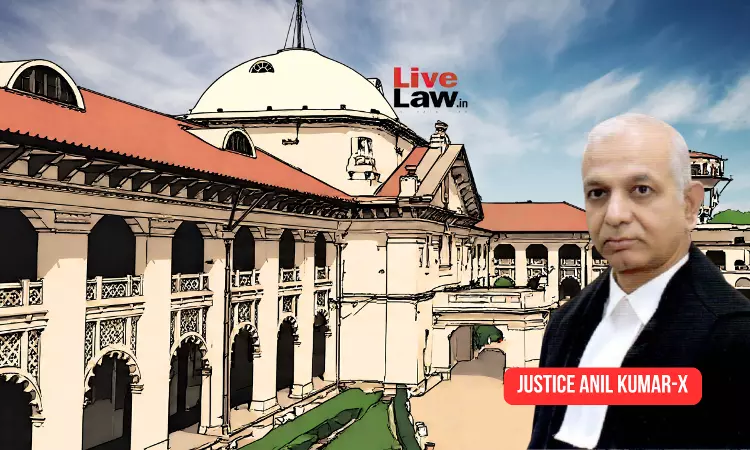
A bench of Justice Anil Kumar-X observed thus while quashing a summoning order passed by a Chief Judicial Magistrate in a murder case.
The Court clarified that introducing new facts during an enquiry raises serious doubts regarding the genuineness of the accusation, especially when such improvements seek to provide a motive where none existed in the original version.
Briefly put, an FIR was lodged on November 3, 2013, by one Pradeep Kumar, alleging that his brother Rahul was murdered by the petitioners, Lala and Mahesh.
It was alleged that the accused persons first made Rahul consume liquor at their house and thereafter assaulted him, causing injuries to his head.
However, earlier that same day, the village Chaukidar had informed the police that Rahul had accidentally fallen from a roof while intoxicated.
Following a police investigation, a final report was submitted concluding that no case was made out against the accused persons.
Being dissatisfied with the final report, the informant filed a protest petition before the Magistrate. This protest petition was treated as a complaint case and during the inquiry proceedings, statements of 7 witnesses were recorded in support of the complaint.
After considering the material available on record, the Magistrate found sufficient grounds to proceed and summoned both petitioners/accused persons to face trial for the offence punishable under Section 302 IPC.
While perusing the record, the High Court noted that the deceased's dead body was found lying in front of the house of one Maharaj Singh, but neither in the investigation nor in the complaint proceedings had any satisfactory explanation come on record as to how the deceased reached that place.
More crucially, the High Court observed that neither the FIR nor the protest petition contained any allegation that the deceased was carrying Rs. 35,000, or that the petitioners had taken him to grab the said amount.
The bench noted that these allegations surfaced for the very first time in the oral statements recorded under Sections 200 and 202 CrPC during the complaint proceedings.
Rejecting these subsequent additions in the oral statements, the Court observed thus:
"A protest petition, once converted into a complaint, becomes the foundational pleading of the complaint case and must contain all material facts constituting the accusation. Material facts omitted from the protest petition cannot ordinarily be supplied later through oral statements. Introduction of such facts for the first time during enquiry amounts to a material improvement and raises serious doubts regarding the genuineness of the accusation."
Though the bench acknowledged that the law permits a Magistrate to treat a protest petition as a complaint, the Court cautioned that such power must be exercised with great caution, particularly in grave offences like murder.
Justice Anil Kumar-X said that the primary object of every criminal proceeding is the discovery of truth. If true facts require scientific, medical, forensic, or circumstantial evidence, a complaint enquiry is not intended to substitute a full-fledged criminal investigation.
Furthermore, the Court stressed that the conversion of a final report into a complaint case should never become an empty formality.
"Even where the Magistrate is satisfied that conversion of the final report into a complaint case would serve the ends of justice, the Magistrate should not remain a mere spectator during the enquiry," the Court ruled.
The High Court held that merely recording statements under the inquiry provisions in a mechanical manner may not always serve the purpose of justice.
Instead, the bench observed, the Magistrate must carefully examine each witness, put appropriate questions to test the credibility of the statements, and scrutinize any delay in disclosure or omissions in earlier versions.
The Court stressed that in serious offences, mere repetition of allegations by witnesses may not be sufficient, and the Magistrate must actively identify the specific material which persuades it to disagree with the conclusions of the investigating agency.
Laying down clear guidelines, the Court said that the Magistrates should also keep in mind certain additional principles:
- Where the police investigation has resulted in a final report, the reasons assigned by the Investigating Officer must be carefully considered and dealt with.
- The Court should identify the specific material which persuades it to disagree with the conclusions of the investigating agency.
- Improvements, omissions and contradictions appearing between the FIR, the protest petition and statements recorded during enquiry should be examined with care.
- Where the prosecution case rests upon circumstantial evidence, the circumstances relied upon should prima facie form a coherent chain pointing towards the accused.
- The order summoning an accused for a grave offence must reflect application of judicial mind and should disclose the reasons which persuaded the Court to proceed against the accused.
Against this backdrop, finding that the Magistrate failed to properly scrutinize the doubtful and inconsistent testimony of the witnesses and failed to conduct a meaningful enquiry into the unexplained circumstances, the High Court ruled that the impugned summoning order suffered from non-application of mind.
Consequently, the petition was allowed, and the summoning orders passed by the Magistrate and upheld by the Sessions Court, were set aside.
Case title - Lala And Another vs State of U.P. and Another 2026 LiveLaw (AB) 327
Citation: 2026 LiveLaw (AB) 327
Tags

Sparsh Upadhyay
Sparsh Upadhyay is an Associate Editor with LiveLaw.

