



- Home
- /
- High Courts
- /
- Allahabad High Court
- /
- POCSO Misuse | Allahabad High Court...
POCSO Misuse | Allahabad High Court Flags Use Of Forged School Certificates To Show Victims As Minors, Seeks UP Govt Guidelines
Sparsh Upadhyay
22 Aug 2026 3:03 PM IST
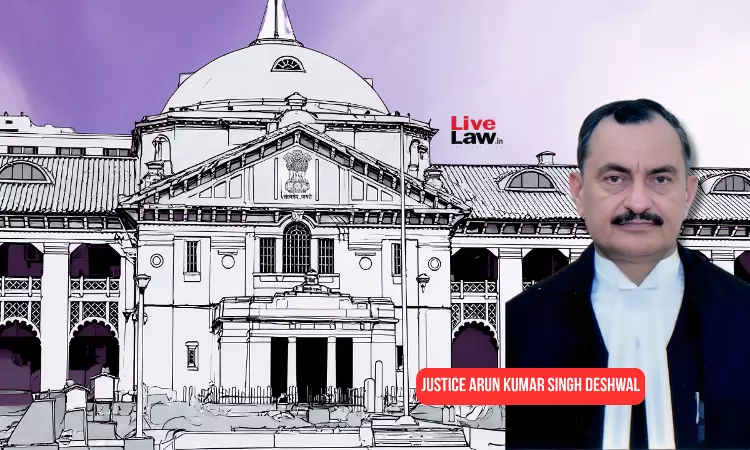
The Allahabad High Court recently flagged what it described as the "clear misuse of the POCSO Act" by the parents of the victims who submit forged school certificates to show the victims as below 18 years of age.The Court noted that this practice results in the false implication of several young boys who find it difficult to obtain bail and are easily convicted in view of the presumption...
This is a premium content
Available exclusively to
Our subscribers
Subscribe Premium 
INR 1099+GST
Your support helps us to bring you more content at
an affordable subscription scheme !!!
All payment options available
The Allahabad High Court recently flagged what it described as the "clear misuse of the POCSO Act" by the parents of the victims who submit forged school certificates to show the victims as below 18 years of age.
The Court noted that this practice results in the false implication of several young boys who find it difficult to obtain bail and are easily convicted in view of the presumption provided under the POCSO Act
Therefore, a bench of Justice Arun Kumar Singh Deshwal directed the Principal Secretary, Basic Education, U.P., to issue necessary guidelines in this regard within two months.
Case in brief
The bench passed the order while granting bail in a POCSO case. The issue arose after contradictory material regarding the victim's age was presented to the Court.
An ossification test indicated the victim's age was between 18 and 20 years. However, a school leaving certificate showed her date of birth as November 12, 2012, indicating she was under 18.
During the hearing of the bail plea, the High Court directed the concerned Headmaster to appear with the relevant school records.
He informed the Court that the date of birth had been entered on the basis of a transfer certificate purportedly issued by a Gram Samaj Junior High School. The Court then directed the Investigating Officer to verify that certificate.
The Headmaster of the Junior High School subsequently stated that the victim had never been enrolled there and that the alleged transfer certificate had not been issued by the school.
High Court's observations
Taking into account this submission, the High Court observed that a 'forged' Transfer Certificate was prepared in the year 2023. The Court, therefore, added that the school leaving certificate based on that purported transfer certificate could not be taken into consideration.
Justice Deshwal observed that it had come across "a number of cases" where parents had submitted forged school certificates, including transfer certificates or letters purportedly issued by Headmasters, showing victims below 18 years to attract the stringent provisions of the POCSO Act.
The Court said:
"These incidents show clear misuse of the POCSO Act just to punish a boy by the parents of the victim girl, who herself left her house being in a romantic relationship".
The Court further noted that where a victim does not have a matriculation certificate, the school-issued date-of-birth certificate may become the document relied upon for determining age.
It remarked that the absence of a prescribed format or procedure for issuance of such certificates had been widely misused, resulting in the "false implication of several young boys".
Furthermore, the High Court referred to Section 94(2) of the Juvenile Justice Act, 2015, which sets out the procedure for determining the age of the alleged victim.
The provision requires consideration first of the date-of-birth certificate from the school or matriculation/equivalent certificate, if available. In its absence, the authority is to consider a birth certificate issued by a corporation, municipal authority or panchayat.
Only in the absence of these documents can age be determined through an ossification test or other latest medical age determination test.
Now, in the present case, since the alleged transfer certificate was found to be forged, the Court held that the school leaving certificate based on it could not be relied upon. In the circumstances, it said, the ossification test was the only option available for determining age in the absence of another valid document.
Taking note of the prevailing practice, the Court directed the Principal Secretary, Basic Education, Uttar Pradesh, to issue guidelines for issuing school date-of-birth certificates for students who have not passed matriculation.
The guidelines are to include a format for the issuance of the date-of-birth certificate and prescribe the documents to be submitted by parents or guardians at the time of admission.
On the merits of the case, the Court noted that the victim had stated under Sections 180 and 183 BNSS that she had left her home herself and subsequently gone with the applicant of her own free will as she was in a relationship with him.
The applicant also relied upon the ossification test and the absence of injuries in the medical examination. He prayed for bail by referring to the fact that he had no criminal history to his name and that a chargesheet had already been filed.
Though the State and informant opposed bail but did not dispute these submissions.
The Court accordingly allowed the bail application. However, it clarified that it was not expressing any opinion on the merits of the case.
Case title - Shivam Yadav @ Chhotu vs. State Of U.P. And 3 Others 2026 LiveLaw (AB) 611
Case Citation: 2026 LiveLaw (AB) 611
Tags

Sparsh Upadhyay
Sparsh Upadhyay is an Associate Editor with LiveLaw.

