



- Home
- /
- High Courts
- /
- Allahabad High Court
- /
- Police Station CCTV Not Working?...
Police Station CCTV Not Working? Allahabad High Court Lays Down Safeguards For Persons Arrested, Brought For Interrogation
Sparsh Upadhyay
30 Sept 2026 2:55 PM IST
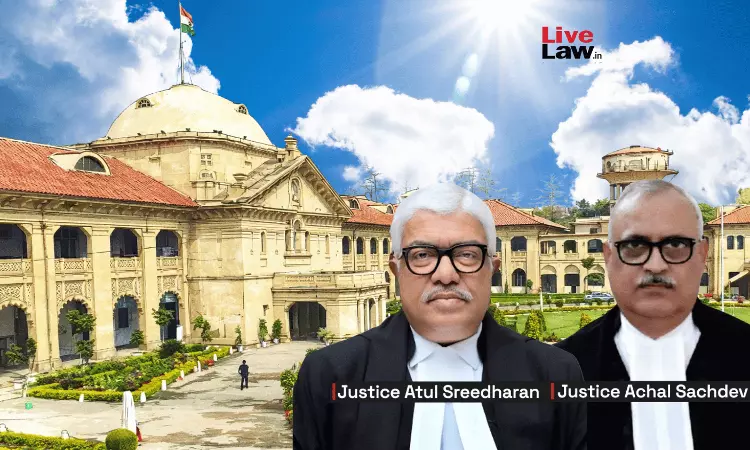
HC says adverse inference can be drawn against police if CCTV footage is missing and no contemporaneous record is maintained
The Allahabad High Court has laid down safeguards for the police to follow when CCTV surveillance at a police station is not functioning. The Court directed that details of persons brought to the station for interrogation or arrested must be recorded contemporaneously in the General Diary (GD).A Bench of Justice Atul Sreedharan and Justice Achal Sachdev clarified that once a CCTV system...
This is a premium content
Available exclusively to
Our subscribers
Subscribe Premium 
INR 1099+GST
Your support helps us to bring you more content at
an affordable subscription scheme !!!
All payment options available
The Allahabad High Court has laid down safeguards for the police to follow when CCTV surveillance at a police station is not functioning. The Court directed that details of persons brought to the station for interrogation or arrested must be recorded contemporaneously in the General Diary (GD).
A Bench of Justice Atul Sreedharan and Justice Achal Sachdev clarified that once a CCTV system is functional within a police station, it must remain operational "24/7 X 365 days".
However, the bench said that if the system fails, the Station House Officer (SHO) must make a GD entry recording the time of failure and identify the official to whom the failure was reported in writing.
It also mandated that the Superintendent of Police (SP) of the district must be informed and ensure that downtime is minimal, while recording the steps taken for immediate repair and restoration.
The Court further directed that when CCTV surveillance is unavailable, every person brought to the police station for interrogation or arrested must be documented in the GD, including the date and time of their entry.
Where such a person is interrogated and subsequently released while the CCTV system remains non-functional, the date and time of release must also be recorded. The police should additionally obtain a receipt recording the release and the person in whose company, or to whom, the person was handed over.
The Court held that failure to follow these safeguards may attract an adverse inference under Section 119(g) of the Bharatiya Sakshya Adhiniyam, 2023, which permits a court to presume that evidence which could have been produced but was not produced would be unfavourable to the person withholding it.
The directions were issued in a habeas corpus petition concerning allegations of illegal detention and the absence of CCTV footage from the concerned police station.
The Court found that the petitioner had been unlawfully detained for 24 hours and directed the State to pay ₹10,000 as compensation.
While addressing the absence of CCTV footage in the case, the Court also referred to what it described as a worrying aspect of the case: a "repeated number of cases" in which police were allegedly trying to manipulate CCTV cameras within police station premises.
The Court observed:
"Another worrying aspect of this case to which this Court must advert to is repeated number of cases in which the police are trying to manipulate CCTV cameras within the premises of the police station".
The Bench acknowledged that CCTV systems are electronic devices and may sometimes fail. However, it made clear that such failure cannot result in a complete absence of contemporaneous records concerning persons brought to the police station.
The Court directed that during any period of CCTV failure, the police must revert to documenting every suspect brought to the police station for interrogation in the GD, including the time of entry and subsequent departure.
For persons arrested in connection with an offence, the Court noted that the arrest memo would adequately disclose the fact of arrest.
The Court further said that, as an additional precaution, the police should obtain a receipt from a person called for interrogation or his next of kin recording that the person was at liberty to leave the police station, along with an endorsement recording the date and time at which the person was set free.
Thus, according to the Court, CCTV failure does not relieve the police of their obligation to maintain a contemporaneous record of a person's entry, interrogation, arrest or release.
Case In Brief
The petitioner (Raghvendra Dubey), alleged that he was illegally picked up from Asansol and brought to Police Station Sardhuwa, Chitrakoot, in connection with a dispute arising from a sand-mining agreement. The police, however, claimed that he had been arrested pursuant to non-bailable warrants after registration of the FIR.
The Court found that CCTV footage showed the petitioner entering the police station at 9:00 AM on July 13, 2026 and leaving at 10:19 AM with the Investigating Officer in the informant's vehicle. He was brought back to the police station at 8:24 PM, whereas his arrest memo showed his arrest at 3:30 PM and the GD recorded his entry into the lock-up at 6:41 PM.
The Court noted that CCTV footage from three cameras covering the interior of the police station was unavailable, despite footage from two other cameras being available.
It found that the missing footage had been deliberately deleted or not saved on the DVR, and also found that the petitioner remained in the constructive custody of the police while being taken away by the Investigating Officer.
The Court further found the arrest memo "grossly deficient", as the witnesses to the arrest were police personnel themselves. It consequently set aside the arrest and directed the petitioner's release, if not required in any other case.
While awarding ₹10,000 compensation for the 24-hour illegal detention, the Court observed that the facts "prima facie, strongly go to disclose that the police personnel acted as recovery agents on behalf of the complainant".
Tags

Sparsh Upadhyay
Sparsh Upadhyay is an Associate Editor with LiveLaw.

