



- Home
- /
- High Courts
- /
- Allahabad High Court
- /
- 'Pugilistic, Boxer-Like' Position...
'Pugilistic, Boxer-Like' Position Of Dead Body Alone Does Not Establish Ante-Mortem Burns: Allahabad High Court
Sparsh Upadhyay
29 Aug 2026 12:39 PM IST
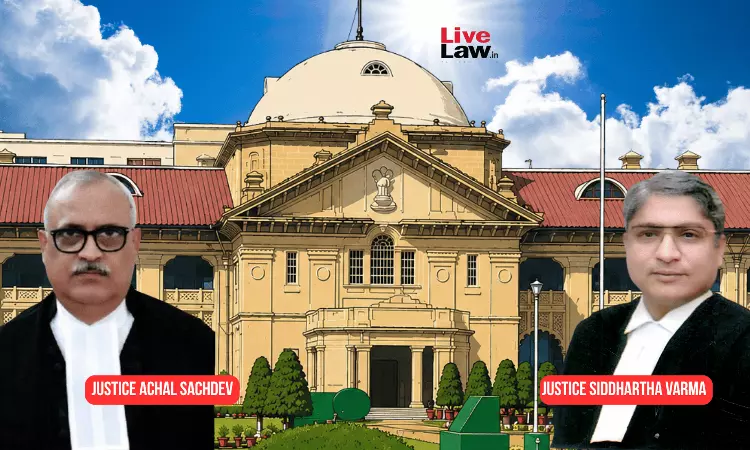
The Allahabad High Court has observed that the 'pugilistic' or 'boxer-like' position of a burnt dead body, by itself, does not establish that the burns were sustained ante-mortem.The Court said that such a posture of the dead body is a heat artifact which can occur no matter whether a person was alive or already dead when the burning began. A Bench of Justice Siddhartha Varma and Justice...
This is a premium content
Available exclusively to
Our subscribers
Subscribe Premium 
INR 1099+GST
Your support helps us to bring you more content at
an affordable subscription scheme !!!
All payment options available
The Allahabad High Court has observed that the 'pugilistic' or 'boxer-like' position of a burnt dead body, by itself, does not establish that the burns were sustained ante-mortem.
The Court said that such a posture of the dead body is a heat artifact which can occur no matter whether a person was alive or already dead when the burning began.
A Bench of Justice Siddhartha Varma and Justice Achal Sachdev made the observation while dismissing a criminal appeal filed by a man against his 1990 conviction for the death of his wife, who suffered extensive burns inside her matrimonial home in 1986.
The High Court noted that the medical evidence read as a whole established ante-mortem, homicidal burning and that the accused's failure to explain how the deceased came to be burnt inside the house constituted an additional link in the chain of circumstances.
About 'Pugilistic Position'
Relying upon Modi's Medical Jurisprudence and Toxicology, the Court explained that the pugilistic or 'boxer's' position is a recognized finding in forensic medicine which results from heat-induced coagulation and shrinkage of the flexor muscle groups, drawing the limbs into a flexed, boxer-like stance, with the elbows and knees bent and fists clenched.
However, the Court clarified thus:
"By itself, the pugilistic position is a heat artefact and can occur whether the person was alive or already dead when the burning began; standing alone, it proves only that the body was subjected to intense heat, not that the burns were ante-mortem".
The Court said that the evidentiary value of the pugilistic position in the present case had to be assessed along with other medical findings.
The post-mortem examination had recorded deep ante-mortem burn injuries with a line of redness at their margins and the doctor had opined that the death was caused by shock and asphyxia resulting from ante-mortem burns.
The Court explained that the line of redness, or erythema/vital reaction, reflects a living vascular response to injury, with blood still circulating and reacting to the burn.
"A line of redness of this kind reflects a living vascular response to injury blood still circulating and reacting to the burn and is accepted in forensic practice as a reliable indicator that the burns were sustained before death, as distinct from post-mortem charring, which shows no such vital reaction", the bench clarified.
The Court also noted the absence of carbon particles in the trachea and the absence of any soot-free area or other feature, which suggests that the fire had been set upon an already-dead body.
High Court's observations on merits of the case
On the medical evidence as a whole, the Court found that the findings supported ante-mortem, homicidal burning, rather than the accidental, post-mortem exposure to fire suggested by the defence.
The Court also considered the circumstances surrounding the death. It noted that the deceased's half-burnt body was recovered from a room inside the house occupied by the accused.
The prosecution also relied upon a letter written by the deceased to her parents shortly before her death, complaining of harassment over an additional dowry demand and expressing an apprehension for her life.
The Court applied Section 106 of the Evidence Act, which provides that when a fact is especially within the knowledge of a person, the burden of proving that fact lies upon that person.
However, the Court clarified that Section 106 does not shift the overall burden of proving guilt from the prosecution. The prosecution must first establish the basic incriminating circumstances.
Only thereafter, the Court clarified, does the evidentiary burden of explaining those circumstances fall upon the accused, who are uniquely placed to explain what happened inside their house. The Court observed thus:
"The inmates cannot discharge themselves simply by remaining silent on the premise that the burden always lies wholly on the prosecution; if they offer no explanation, or a false one, that silence or falsity becomes an additional link fortifying the chain of circumstances against them".
It further relied on the Supreme Court's decision in Sharad Birdhichand Sarda v. State of Maharashtra and noted that a false explanation can serve as an additional link when the other circumstances have already been cogently established.
A false plea, however, cannot by itself substitute for a missing link in the prosecution case, the bench added.
The counsel for the accused had relied upon the testimony of a defence witness to suggest that the deceased died accidentally in a room locked from the inside.
The High Court found that this explanation did not offer any explanation as to how the deceased came to be in that condition, nor was any information of an accident conveyed to the deceased's father
It also noted that the accused had also not denied the fact that the deceased had written letters to her parents complaining of dowry harassment, including the one written barely a day before her death.
Further, it noted that if the fire had been accidental and discovered by the family, the defence version did not explain why the body was left for the informant to discover rather than the incident being reported to him or the police.
The Court concluded thus:
"On this record, that burden has not been discharged, and the defence version, rather than displacing the prosecution case, becomes an additional link against the accused within the meaning of Sharad Birdhichand Sarda".
The Court consequently dismissed the criminal appeal and affirmed the conviction and sentence under Sections 302 and 498-A IPC.
Case title - Ashok Kumar vs. State 2026 LiveLaw (AB) 631
Case Citation: 2026 LiveLaw (AB) 631
Tags

Sparsh Upadhyay
Sparsh Upadhyay is an Associate Editor with LiveLaw.

