'Not A Healthy Practice': Allahabad High Court Disapproves Review Pleas Filed By Lawyers Who Did Not Argue Original Case
Sparsh Upadhyay
25 Nov 2026 1:14 PM IST
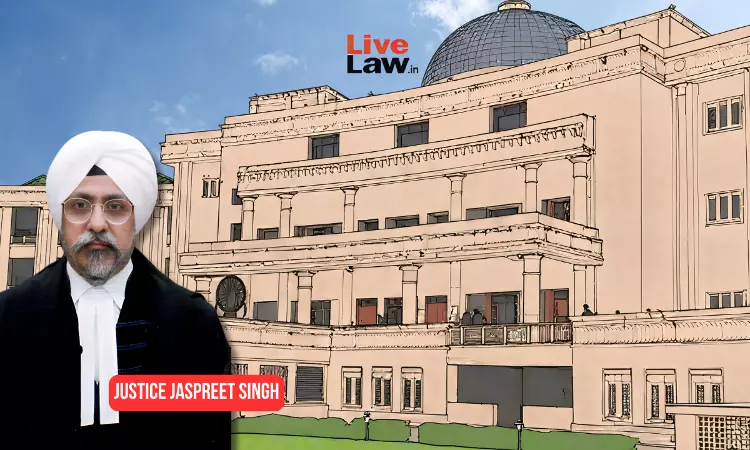
The Allahabad High Court recently took exception to the practice of filing review petitions through lawyers who did not represent the petitioners when the original writ petitions were heard. The Court described the same as "not a healthy practice".
A bench of Justice Jaspreet Singh made the observation while dismissing a review petition filed by the original petitioners challenging the dismissal of their writ petition pertaining to a decades-old property dispute.
The Court noted that the counsel appearing in the review petition had neither argued the original writ petition nor obtained a no-objection (NOC) from the previous counsel.
"In this background, it may be noticed that it is not a healthy practice where review petitions are filed by counsel who did not argue the writ petitions or were the counsel on record when the writ petition was heard", the Court observed.


In this regard, the Court referred to the Supreme Court's 1997 Judgment in Tamil Nadu Electricity Board and Another v. N. Raju Reddiar and Another wherein the Top Court had deprecated the practice of review petitions being filed by counsel who were not representing the review petitioner in the writ petition
The High Court, however, examined the review petition on its merits before dismissing it.
For context, the review petition was filed by the original petitioners challenging the dismissal of their writ plea by the High Court in February this year.
The petitioners sought review of that order while contending that their ancestral property was the subject matter of a dispute before the consolidation authorities, which had incorrectly decided the matter.
Their counsel submitted that the private respondents had got their names incorporated in the revenue records during consolidation operations without notice or information to the petitioners.
It was also argued that fraud had been played upon them and that they were entitled to the benefit of Section 17 of the Limitation Act.
The petitioners contended that since substantial rights of the petitioners are involved, the writ petition should not have been dismissed on the ground of limitation.
Examining the record, the Court noted that the petitioners had challenged consolidation orders dated July 12, 1988 and November 4, 1988, by filing a revision under Section 48(1) of the Uttar Pradesh Consolidation of Holdings Act, 1953, only in 2025.
It noted that the revisional court had found no explanation from the revisionist (the review petitioner herein) and also noticed that a notification under Section 52 of the U.P.C.H. Act had been made; thereafter, it was not appropriate to condone a delay of more than four decades.
The High Court had further observed that the order of the Deputy Director of Consolidation was challenged before it after almost 6 months.
It also noted that the writ court had found that no reasonable cause had been established to explain the delay of more than three decades. The mere assertion that the petitioners were unaware of the consolidation authorities' orders was not sufficient to condone such delay.
In fact, the Court noted that the review petitioners had approached the High Court again after a delay of 7 months.
The Court said that, in the absence of any clear pleadings before the writ court, which it ignored while passing the order under review, the order could not be said to suffer from an error apparent on the face of the record.
In its order, the Court also addressed the applicability of limitation to review petitions arising from orders passed in writ jurisdiction.
It observed that where the law of limitation is not applicable to proceedings under writ jurisdiction, there similarly cannot be any limitation for filing a review application in respect of such orders, unless a specific provision prescribes a limitation period.
However, the Court clarified that the absence of a prescribed limitation period does not prevent the Court from considering delay while exercising its jurisdiction.
It noted that a writ petition, being purely equitable in nature, can be refused on the ground of laches even where no period of limitation is prescribed or applicable.
The same principle, the Court held, could be imported while considering an application seeking condonation of delay in filing a review petition. In this regard, the Court referred to a coordinate Bench decision in Mohd. Jahan Begum and Another v. Board of Revenue and Others 2016.
Considering the explanation furnished in the affidavit accompanying the application for condonation of delay, the Court found that the laches had been explained and proceeded to examine the review petition on its merits.
However, the bench ultimately found that the petitioners had failed to establish any error apparent on the face of the record or any ground bringing their case within the scope of review.
The Court also clarified that the petitioners' claims concerning their rights in the property could still be agitated before the appropriate forum, even after the notification under Section 52 of the Uttar Pradesh Consolidation of Holdings Act, 1953, if their rights had been impaired.
In this regard, the Court referred to the Full Bench decision of the HC in Kaushal Kishore v. Deputy Director of Consolidation/Chief Revenue Officer, Gonda and Others 2026.
The Court thus dismissed the petition.