



- Home
- /
- High Courts
- /
- Allahabad High Court
- /
- Bank Can't Metamorphose Into...
Bank Can't Metamorphose Into Investigating Agency: Allahabad HC Slaps ₹50K Cost On IOB For Arbitrarily Freezing Account
Sparsh Upadhyay
18 May 2026 4:01 PM IST
The Allahabad High Court recently imposed a cost of Rs. 50K on the Indian Overseas Bank for arbitrarily freezing the account of a Firm merely on suspicion without there being any formal complaint or order from an investigative authority, causing it to suffer severe financial loss and disruption of business operations. "The act of the Bank in casually freezing the bank account of...
This is a premium content
Available exclusively to
Our subscribers
Subscribe Premium 
INR 1099+GST
Your support helps us to bring you more content at
an affordable subscription scheme !!!
All payment options available
The Allahabad High Court recently imposed a cost of Rs. 50K on the Indian Overseas Bank for arbitrarily freezing the account of a Firm merely on suspicion without there being any formal complaint or order from an investigative authority, causing it to suffer severe financial loss and disruption of business operations.
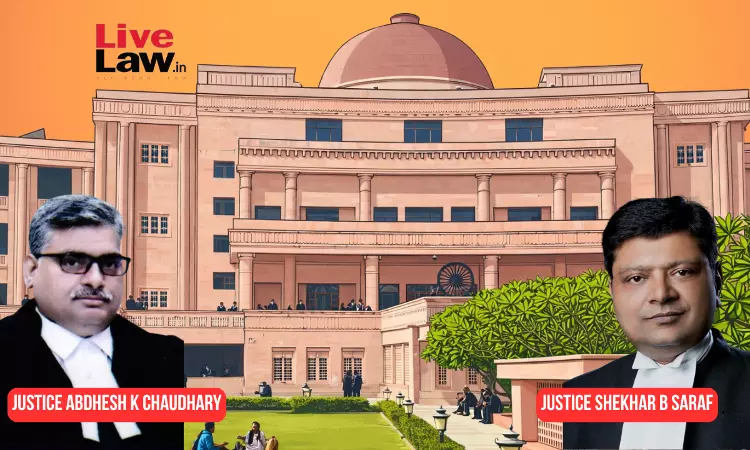
"The act of the Bank in casually freezing the bank account of an individual besides being a serious breach of trust with its account holder also amounts to demoralizing business sentiment, losing faith in the financial system and most importantly having adversarial impact on the economic prosperity of any country", a bench of Justice Shekhar B Saraf and Justice Abdhesh Kumar Chaudhary observed as it pulled up IOB for its metamorphosis into an investigating agency.
Briefly put, the petitioner firm's current account was frozen by IOB. The action was taken after the firm, which is engaged in the business of fisheries machinery, received an RTGS transfer of ₹23 lakhs from one Mrs Anita on January 16, 2026, for the purchase of machinery.
When the proprietor subsequently attempted to withdraw funds on January 20, 2026 (having already withdrawn ₹5 lakhs on the day of the transfer), he was orally informed by IOB officials that the account had been frozen and no transactions could be permitted.
Despite complaints and legal notices, the petitioner's grievance was not resolved, and hence, it moved the High Court.
Before the HC, it was argued that no criminal complaint existed and that no prior written notice was served before the account was frozen, and hence the bank's act was arbitrary, illegal and bad in law. It was also alleged that the bank had violated the principles of natural justice.
The bank, on the other hand, justified its action by claiming that the account was frozen as a precautionary measure due to a "suspicious transaction".
It was argued that the petitioner had declared an annual income of ₹5.76 lakhs when opening the account and hence, the sudden influx of ₹23 lakhs in his account was 'suspicious'.
Furthermore, IOB claimed that the Bank of Maharashtra, where Mrs Anita maintained her account, had noticed some suspicious activity and requested that IOB not release the said amount and, in fact, refund it to Bank of Maharashtra.
Importantly, IOB heavily relied upon the provisions of Section 12(2) of the Prevention of Money Laundering Act, 2002, to justify the freezing of the account.
High Court's order
At the outset, the bench observed that there are no guidelines/notification/circular/SOP, etc., of any Bank which specifically bars crediting of a higher amount than the annual income mentioned in the account opening form of the Bank.
The Court also did not find anything 'unusual' about the credit of 23,00,000/- into the account of the petitioner, within a period of 15 days from the opening of the current account or having withdrawn 5₹ lakhs on the same day, as it noted that there was no complaint of fraudulent activity from any quarter.
Crucially, the Court noted that the email from the Bank of Maharashtra was actually a reply to a query raised by IOB itself, which showed that IOB had launched a "self-declared investigation" without any third-party complaint.
The division bench categorically held that banks can't initiate action against their customers without cogent material on record provided by formal entities such as the Reserve Bank of India, the Central Bureau of Investigation, the Enforcement Directorate and police authorities.
Furthermore, the bench clarified that even a designated authority must provide proof of suspicious activity when seeking action against customers' accounts.
It added that the relationship between a bank and its customers is that of a trustee holding money on behalf of its customers and that it can't become an investigative agency with a roving eye.
Regarding the IOB's argument for invoking Section 12(2) of the PMLA, the bench noted that the provision pertains merely to a reporting entity's duty to maintain confidential records and does not in any manner authorise a banking company to freeze an account.
Observing that the bank was likely confusing the provision with Section 12AA(2) regarding enhanced due diligence, the Court clarified that even under Section 12AA, a bank may only refuse to carry out a "specified transaction" but cannot suspend or freeze the entire account.
The Court pointed out that the freezing of a bank account is always done under Section 17 of the Act by a Competent Authority.
The Court added that if the Bank is construed to have the power to freeze any bank account, rather than a particular specified transaction, as is being propagated in the present case, a havoc-like situation would be created.
"…the entire financial system would come crumbling down for the simple reasons that besides the other investigative agency and the Courts, the Bank would also have power to freeze account at its whims and discretion by terming any transaction to be suspicious, without assigning any reason, which cannot be the intent of law", the bench opined.
The Court further observed that the foundation for suspecting the petitioner's account "crumbles like a pack of cards" since the Bank of Maharashtra had neither frozen Mrs Anita's account nor initiated any proposed recovery action against her.
Thus, concluding that any blanket or disproportionate freezing of accounts where the holder is not an accused is manifestly arbitrary and violates fundamental rights under Article 19(1)(g) and 21, the bench allowed the petition.
The Indian Overseas Bank was directed to de-freeze the bank accounts of the petitioner forthwith.
Noting the "increasing menace" of indiscriminately freezing bank accounts, which paralyses day-to-day business operations, the bench found the bank's action to be vexatious and actuated with mala fides.
Consequently, the Court directed the IOB to pay ₹50,000 as compensation to the petitioner within 4 weeks.
Case title - M/S S. A. Enterprises Thru. Its Proprietor Rameshvar Singh And Another vs Reserve Bank Of India Thru. Its Governor Mumbai And 2 Others 2026 LiveLaw (AB) 282
Case Citation : 2026 LiveLaw (AB) 282
Tags

Sparsh Upadhyay
Sparsh Upadhyay is an Associate Editor with LiveLaw.

