



- Home
- /
- High Courts
- /
- Allahabad High Court
- /
- UP Goondas Act | Can A Show Cause...
UP Goondas Act | Can A Show Cause Notice Be Based On SHO's Report Forwarded Through The SP? Allahabad High Court Answers
Sparsh Upadhyay
23 July 2026 2:42 PM IST
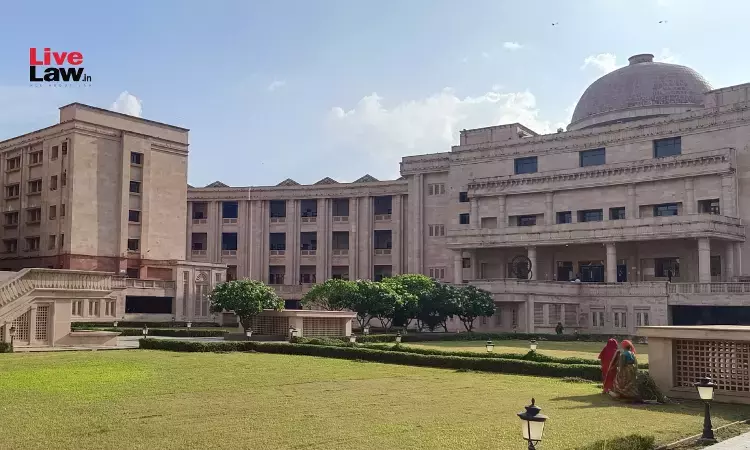
UP Goondas Act | Can A Show Cause Notice Be Founded On An SHO's Report Forwarded Through The SP? Allahabad High Court Answers
The Allahabad High Court (Lucknow Bench) has clarified that proceedings under Section 3 (1) of the Uttar Pradesh Control of Goondas Act, 1970 can validly be initiated on the basis of a Station House Officer's (SHO) report, provided it is forwarded through the Superintendent of Police (SP) to the District Magistrate in accordance with Rule 31 of the Uttar Pradesh Control of Goondas Rules,...
This is a premium content
Available exclusively to
Our subscribers
Subscribe Premium 
INR 1099+GST
Your support helps us to bring you more content at
an affordable subscription scheme !!!
All payment options available
The Allahabad High Court (Lucknow Bench) has clarified that proceedings under Section 3 (1) of the Uttar Pradesh Control of Goondas Act, 1970 can validly be initiated on the basis of a Station House Officer's (SHO) report, provided it is forwarded through the Superintendent of Police (SP) to the District Magistrate in accordance with Rule 31 of the Uttar Pradesh Control of Goondas Rules, 1970.
A bench of Justice Rajesh Singh Chauhan and Justice Ram Manohar Narayan Mishra observed that such a course is in the "letter and spirit" of Rule 31 of the 1970 Rules.
Thus, the Court dismissed a writ petition challenging a show cause notice issued under Section 3 of the Uttar Pradesh Control of Goondas Act by the District Magistrate Judicial, Unnao.
For context, Section 3 (1) of the Act empowers the District Magistrate to initiate proceedings against a person by issuing a show cause notice. Rule 3 (1) of the Rules provides that such action should ordinarily be initiated on written information received from the Superintendent of Police, a Sub-Divisional Magistrate or two respectable local residents
In the present case, it was the petitioner's contention that the impugned notice had been issued in violation of Rule 3 (1) since the information initiating the proceedings had been furnished by the SHO, Police Station Safipur, Unnao, rather than by the Superintendent of Police.
The petitioner's counsel placed reliance on the Full Bench decision in Ramji Pandey v State of Uttar Pradesh 1981, to argue that the notice was legally unsustainable.
Rejecting this argument, the Bench noted that the information regarding the petitioner's criminal antecedents had been submitted by the SHO through the Superintendent of Police, Unnao, to the District Magistrate.
It observed that Rule 3(1) expressly contemplates the SP furnishing such information and that, where complaints are received regarding a person's criminal activities, the District Magistrate would necessarily seek a report from the concerned police station through the Superintendent of Police to verify those allegations.
"...otherwise he could have not known and verified the criminal antecedents of a person against whom two respectable persons of the locality have lodged the complaint", the bench noted.
Therefore, the Court found no illegality in the letter so given by the SHO concerned through the Superintendent of Police, Unnao, addressed to the District Magistrate, Unnao.
The High Court also rejected the petitioner's reliance on the Full Bench ruling in Ramji Pandey.
The Bench observed that the show cause notice specifically referred to the petitioner's criminal antecedents, his alleged activities prejudicial to public order and particulars of four criminal cases.
It held that, unlike the notice considered in Ramji Pandey, the impugned notice complied with the requirements laid down by the Full Bench. The Bench therefore found the facts of the present case to be materially different and held that the decision did not assist the petitioner.
Importantly, the Court also noted that the petitioner had approached the High Court more than 100 days after the issuance of the show cause notice, without even disclosing the date on which it had been served.
The division bench observed that the delay on the part of the petitioner reflected a "lack of alertness and seriousness" and prima facie indicated that the petitioner was "not actually aggrieved by the notice".
In view of this, holding that Rule 3 (1) of the 1970 Rules had been complied with and that the directions issued by the Full Bench in Ramji Pandey had also been followed, the Division Bench dismissed the writ petition as misconceived.
Case title - Faishal Beg vs. State Of U.P. Thru. Prin. Secy. Home Lko. And 3 Others 2026 LiveLaw (AB) 457
Case Citation: 2026 LiveLaw (AB) 457
Tags

Sparsh Upadhyay
Sparsh Upadhyay is an Associate Editor with LiveLaw.

