



- Home
- /
- High Courts
- /
- Allahabad High Court
- /
- Wrong To Claim One Religion As...
Wrong To Claim One Religion As 'Only True Religion' As It Disparages Other Faiths: Allahabad HC Refuses To Quash 295A IPC Case
Sparsh Upadhyay
26 March 2026 7:41 PM IST
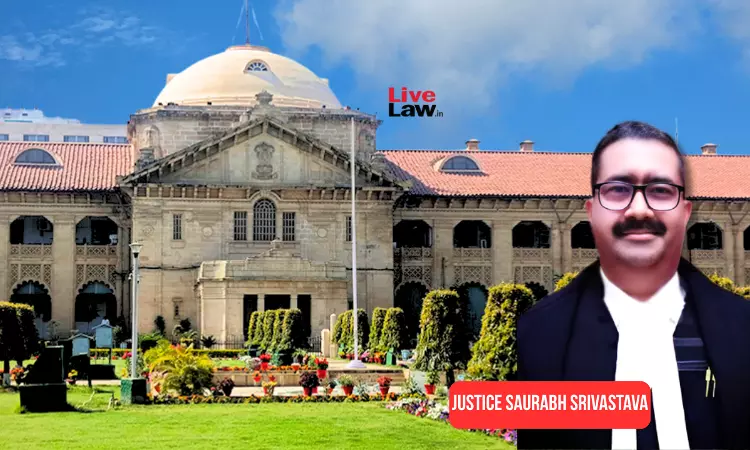
The Allahabad High Court has observed that it is 'wrong' for any person to claim in secular India that a particular religion is the "only true religion", as doing so implies a 'disparagement' of other faiths and the same prima facie attracts Section 295A IPC. A bench of Justice Saurabh Srivastava observed thus while dismissing a quashing petition filed by Reverend Father Vineet...
This is a premium content
Available exclusively to
Our subscribers
Subscribe Premium 
INR 1099+GST
Your support helps us to bring you more content at
an affordable subscription scheme !!!
All payment options available
The Allahabad High Court has observed that it is 'wrong' for any person to claim in secular India that a particular religion is the "only true religion", as doing so implies a 'disparagement' of other faiths and the same prima facie attracts Section 295A IPC.
A bench of Justice Saurabh Srivastava observed thus while dismissing a quashing petition filed by Reverend Father Vineet Vincent Pereira, who is facing charges under Section 295A IPC [Deliberate and malicious acts, intended to outrage religious feelings of any class by insulting its religion or religious beliefs]
According to the FIR, the applicant allegedly conducted prayer meetings where he frequently stated that Christianity is the only religion, thereby hurting the sentiments of a particular religion, i.e. Hindu.
During the initial investigation, though the IO concluded that no illegal religious conversion of marginalised sections had taken place, the police proceeded with the chargesheet regarding the allegations of criticising other religions.
His counsel argued that he was falsely implicated to harass him and that, as per the FIR, no offence under Section 295A IPC was made out.
It was further argued that the Magistrate took cognizance of the chargesheet without applying a judicial mind, acting without sufficient corroborative evidence.
The State, on the other hand, argued that the applicant's contentions involved disputed questions of fact and required an appreciation of evidence.
It was lastly argued that at the stage of taking cognizance, the trial court is only required to see if a prima facie case exists and is not expected to hold a mini-trial.
Against the backdrop of these submissions, Justice Srivastava, at the outset, stressed that India is a land where people of all faiths and beliefs in a secular state as defined by the Constitution of India, live together.
Therefore, the Court observed, "it is wrong for any religion to claim that it is the only true religion as it implies a disparagement of other faiths".
The Court concluded that the opening line of Section 295A specifically deals with "deliberate and malicious" intentions to outrage the feelings of any class of citizen by insulting their religion or religious faith.
The Court added that the applicant's act falls within the ambit of Section 295-A of the IPC, and, as such, at this stage, it cannot be said that, prima facie, no case is made.
The Court clarified that a Magistrate is only required to record a prima facie opinion based on the material on record and not hold a mini-trial or examine the defence of the accused at this initial juncture.
“At the stage of taking cognizance, a court's primary focus is to determine if a prima facie case exists, meaning whether there is sufficient evidence to suggest that an offense has been committed, and not to delve into the merits of the case or the evidence,” the bench noted.
Thus, finding that all the submissions made by the applicant related to disputed questions of fact that cannot be adjudicated under Section 528 BNSS, the High Court found the application devoid of merit. Hence, the same was dismissed.
Case title - Rev. Fr. Vineet Vincent Pereira Alias Father Vineet Vinicent Paresh vs. State of U.P. and Another 2026 LiveLaw (AB) 142
Case citation : 2026 LiveLaw (AB) 142

Sparsh Upadhyay
Sparsh Upadhyay is an Associate Editor with LiveLaw.

