



- Home
- /
- High Courts
- /
- Allahabad High Court
- /
- Ad Hoc Appointee Cannot Be Directly...
Ad Hoc Appointee Cannot Be Directly Confirmed In Service Without Going Through Statutory Regularization: Allahabad High Court
Upasna Agrawal
30 Sept 2026 11:00 AM IST
The Allahabad High Court has held that an employee appointed on an ad hoc basis cannot be directly confirmed in service. It held that a confirmation order which is not traceable to any recruitment, service or regularization rules is void ab initio and confers no legally enforceable right.The Court held that an ad hoc appointment made outside the prescribed recruitment rules is only a...
This is a premium content
Available exclusively to
Our subscribers
Subscribe Premium 
INR 1099+GST
Your support helps us to bring you more content at
an affordable subscription scheme !!!
All payment options available
The Allahabad High Court has held that an employee appointed on an ad hoc basis cannot be directly confirmed in service. It held that a confirmation order which is not traceable to any recruitment, service or regularization rules is void ab initio and confers no legally enforceable right.
The Court held that an ad hoc appointment made outside the prescribed recruitment rules is only a stop-gap arrangement and cannot ripen into a regular appointment on the strength of a later executive order of confirmation. An ad hoc appointee must first be regularized under the applicable rules and placed on probation before the question of confirmation can arise, it held.
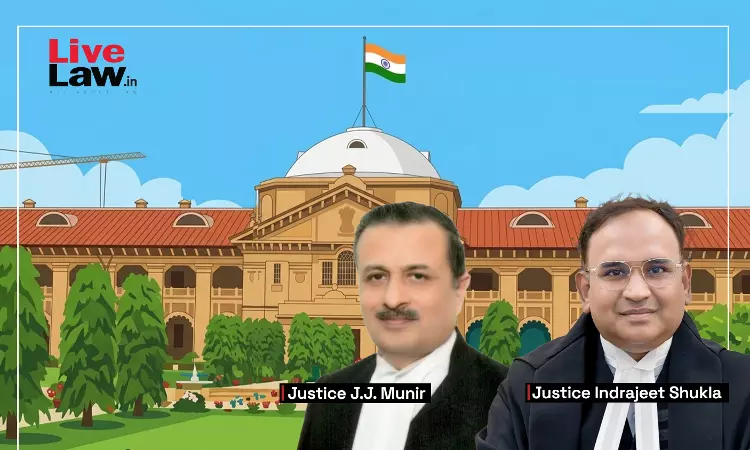
The bench of Justice J.J. Munir and Justice Indrajeet Shukla held,
“An ad hoc employee must first undergo the formal Regularization Procedure (evaluation by a Selection Committee, screening of records, and checking availability of a substantive vacancy). Once regularized, they are placed on probation, after which they can be “confirmed”. Directly confirming an ad hoc appointee skips this mandatory legal gateway, which is the case of the appellant-petitioner.”
Appellants were engaged as Seasonal Collection Amins in District Maharajganj in 1976. In February 1990, the Tehsildar, Farenda reported that eight posts of Collection Amin in the Tehsil were lying vacant, and on the strength of that report the Sub-Divisional Officer, Farenda, appointed the appellants as Collection Amins on an ad hoc basis by order dated 09.02.1990.
The District Magistrate, Maharajganj terminated their services on 31.03.1990, citing a ban on filling up vacant posts of Collection Amin. That order was stayed by the High Court in Writ Petition No. 10010 of 1990 and was later recalled as coram non judice, the appointing authority for Collection Amins being the Sub-Divisional Magistrate. While that petition was pending, the Sub-Divisional Magistrate, Farenda passed an order dated 13.03.1991 confirming the appellants in service.
Their services were terminated afresh on 06.11.1995 under the U.P. Temporary Government Servant (Termination of Services) Rules, 1975. That termination was quashed on 26.05.2004, with liberty to the State to pass an appropriate order in accordance with law. Acting on that liberty, the Sub-Divisional Officer issued a show cause notice on 25.01.2006 and, by order dated 19.04.2006, annulled both the ad hoc appointment and the confirmation. The writ petition against that order was dismissed by a Single Judge, giving rise to this intra-court appeal.
Counsel for the appellants submitted that the ad hoc appointment had been made against substantive vacancies by the competent appointing authority on the strength of the Government Order dated 29.03.1986. It was argued that the confirmation had followed an assessment of the vacancy position.
It was submitted that no fraud or misrepresentation was alleged against the appellants, that their names figured in the consolidated seniority list of Collection Amins published on 15.06.1993 at serial numbers 103 to 109, and that they could not be made to suffer for a lapse on the part of the State officials.
It was further submitted that 14 years of service as Seasonal Collection Amins from 1976 to 1990, followed by ad hoc service and continuance under interim orders, could not be brushed aside; that the appellants were protected by Article 311(2) of the Constitution. It was argued that their services stood regularized ipso facto under the U.P. Regularization of Ad-hoc Appointments (On Posts Outside the Purview of the Public Service Commission) Rules, 1979.
The State submitted that Seasonal Collection Amins are engaged under Paragraph 19 of the U.P. Collection Manual, a body of executive instructions without statutory force, and that such engagement lasts only for the season or for 89 days, whichever is earlier. It was submitted that the U.P. Collection Amins Service Rules, 1974 confer no power to make ad hoc appointments to the post of Collection Amin, and that a Seasonal Collection Amin can reach that post only against the 35% quota, through a Selection Committee.
The Court observed that the order dated 13.03.1991 disclosed neither the authority nor the power under which it had been made.
“It further does not depict/refer to any applicable recruitment rules, service rules, or regularization rules, which gives the impression that the order is one by 'a monarch' in place of a Statutory Authority under a democratic setup.”
Testing the confirmation against the Rules, 1974, the Court held that no recruitment exercise under those Rules had been carried out, a position which counsel for the appellants accepted.
Testing it against the Rules, 1979 as they stood in 1991, it held that the appellants did not meet the cut-off date of 01.10.1986 fixed by the second amendment, and had in any case not completed three years of continuous ad hoc service by 13.03.1991, having been appointed only on 09.02.1990. The cut-off date was extended to 30.06.1998 by the third amendment of 2001, but the appellants never came forward seeking consideration for regularization after those Rules came into force, observed the Court.
“In service jurisprudence, confirmation ordinarily presupposes a substantive appointment, which is not the case of the appellant-writ petitioners.”
The Court rejected the plea that the State was estopped from questioning the confirmation, holding that no estoppel operates against a statute and that an administrative order contrary to codified law is a nullity.
“An order which has no sanction of the law cannot become lawful merely by reason of its implementation or continuance over a period. The doctrine of estoppel, therefore, cannot be invoked to sustain the purported confirmation dated 13.03.1991 or defeat the statutory mandate governing appointments and regularization.”
On the appellants' claim to parity with one Gulam Hussain, whose termination in similar circumstances had been quashed, the Court held that negative equality has no place in the constitutional scheme and the State cannot be compelled to repeat a mistake it has once made.
On the length of service, the Court held that the appellants' continuance rested on interim orders. It relied on the Constitution Bench decision of the Supreme Court in State of Karnataka v. Uma Devi, which described such employees as being in litigious employment and held that continuance under cover of an order of court gives no right to absorption or permanence, and on the Five-Judge Full Bench decision of the High Court in Jahaj Pal v. District Insepector of Schools to the same effect.
“The mere passage of time or continuance pursuant to interim orders cannot validate an order which was void from its inception.”
The Court added that even if the Sub-Divisional Magistrate were assumed to have had no power to review his predecessor's order, it would still decline to interfere, since setting aside the order dated 19.04.2006 would only revive the confirmation order of 13.03.1991.
“We, therefore, decline to exercise our discretionary jurisdiction to bring back to life an order which is otherwise contrary to law.”
Holding that the confirmation order conferred no legally enforceable right and that the consequential orders founded on it must fall with it, the Court found no error of principle in the view taken by the Single Judge. The special appeal was dismissed.
Tags


