



- Home
- /
- High Courts
- /
- Allahabad High Court
- /
- Additional Defence In Written...
Additional Defence In Written Statement Can't Be Allowed After Trial Begins Unless Due Diligence Is Established: Allahabad High Court
Upasna Agrawal
23 Nov 2026 3:00 PM IST
The Allahabad High Court has held that the liberal approach ordinarily taken to amendment of a written statement does not dispense with the requirement of due diligence under the proviso to Order VI Rule 17 of the Code of Civil Procedure, 1908. The proviso to Order VI Rule 17 bars amendment after commencement of trial unless the court concludes that, despite due diligence, the party could...
This is a premium content
Available exclusively to
Our subscribers
Subscribe Premium 
INR 1099+GST
Your support helps us to bring you more content at
an affordable subscription scheme !!!
All payment options available
The Allahabad High Court has held that the liberal approach ordinarily taken to amendment of a written statement does not dispense with the requirement of due diligence under the proviso to Order VI Rule 17 of the Code of Civil Procedure, 1908.
The proviso to Order VI Rule 17 bars amendment after commencement of trial unless the court concludes that, despite due diligence, the party could not have raised the matter earlier. Neither the relevance of the proposed defence nor the absence of prejudice to the other side, it held, can substitute for that showing.
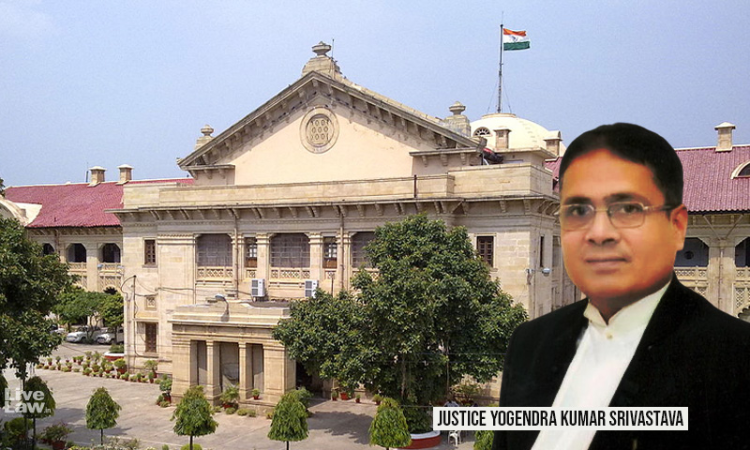
Justice Dr. Yogendra Kumar Srivastava held,
“Once trial has commenced, the relevance or potential significance of the proposed amendment, the absence of prejudice to the opposite party or the fact that it introduces an additional defence cannot, by themselves, justify its allowance. The applicant must independently satisfy the court that, despite due diligence, the matter could not have been raised before commencement of trial.”
The respondent instituted SCC Suit No. 12 of 2020 on 10.01.2020 before the Judge, Small Causes Court, Kanpur Nagar, seeking the petitioner's eviction from a tenanted accommodation, arrears of rent and damages, claiming ownership under a Will dated 10.11.2010 executed by Smt. Satyawati Tripathi. The petitioner's written statement of 18.02.2021 disputed her ownership and landlordship.
With the suit at final arguments, the petitioner applied on 15.09.2025 to add paragraphs pleading that the property had been partitioned between the respondent and Smt. Krishna Tripathi before the suit was filed, under Resolution No. 121 dated 07.09.2019 of the Kanpur Nagar Nigam, a separate house number 92-A being allotted to Krishna Tripathi's share.
He contended the tenancy had consequently been split and the suit was not maintainable without her, and said he learnt of the partition only in the last week of August 2025. The trial court rejected the application on 20.11.2025, holding that the circumstances relied on existed before the suit was instituted; the revision was dismissed on 07.10.2026, and the petitioner moved the High Court under Article 227.
The application, the Court found, gave no particulars of how the petitioner came by that knowledge, or what he had done earlier to ascertain the facts.
“A mere assertion of subsequent knowledge, without a satisfactory explanation as to why the matter could not have been raised earlier despite due diligence, would not, by itself, satisfy the statutory requirement.”
The petitioner argued that the courts below misread A.K. Gupta & Sons Ltd. v. Damodar Valley Corporation, which concerned a plaintiff adding a relief to the plaint rather than a defendant adding a defence. The Court held the distinction did not dispense with the due diligence requirement.
Dismissing the petition, the Court clarified that its observations went only to the permissibility of the amendment, not to the rival claims on ownership, partition or the landlord-tenant relationship. The trial court was directed to conclude the suit preferably within three months.
Counsel for Petitioner :- Prakhar Tandon
Counsel for Respondent :- Manish Tandon
Tags


