



Appeals Against Urban Land Ceiling Orders Abated After 1999 Repeal: Allahabad High Court
Upasna Agrawal
4 Nov 2026 10:30 AM IST
The Allahabad High Court has held that an appeal under Section 33 of the Urban Land (Ceiling and Regulation) Act, 1976 can neither be filed nor continued after the Urban Land (Ceiling and Regulation) Repeal Act, 1999 came into force, and that the right of appeal is not saved by Section 6 of the General Clauses Act, 1897.
Section 33 of the Act of 1976 allowed a person aggrieved by an order of the competent authority, other than an order under Section 11 or sub-section (1) of Section 30, to appeal to the prescribed appellate authority within thirty days of communication of the order.
Section 4 of the Repeal Act, 1999 provides that all proceedings relating to any order made or purported to be made under the principal Act, pending immediately before the commencement of the Repeal Act before any court, tribunal or other authority, shall abate, excepting only proceedings relating to Sections 11, 12, 13 and 14 insofar as they relate to land of which possession has been taken by the State.


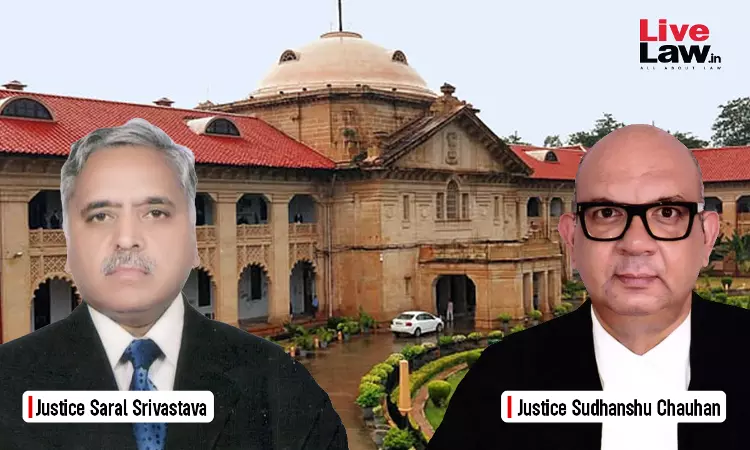
The bench of Justice Saral Srivastava and Justice Sudhanshu Chauhan held,
“Thus, it is beyond doubt that Section 4 of the Repeal Act, 1999 express an intendment contrary to the provisions of Section 6 of the General Clauses Act, 1897. The intention of the legislature is clear that all proceedings before any court, tribunal or other authorities under the Act, 1976 shall abate, which is not so under the provisions of Section 6 of the General Clauses Act,1897.”
The Kanpur Development Authority had filed three writ petitions, decided by a common judgment. In each, proceedings under the Act of 1976 had run their course years earlier — a draft statement under Section 8(3), an order under Section 8(4) declaring 6,632.61 sq m, 16,676.46 sq m and 9,242.50 sq m of land as vacant surplus in the three cases, a final statement under Section 9, notifications under Sections 10(1) and 10(3), and a notice under Section 10(5).
Possession was taken in 1991 in two cases and in 1986 in the third, handed over to the Kanpur Development Authority, and the land recorded in its name in the revenue records. The tenure holders never challenged those proceedings.
The Repeal Act came into force in Uttar Pradesh on 18.03.1999. The private respondents, successors of the original tenure holders, filed appeals under Section 33 before the District Judge, Kanpur in 2009, 2011 and 2013, against orders under Section 8(4) passed in 1983, 1982 and 1979. By judgments dated 24.12.2024, the District Judge disposed of the appeals, finding that the record did not support the claim that the land had actually been transferred from the tenure holder to the State, and holding the appeals liable to be abated.
Counsel for the development authority argued that once the Act of 1976 stood repealed, Section 4 abated all pending proceedings, including appeals under Section 33, and that proceedings concluded long before the repeal could not be reopened under a statute that no longer existed. The impugned judgments were without jurisdiction. Reliance was placed on a coordinate bench decision in State of U.P. v. Jagdish Chandra.
Counsel for the private respondents relied on Section 6(e) of the General Clauses Act, arguing that a right of appeal is a substantive right which cannot be taken away except expressly or by necessary intendment. Since possession had already been taken, it was pleaded, the Act of 1976 continued to govern the dispute; and as a civil court has no jurisdiction over disputes under the Act, Section 33 was the only remedy left. Reliance was placed on State of U.P. v. Nek Singh, and it was contended that Jagdish Chandra did not lay down good law.
The Court observed that the Repeal Act divides land vested under Section 10(3) into two categories: land of which possession has been taken, where the proceedings stand concluded, and land of which possession has not been taken, which is to be restored on refund of any amount paid. It held that apart from proceedings under Sections 11 to 14 relating to land already taken over, nothing pending before any court, tribunal or authority survives.
It observed that Section 6 of the General Clauses Act, the Court noted, operates only where no different intention appears in the repealing statute. Reading the Statement of Objects and Reasons to the Repeal Act, which records that the Act of 1976 had failed to achieve its objectives, that public opinion was nearly unanimous on the point, and that the Standing Committee had suggested a provision for abatement of proceedings, the Court held that a contrary intention was evident.
On the respondents' reliance on Garika Pati Veeraya v. N. Sabbiah Choudhary and Transmission Corporation of A.P. v. C.H. Prabhakar, the Court agreed that a vested right of appeal can be taken away by a later enactment only where it so provides expressly or by necessary intendment and held that Section 4 had done exactly that.
“In view of what has been held by us we are of the view that in view of Section 4 of the Repeal Act, the vested right of appeal as contained in Section 33 of the Act, 1976 has been taken away and all such appeals are to abate. Further with the enforcement of the Repeal Act, 1999 w.e.f. 18.03.1999, the Act, 1976 stands obliterated, and as such the question of filing an appeal after the enforcement of the Repeal Act, 1999 does not arise.”
The Court rejected the argument that landholders would be left without a remedy. It held that the Repeal Act protects the possession of those from whom possession was never taken, and they may protect it through remedies available under common law.
Relying on State of U.P. v. Ehsan, it noted that a writ court may relegate a landholder to a suit, and on its own decision in State of U.P. v. Balbir Singh, that a petition under Article 226 is not a continuation of the original proceedings and so does not abate under Section 4.
Nek Singh, the Court held, had considered neither the earlier view of the High Court nor the decisions of the Supreme Court on the point; Jagdish Chandra lays down the correct law.
The appeals were held unsustainable on a second, independent ground. The challenges came about 18, 20 and 27 years after possession was taken, against a limitation of thirty days under Section 33, and were pursued by successors with no personal knowledge of the proceedings.
“The land holders having kept quite for such a long duration of time impliedly abandoned their rights over the land in dispute. Thus, the land holders having acquiesced to the proceedings under the Act, 1976 renders the appeals as not maintainable.”
Before parting, the Court expressed its anguish at the manner in which the District Judge had dealt with the issue. Jagdish Chandra had been placed before him and extracted in his judgment, yet no reason was given for holding it inapplicable.
The private respondents had themselves admitted in the appeal that the Act of 1976 did not apply to the land, from which it followed that no appeal under Section 33 could lie at all. Nor was it explained how the appeals stood abated: if Section 4 applied, they were not maintainable when filed, and on the respondents' own case that they were maintainable, they ought to have been allowed rather than abated. The judgments were held to be self-contradictory and in violation of the Repeal Act.
Accordingly, the writ petitions were allowed and the judgments and orders dated 24.12.2024 passed by the District Judge, Kanpur were set aside.


