



- Home
- /
- High Courts
- /
- Allahabad High Court
- /
- Bank Can Recover Loan Dues From...
Bank Can Recover Loan Dues From Guarantor After Default Without First Proceeding Against Principal Borrower: Allahabad High Court
Sparsh Upadhyay
11 Aug 2026 1:40 PM IST
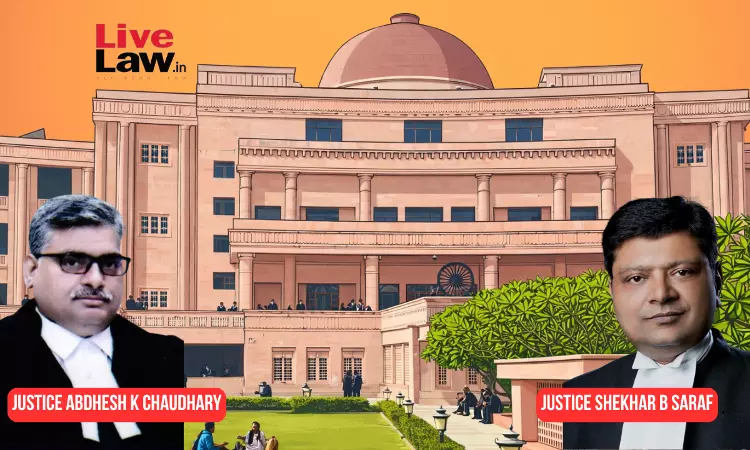
The Allahabad High Court has clarified that a bank can recover loan dues from a guarantor after the principal borrower defaults without first exhausting its remedies against the principal borrower.Referring to Section 128 Indian Contract Act, 1872 (Surety's liability), a bench of Justice Shekhar B. Saraf and Justice Abdhesh Kumar Chaudhary noted that the liability of the surety is...
This is a premium content
Available exclusively to
Our subscribers
Subscribe Premium 
INR 1099+GST
Your support helps us to bring you more content at
an affordable subscription scheme !!!
All payment options available
The Allahabad High Court has clarified that a bank can recover loan dues from a guarantor after the principal borrower defaults without first exhausting its remedies against the principal borrower.
Referring to Section 128 Indian Contract Act, 1872 (Surety's liability), a bench of Justice Shekhar B. Saraf and Justice Abdhesh Kumar Chaudhary noted that the liability of the surety is 'coextensive' with that of the principal debtor, which means that the quantum of the guarantor's obligation is the same as that of the principal borrower.
"The guarantor is liable for the whole of the amount for which the principal borrower is liable, and his liability is neither more nor less, unless the contract of guarantee provides otherwise. The liability is joint and several; the creditor is entitled to proceed against either or both simultaneously", the bench further clarified.
The division bench made these observations while dismissing writ petitions filed by 2 employees who had stood as guarantors for loans availed by their colleague from the UP Postal Primary Cooperative Bank Limited.
Case in brief
Briefly put, the principal borrower (Vikrant Dubey) availed three loans from the Bank during 2022-23: a ₹50,000 festival loan, a ₹3 lakh short-term loan and a ₹18 lakh personal loan.
After he defaulted on repayment, the Bank initiated recovery proceedings against him and simultaneously sought to recover the outstanding dues from the two petitioners as guarantors.
The Bank requested the Postal Department, where the petitioners worked, to deduct ₹10,000 per month from the salary of each petitioner towards recovery of the outstanding loan amount.
Challenging the proposed salary deductions, the petitioners moved the High Court, wherein they argued that the Bank was required to first exhaust its remedies against the principal borrower and could proceed against the guarantors only in respect of any residual amount remaining unpaid thereafter.
They contended that simultaneous recovery from the principal borrower and guarantors was impermissible and contrary to the concept of guarantee.
They also relied upon the Supreme Court's judgment in Ram Kishun v. State of U.P. in support of their submission.
The petitioners further relied upon a communication dated March 6, 2026, through which respondent No. 4 had asked the Bank why recovery was not being effected from the principal borrower and had cautioned that recovery from the guarantors would not be proper until the borrower's status was clarified.
Despite this, the Bank issued a letter dated April 15, 2026, seeking recovery of ₹10,000 per month from the petitioners' salaries.
High Court's observations
At the outset, the bench referred to Section 128 of the Indian Contract Act, 1872, to hold that the liability of the guarantor is immediate, absolute (subject only to the terms of the contract), and co-extensive with that of the principal borrower
The Bench also relied upon Supreme Court decisions in Bank of Bihar Ltd. vs. Dr. Damodar Prasad, State Bank of India v. M/s Indexport Registered 1992 and Industrial Investment Bank of India Ltd. vs. Biswanath Jhunjhunwala 2009, to reiterate that a creditor is not bound to exhaust its remedy against the principal borrower before proceeding against the surety.
"The creditor is at liberty to proceed against the surety without first exhausting remedies against the principal borrower", the bench noted.
The Court also rejected the petitioners' reliance on the Top Court's decision in Ram Kishun, observing that the judgment itself reaffirmed that a surety cannot restrain execution against him until the creditor has exhausted its remedies against the principal borrower.
The Bench said the judgment relied upon by the petitioners was "self-defeating" and described their reliance on it as a “self-goal on the part of the learned Counsel for the petitioners.”
The Court observed thus:
"The petitioners, as such, have no right to restrain execution of the decree against them until the creditor (Bank) has exhausted his remedy against the principal borrower/debtor for the reason that it is the business of the petitioners (surety/guarantor) to see whether the principal borrower/debtor has paid or not and not that of the creditor".
Applying these principles, the Court noted that the petitioners had voluntarily stood as guarantors for the loans advanced to the principal borrower.
Importantly, no material was placed on record to show that the guarantee contract contained any stipulation postponing the guarantors' liability or requiring the creditor to proceed first against the principal borrower.
Hence, the Court concluded that the Bank was fully entitled to seek recovery from the petitioner's salary by way of monthly deductions.
It also clarified that the March 6 communication issued by respondent No. 4 could not override the statutory liability or the settled Supreme Court rulings.
The petitioners also argued that the proposed salary recovery violated the principles of natural justice because they had not been given an opportunity of personal hearing before the proposal dated April 15, 2026.
The Court rejected this contention as it remarked that their liability flowed directly from the contractual guarantee and was co-extensive under Section 128 of the Contract Act.
It said they had ample opportunity to discharge their obligations or pursue appropriate civil remedies, and that the writ petitions could not be used to defeat their contractual and statutory liability.
The Court further clarified that the petitioners remained free to pursue their rights of subrogation or contribution against the principal borrower after discharging the liability, but could not restrain the creditor from enforcing the guarantee.
Holding that the Bank's proposed recovery of ₹10,000 per month from each petitioner's salary was legally sustainable, the High Court dismissed both writ petitions.
Advocate Anand Dubey appeared on behalf of the petitioners
Advocate Nirankar Singh appeared on behalf of the respondent No.2 - U. P. Postal Primary Cooperative Bank Limited
Case title - Vineet Pandey vs State of U.P. Thru. Prin. Secy. Deptt. of Cooperative Lko. And 3 others 2026 LiveLaw (AB) 563
Case Citation: 2026 LiveLaw (AB) 563
Tags

Sparsh Upadhyay
Sparsh Upadhyay is an Associate Editor with LiveLaw.

