



- Home
- /
- High Courts
- /
- Allahabad High Court
- /
- HC Rule Barring Special Appeal...
HC Rule Barring Special Appeal Yields To Natural Justice; Appeal Maintainable Against Non-Speaking Single Judge Order: Allahabad High Court
Upasna Agrawal
23 July 2026 3:20 PM IST
The Allahabad High Court has held that a special appeal is maintainable against a non-speaking order passed by a Single Judge, notwithstanding the bar contained in the Allahabad High Court Rules, 1952. It held that the requirement to record reasons is a facet of natural justice, and that the bar created by Rule 5 must yield to it.Rule 5 of Chapter VIII of the Rules, 1952 bars a special...
This is a premium content
Available exclusively to
Our subscribers
Subscribe Premium 
INR 1099+GST
Your support helps us to bring you more content at
an affordable subscription scheme !!!
All payment options available
The Allahabad High Court has held that a special appeal is maintainable against a non-speaking order passed by a Single Judge, notwithstanding the bar contained in the Allahabad High Court Rules, 1952. It held that the requirement to record reasons is a facet of natural justice, and that the bar created by Rule 5 must yield to it.
Rule 5 of Chapter VIII of the Rules, 1952 bars a special appeal against a judgment of a Single Judge passed in the exercise of the jurisdiction conferred by Article 226 or Article 227 of the Constitution in respect of an order of the Government or any officer or authority made in the exercise of appellate or revisional jurisdiction under a State or Central Act.
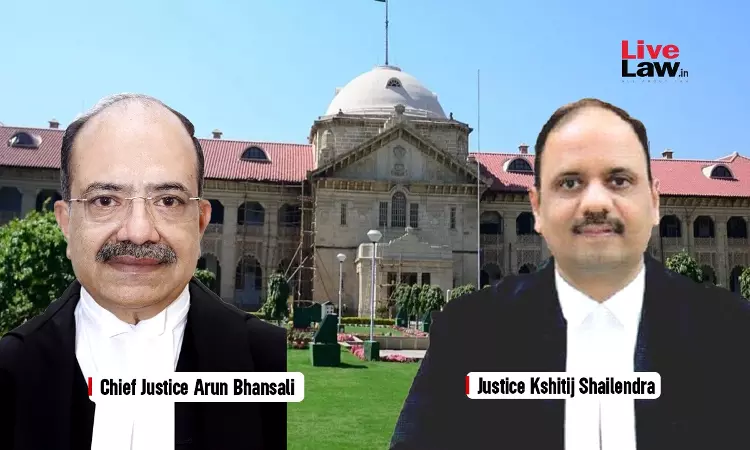
Referring to the decision of the Apex Court in Abhishek Gupta v. Dinesh Kumar and others, the bench of Chief Justice Arun Bhansali and Justice Kshitij Shailendra held,
“As noticed herein before, Supreme Court in the case of Abhishek Gupta (supra) has laid down that the bar created by 'Rule 5 of the Rules, 1952 must yield to the foundational principles of natural justice', the very fact that the order impugned is non-speaking and does not contain any reasons, in the light of the observations made by Supreme Court, the present appeal against such an order would be maintainable and the preliminary objection raised in this regard cannot be sustained.”
The Committee of Management of a society, through its President Shri Niwas, had filed a writ petition challenging the order dated March 12th 2019 by which the Deputy Registrar, Agra cancelled the registration of the society under Section 12-D(1)(c) of the Societies Registration Act, 1860, along with the orders by which the Commissioner, Agra Division, Agra dismissed the appeal and the review application.
The Single Judge held that the appellate authority had not correctly appreciated the law laid down in Laljimal Dharamshala Society and another v. The Commissioner Agra Division Agra and others, set aside both orders of the Commissioner and remitted the matter to the appellate authority to decide afresh. The appellant, who had been heard by the Single Judge, filed the present special appeal.
At the outset, counsel for the respondent objected that the appeal was not maintainable, since the writ petition had been directed against an order of the appellate authority and Rule 5 barred a special appeal in such matters.
Counsel for the appellant argued that the Single Judge had recorded no reasons whatsoever for setting aside the orders impugned in the writ petition, and had not even indicated whether the petition stood allowed or disposed of. It was urged that a special appeal against an order of that nature could not be shut out.
Extracting the order of the Single Judge, the Court observed that it disclosed nothing about the facts, the orders under challenge, the law laid down in the judgment relied upon, or how the appellate authority had departed from it.
“As noticed herein before, the order passed by learned Single Judge is ex facie non-speaking, inasmuch as there is absolutely no discussion worth the name either on the facts or orders impugned or the judgement relied upon or as to how the impugned orders were contrary to the judgement cited and even the aspect as to whether the writ petition has been allowed or disposed of, has not been indicated.”
On a plain reading of Rule 5, the Court observed that the appeal would be barred at first blush. It observed that the Supreme Court in Abhishek Gupta, after considering Rule 5 had held that the Rule must be read in a manner that advances the cause of access to justice rather than thwarts it. It was held that bar under the Rule must yield to the foundational principles of natural justice, namely the right to be heard and the right to a fair hearing.
The Court held that the passing of a speaking order, or the necessity to record reasons, is itself a facet of natural justice.
“Once it is found that the order is non-speaking and the necessity for a speaking order by learned Single Judge cannot be over emphasised in terms of what has been laid down by Supreme Court in the case of Kranti Associates (supra), the order passed by learned Single Judge cannot be sustained.”
Accordingly, the appeal was allowed and the order dated 24.02.2026 was set aside. The writ petition was restored to its original file and number to be heard and decided by the Single Judge in accordance with law.
Case Title: Sanjay Agrawal v. State of U.P. and 4 others
Counsel for Appellant :- Aklank Kumar Jain
Counsel for Respondent :- J.P. Singh, Ratnesh Pratap Singh
Tags


