



- Home
- /
- High Courts
- /
- Allahabad High Court
- /
- Urban Ceiling Act | State Must...
Urban Ceiling Act | State Must Prove Actual Possession Before 1999 Repeal To Retain Land: Allahabad High Court
Upasna Agrawal
12 Oct 2026 2:20 PM IST
The Allahabad High Court has held that in proceedings under the Urban Land (Ceiling and Regulation) Act, 1976, the burden of proving that possession of the excess land was in fact taken over lies upon the State. It held that where the State fails to discharge it, the landholder is entitled to the benefit of the Urban Land (Ceiling and Regulation) Repeal Act, 1999.It held that an undated...
This is a premium content
Available exclusively to
Our subscribers
Subscribe Premium 
INR 1099+GST
Your support helps us to bring you more content at
an affordable subscription scheme !!!
All payment options available
The Allahabad High Court has held that in proceedings under the Urban Land (Ceiling and Regulation) Act, 1976, the burden of proving that possession of the excess land was in fact taken over lies upon the State. It held that where the State fails to discharge it, the landholder is entitled to the benefit of the Urban Land (Ceiling and Regulation) Repeal Act, 1999.
It held that an undated notice under Section 10(5), signed neither by the landholder nor by two witnesses, cannot establish that possession was surrendered. Such a petition cannot be dismissed for delay, the question being whether possession passed at all, it held.
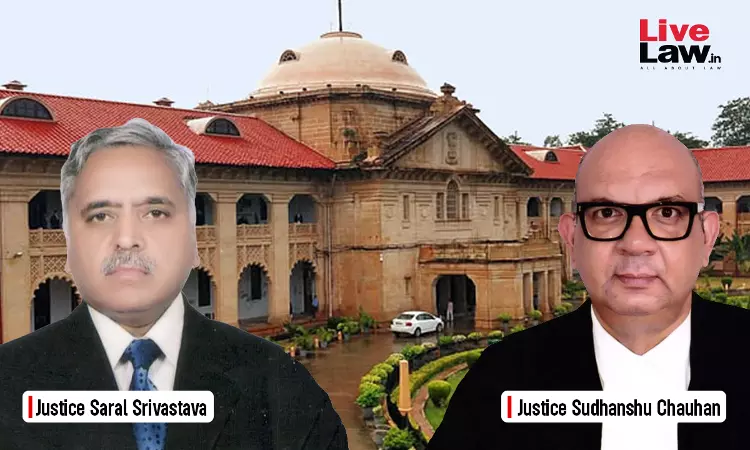
While holding that the ceiling case was abated, the bench of Justice Saral Srivastava and Justice Sudhanshu Chauhan held,
“We are well aware of the fact that the burden of proof of taking over possession of the land in proceedings under the Act, 1976, rests upon the State, however, in the present case, the respondents have utterly failed to discharge this burden.”
The petitioner is the grandson of Ram Nihor, the original landholder, who had filed a ceiling return under Section 6(1) of the Act, 1976. By order dated 20.05.1982 under Section 8(4), an area of 8,834.60 sq m at Village Hasanpur and Village Singhpur, Pargana Shivpur, Varanasi, was declared excess vacant. Notification under Section 10(3) was published in the State Gazette, a notice under Section 10(5) was issued for taking voluntary possession, and the land was said to have been handed over to the Varanasi Development Authority on 20.07.1998.
The land continued to be recorded in the name of Ram Nihor, who died in 1992, then of his son Lal Chandra, who died in 2014, and thereafter of the petitioner. It was recorded in the name of the State only by order dated 20.09.2021. An earlier writ petition had been disposed of on 15.06.2021 with a direction that it be treated as a representation. The representation was rejected by the impugned order dated 18.10.2023.
The petitioner argued that his grandfather was never served with the notice under Section 8(3) and the order under Section 8(4) was passed ex parte. It was also submitted that the notice under Section 10(5) was undated and never served, and no notice under Section 10(6) was issued. Possession having never passed, he claimed the benefit of the Repeal Act, 1999.
The State contended that the ceiling proceedings had concluded well before the Repeal Act came into force and that the petition, filed 25 years after possession was taken, was barred by delay. The Varanasi Development Authority said the petitioner had encroached on the land and built on it.
Perusing the record, the Court found that the order under Section 8(4) had been passed before the notice under Section 8(3) was issued.
“Thus, it is evident that the order dated 20.05. 1982 under Section 8(4) precedes the notice dated 05.08.1982 under Section 8 (3) of the Act, 1976 and as such has been passed without issuing any proper notice to the original land holder, Ram Nihor, and as such is not sustainable in the eyes of law.”
On possession, the Court observed that the notice under Section 10(5) was undated, and neither the counter affidavit nor the impugned order gave any date of its issue or service. It further noted that it carried no signature of the landholder, his representatives or two witnesses.
“Admittedly, no notice under Section 10(5) of the Act, 1976, has ever been served, and the respondents allege to be in possession of the land in dispute solely on the basis of the undated notice under Section 10(5). Thus, there is nothing on record to demonstrate, as to how and when the possession of the land in dispute was handed over to the respondents by the original landholder or his legal representatives at any point in time.”
Relying on Vishnu Vijay Bharti v. Fakhrul Hasan and others and The State of Haryana and others v. Amin Lal, the Court held that revenue records, though not documents of title, can raise a presumption of possession. It further held that the land having remained recorded in the names of the petitioner and his predecessors for more than 23 years after the alleged takeover in 1998 raised such a presumption in their favour.
Relying on State of U.P. v. Hariram, A.P. Electrical Equipment Corporation v. Tehsildar and others and Dalsukhbhai Bachubhai Satasia and others v. State of Gujarat and others, the Court reiterated that notice under Sections 10(5) and 10(6) is mandatory and must be served on the person in possession. It held that mere vesting under Section 10(3) does not give the State de facto possession, and the State must establish voluntary surrender, peaceful delivery under Section 10(5) or forceful dispossession under Section 10(6). There had been no forceful dispossession here, and the notice under Section 10(5) was never delivered, noted the Court.
On delay, the Court held that the petitioner had continued in possession before and after the Repeal Act came into force, that the revenue entries had stood in his family's name throughout, and he had come to court when those entries were sought to be mutated in favour of the State.
“We are of the view that the question involved in the present case is whether actual possession has been transferred at all to the respondents or not and not that of delay in approaching this Court”
Accordingly, the writ petition was allowed and the proceedings of Ceiling Case No. 486/2480/5523/81-82 were held to be abated. The Court directed respondent no.2 to expunge the entries in the name of the State and restore the revenue entries as they stood prior to the order dated 20.09.2021.
Tags


