



- Home
- /
- High Courts
- /
- Allahabad High Court
- /
- Unreserved Category Not A 'Residual...
Unreserved Category Not A 'Residual Avenue' For Candidates To Switch After Claiming Reservation: Allahabad High Court
Upasna Agrawal
23 Nov 2026 10:30 AM IST
The Allahabad High Court has held that a candidate who declared himself to belong to the Economically Weaker Section (EWS) category in his online application form cannot seek consideration in the Unreserved category later in the selection, where the advertisement makes the declared category valid only up to the last date for applying and provides no route for converting an...
This is a premium content
Available exclusively to
Our subscribers
Subscribe Premium 
INR 1099+GST
Your support helps us to bring you more content at
an affordable subscription scheme !!!
All payment options available
The Allahabad High Court has held that a candidate who declared himself to belong to the Economically Weaker Section (EWS) category in his online application form cannot seek consideration in the Unreserved category later in the selection, where the advertisement makes the declared category valid only up to the last date for applying and provides no route for converting an unsubstantiated reserved-category claim into an Unreserved one.
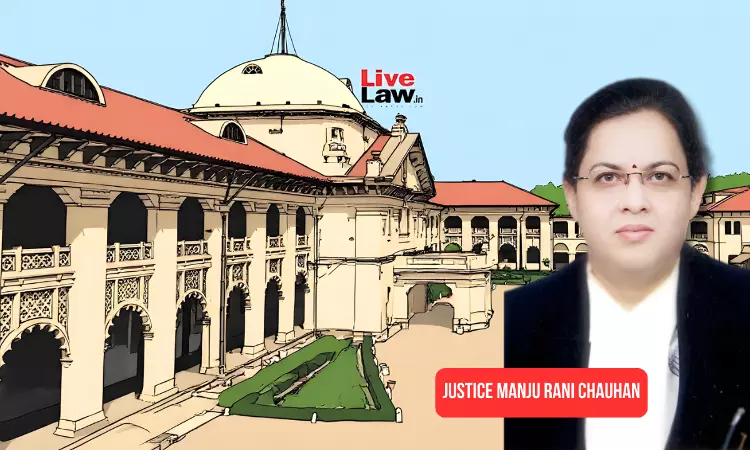
Justice Manju Rani Chauhan held,
“Undoubtedly, a reserved-category candidate who secures selection on the basis of his own merit, without availing any concession or relaxation, may be entitled to consideration against an Unreserved vacancy. However, such a principle cannot be divorced from the prescribed procedure or construed as conferring an unfettered right upon a candidate to alter the category declared by him at any stage of the selection process, irrespective of the express stipulations of the advertisement.”
“The Unreserved category is not a residual avenue which may be invoked at the convenience of a candidate after his original declaration has been acted upon by the Commission.”
Petitioner applied to the Uttar Pradesh Public Service Commission for the post of Lecturer in Textile Technology under its advertisement dated 15.09.2021, mentioning his category as EWS. He cleared the written examination held on 26.11.2025 in that category and was called for interview on 05.05.2026.
On 02.05.2026 he filed an affidavit stating that the EWS column had been marked owing to a clerical error, that he held no EWS certificate and did not intend to claim reservation, and that his candidature be considered in the General category. On the day of the interview he nonetheless undertook to produce the certificate by 20.05.2026, a pre-condition for being allowed to appear.
The select list notified on 25.06.2026 placed him at Serial No. 4 under the UR/EWS category, his selection shown as provisional. The Commission recommended 34 of the selected candidates for appointment, left out the petitioner, did not decide his representations, and by the impugned notification dated 16.10.2026 recommended Suraj Singh against the resultant vacancy. No order cancelling his candidature was ever served on him.
Petitioner pleaded that he had concealed nothing and taken no benefit of the EWS category, having paid the General category fee and competed on merit. Relying on Pankhudi Agarwal v. State of U.P., he argued that an unsubstantiated disclosure is not a deliberately false one, and that failure to substantiate a reservation claim may cost a candidate that reservation without costing him the selection.
The Commission relied on Clause 13.2 of the advertisement, which bars any correction of the declared category after the last date and provides for cancellation where false or misleading information is furnished. It contended that the undertaking of 05.05.2026, given when the petitioner knew he was not EWS, was a deliberate misrepresentation to gain entry into the interview.
The Court observed that the petitioner had consciously indicated the EWS category and, instead of standing by his affidavit, had gone on to promise the certificate within fifteen days. It held that the undertaking could not be read as an isolated procedural formality divorced from the earlier declarations.
“A candidate cannot be permitted to treat a solemn undertaking as a mere instrumentality for securing an opportunity to participate in the next stage of selection and subsequently disown the obligation voluntarily undertaken by him.”
While a reserved-category candidate selected on his own merit without concession may be considered against an Unreserved vacancy, the Court held, that principle confers no unfettered right to alter the declared category at any stage; the conditions of an advertisement bind candidate and recruiting authority alike and, on Bedanga Talukdar v. Saifudaullah Khan, cannot be relaxed except under an express enabling provision.
Examining Pankaj Singh v. State of U.P., where a Division Bench had directed that a candidate unable to furnish an OBC certificate be considered in the Unreserved category, the Court found that the protection there rested on an express instruction in that advertisement treating a candidate who failed to establish reservation as a General category candidate. Absent such a stipulation here, the petitioner could not claim a condition his own advertisement does not contain.
The Court however clarified,
“the mere furnishing of an inconsistent affidavit or failure to produce an EWS certificate cannot, without more, be elevated to a finding of fraud or deliberate misrepresentation; such a conclusion must necessarily rest upon the precise language of the advertisement and cogent material establishing the nature and effect of the petitioner's declaration.”
Noting that the petitioner had placed no material on record to show that he was in fact selected against an Unreserved vacancy on merit rather than under the EWS category he had declared, the Court held the cancellation legally sustainable and dismissed the writ petition.
Tags


