



- Home
- /
- High Courts
- /
- Allahabad High Court
- /
- Courts Can't Direct CBI To Secure...
Courts Can't Direct CBI To Secure Prosecution Sanction: Allahabad High Court Quashes Case Against Ex-DM In Illegal Sand Mining Case
Sparsh Upadhyay
27 July 2026 1:14 PM IST
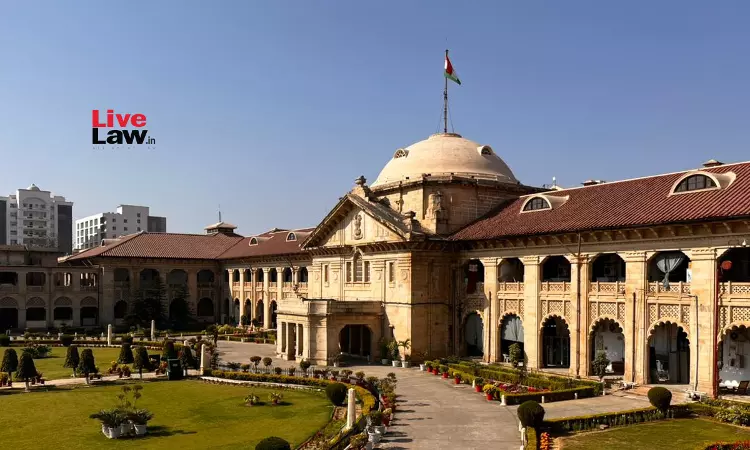
The Allahabad High Court recently observed that a trial court cannot direct the investigating agency, such as the CBI, to ensure that sanction for the prosecution of a public servant is obtained, as such a direction virtually amounts to directing the competent sanctioning authority to grant sanction, which is impermissible in law. A Bench of Justice Raj Beer Singh made the observation...
This is a premium content
Available exclusively to
Our subscribers
Subscribe Premium 
INR 1099+GST
Your support helps us to bring you more content at
an affordable subscription scheme !!!
All payment options available
The Allahabad High Court recently observed that a trial court cannot direct the investigating agency, such as the CBI, to ensure that sanction for the prosecution of a public servant is obtained, as such a direction virtually amounts to directing the competent sanctioning authority to grant sanction, which is impermissible in law.
A Bench of Justice Raj Beer Singh made the observation while allowing a quashing petition filed by former Saharanpur District Magistrate Pawan Kumar challenging an order of the Special Judge CBI Ghaziabad refusing to accept a CBI closure report and directing the agency to obtain prosecution sanction against him in connection with the alleged illegal renewal of sand mining leases in Saharanpur.
The High Court set aside the impugned order insofar as it related to Pawan Kumar, who is presently posted as Director in the Department of Rural Development, Delhi. The Court accepted the CBI closure report against him and quashed the proceedings.
Case in brief
Briefly put, an RC/First Information Report was registered following a preliminary enquiry into the alleged illegal renewal of 13 sand mining leases in Saharanpur.
After investigation, the CBI filed a closure report concluding that the allegations against Pawan Kumar could not be substantiated and that no material indicating criminal conspiracy, cheating or abuse of official position had been found against him.
However, the Special Judge refused to accept the closure report. While taking cognizance against several private accused, the trial court also directed the CBI to obtain sanction for prosecuting Pawan Kumar under the Prevention of Corruption Act.
Challenging this order, former DM moved the High Court arguing that he had merely acted in discharge of his official duties and pursuant to the directions issued by the State Government, he had collected factual reports from subordinate authorities and forwarded them to the Government.
It was his stance that he had no role in making any recommendation, approval, or independent opinion regarding renewal of the mining leases.
It was further contended that the Government alone was the competent authority to decide the issue of renewal and that no second renewal lease deed was ever executed because of an interim order passed by the High Court.
The CBI, on the other hand, argued that the petition under Section 482 CrPC was not maintainable as the applicant had not yet been summoned and the trial court had merely directed the agency to obtain prosecution sanction.
High Court's observations
Rejecting this preliminary objection, the High Court observed that since the trial courts had opined that a prima facie case existed against the applicant and a direction was issued to secure prosecution sanction, the order impugned adversely affected his rights.
The Court also said that the said direction of the trial court appeared against law. Hence, the single judge found the petition under Section 482 CrPC to be maintainable.
On the issue of sanction, the Court relied on the Supreme Court's decisions in Mansukh Lal Vithaldas Chauhan v State of Gujarat 1997 and State of Punjab v Mohd Iqbal Bhatti 2009 to reiterate that the power to grant or refuse sanction vests exclusively with the competent authority which must independently apply its mind to the material collected during investigation.
Referring to these judgments, the High Court observed thus:
“It is apparent that neither the Court nor any other authority can direct the sanctioning authority to grant or not to grant sanction of prosecution”.
The Court noted that although the Special Judge had directed the CBI to ensure that prosecution sanction was obtained the direction in substance amounted to directing the sanctioning authority itself and was, therefore, unsustainable in law.
In view of this, the bench said that the direction of the Special Judge to the CBI was contrary to the law and thus not sustainable.
Furthermore, on the merits of the case, the High Court noted that the material collected during the CBI investigation showed that the applicant had merely sought reports from subordinate officials as directed by the State Government and forwarded those reports without any alteration, recommendation or opinion.
There was nothing on record to indicate that he had submitted any false or misleading report or recommended renewal of the leases.
The Court further noted that after the State Government approved the second renewal, the applicant merely issued a consequential office order communicating the Government's decision to subordinate authorities.
Before any lease deed could actually be executed, however, the High Court in a separate public interest litigation restrained any further second renewal of mining leases. Consequently, no second renewal lease deed was ever executed. The Court found that the trial court's observation to the contrary was factually incorrect.
In view of these observations and the finding that no incriminating material was collected during the investigation against the applicant, Justice Singh observed that the Special Judge had failed to identify any material showing misconduct, abuse of official position, or participation in any criminal conspiracy.
The Court remarked that there was no material to show any misconduct on the part of the applicant to impute any criminal conspiracy to him.
It further observed thus:
"There is no such evidence which could indicate any criminal conspiracy on the part of the applicant…There is no material to show any abuse of the powers or any misconduct on the part of the applicant so as to attract the provisions of the Prevention of Corruption Act against the applicant".
Accordingly, the High Court concluded that no prima facie case was made out against the applicant, accepted the CBI closure report insofar as it related to him, quashed the proceedings and allowed the petition.
Senior Advocate GS Chaturvedi, assisted by Advocate Alok Ranjan Mishra, appeared for the applicant.
Advocate Rahul Srivastava appeared for the CBI.
Case Title - Pawan Kumar vs. Central Bureau of Investigation and Another 2026 LiveLaw (AB) 471
Case Citation: 2026 LiveLaw (AB) 471
Tags

Sparsh Upadhyay
Sparsh Upadhyay is an Associate Editor with LiveLaw.

