



- Home
- /
- High Courts
- /
- Allahabad High Court
- /
- Clarificatory Circular Issued After...
Clarificatory Circular Issued After Complaint But Before Decision Governs Pending Public Tender Complaint: Allahabad High Court
Upasna Agrawal
25 Aug 2026 7:00 PM IST
The Allahabad High Court has held that a clarificatory circular which comes into force after a complaint against a co-bidder is lodged, but before that complaint is finally decided, ordinarily governs the pending complaint. It held that such a circular would not apply only where it unsettles a right that has already crystallised, or where it is shown to have been framed to defeat an...
This is a premium content
Available exclusively to
Our subscribers
Subscribe Premium 
INR 1099+GST
Your support helps us to bring you more content at
an affordable subscription scheme !!!
All payment options available
The Allahabad High Court has held that a clarificatory circular which comes into force after a complaint against a co-bidder is lodged, but before that complaint is finally decided, ordinarily governs the pending complaint.
It held that such a circular would not apply only where it unsettles a right that has already crystallised, or where it is shown to have been framed to defeat an identified complaint.
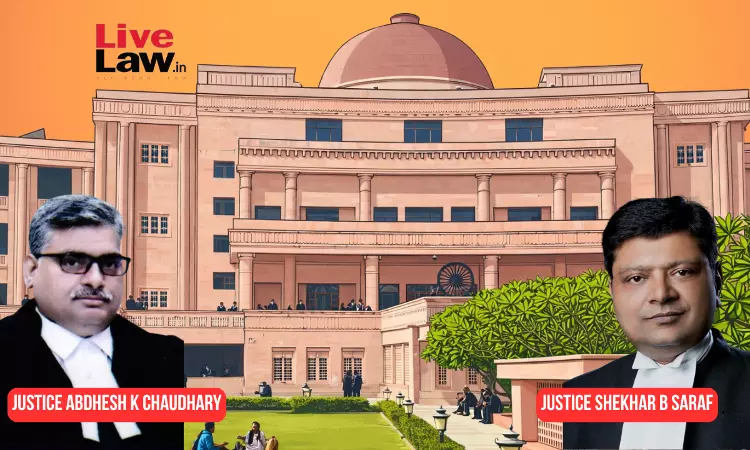
The bench of Justice Shekhar B. Saraf and Justice Abdhesh Kumar Chaudhary held,
“A procedural or clarificatory circular ordinarily governs pending proceedings unless it purports to reopen or unsettle a right that has already crystallised.”
Petitioner, a registered contractor, bid for the renovation and expansion of a press club in Ambedkar Nagar, estimated at Rs. 117 lakhs. After the technical bids were opened on 15th April 2026, petitioner objected on 17th April 2026 that respondent no. 6 had concealed an ongoing work under the Rural Engineering Department so as to misrepresent its bid capacity.
An office order dated 18th April 2026 of the Uttar Pradesh Public Works Department laying down a Standard Operating Procedure for technical bid evaluation. Clause 12 provided that concealed work of a contractor would be verified only where its cost exceeded 10 per cent of the invited tender cost, and that below that figure the bid capacity displayed on the Prahari portal would be re-evaluated by the Local Prahari Committee.
On 22nd April 2026 the Local Tender Evaluation Committee found the complaint meritorious and declared respondent no. 6's bid non-responsive. By report dated 2nd May 2026 the Headquarters Disposal Committee neither set aside that finding nor declared respondent no. 6 eligible, and remanded the matter for fresh consideration in light of the office order. Respondent no. 6 was then found technically qualified, declared L-1 and awarded the contract on 10th June 2026.
Petitioner approached the High Court seeking quashing of the report dated 2nd May 2026 and of the opening of the financial bid. It was argued that the office order could not govern a complaint already pending and the outcome of the remand was never communicated, petitioner learning of the reversal only when the financial bid was opened. It was argued that petitioner had been treated differently, in violation of Articles 14 and 19(1)(g), in a separate tender for the Bhiti Umrawan link road.
Respondent no. 6 pleaded that the office order was clarificatory, and that its undisclosed work cost Rs. 3.72 lakhs against a tender value of Rs. 117 lakhs, below the Clause 12 threshold. State authorities submitted that nearly two months of the six-month contract had run.
The Court held that the single day between the complaint and the office order did not by itself establish a design to defeat it, but declined to treat the timing as immaterial merely because the order was said to be clarificatory. It gave three reasons for applying the order: it did not abolish the category of complaint relating to ongoing works but only quantified it; it operated across all Public Works Department tenders in the State, in furtherance of a government order dated 05.12.2023; and “the SOP is clarificatory of an existing norm and does not create a new substantive disqualification or eligibility criterion with retrospective effect; it only structures the manner of applying a criterion that was already in force.”
The Court observed that on the date of the office order the complaint stood at stage 6 of the nine-stage e-tender process on the Prahari portal, no final order having been passed on it.
“According to this Court, the SOP is of general, State-wide application, and there is nothing to show it was drafted with the purpose to defeat the purpose of the petitioner's complaint. The petitioner's expectation of an outcome based on an unquantified reading of 'ongoing works' therefore does not rise to be a legitimate expectation whose frustration would, by itself, be actionable in judicial review. Further, we are unable to find any contemporaneous material on record suggesting that the SOP had been issued due to any malafide reason or that the same has been issued for this specific tender.”
On discrimination, the Court observed the two concealments were not comparable, being Rs. 3.72 lakhs against a tender of Rs. 117 lakhs here, as against Rs. 94.09 lakhs, or roughly 40 per cent, in a tender of Rs. 223 lakhs.
“Identical treatment of dissimilarly placed cases is not equality; Article 14 forbids the equal treatment of unequals as much as it forbids the unequal treatment of equals.”
Noting it was petitioner's un-rebutted case that the outcome of the remand was never communicated and that no proof of communication was produced, the Court held,
“A complainant who has succeeded before a committee is ordinarily entitled to know, by a reasoned and communicated order, why that finding was undone on remand by the same committee. The principle of audi alteram partem applies with particular force where an administrative reversal operates directly and adversely on a party who was not privy to the second round of consideration.”
Weighing that infirmity against the execution of the contract and the lapse of more than two months of the six-month period, the Court declined to quash the report dated 2nd May 2026, the opening of the financial bid or the award of the contract, and declined to restrain execution of the work.
Directing the State to communicate to petitioner within four weeks a reasoned order reflecting the basis on which respondent no. 6's bid was found eligible on remand, the Court disposed of the writ petition, leaving petitioner at liberty to pursue such remedies as may be available in law, including a suit for damages.
Case Title: Ranjana Pandey vs. State Of U.P. Thru. Prin. Secy. P.W.D. Lko And 6 Others 2026 LiveLaw (AB) 623
Case Citation: 2026 LiveLaw (AB) 623
Tags


