



- Home
- /
- High Courts
- /
- Allahabad High Court
- /
- Local Commissioner Can't Be...
Local Commissioner Can't Be Appointed Merely Because Opposite Party Disputes Inference Drawn From Documents On Record: Allahabad High Court
Upasna Agrawal
17 Nov 2026 11:10 AM IST
The Allahabad High Court has held that a Commissioner for local investigation cannot be appointed merely because the opposite party disputes the inference which a litigant seeks to draw from documents already brought on record. It held that the power is discretionary and cannot be used to collect evidence which a party is otherwise required to prove.Section 34(1)(c) of the Uttar Pradesh...
This is a premium content
Available exclusively to
Our subscribers
Subscribe Premium 
INR 1099+GST
Your support helps us to bring you more content at
an affordable subscription scheme !!!
All payment options available
The Allahabad High Court has held that a Commissioner for local investigation cannot be appointed merely because the opposite party disputes the inference which a litigant seeks to draw from documents already brought on record.
It held that the power is discretionary and cannot be used to collect evidence which a party is otherwise required to prove.
Section 34(1)(c) of the Uttar Pradesh Urban Buildings (Regulation of Letting, Rent and Eviction) Act, 1972 gives the Prescribed Authority and the Appellate or Revising Authority the same powers as a civil court in issuing a commission for local investigation.
The Court held that the power is referable to Section 75 read with Order XXVI Rule 9 CPC, under which a commission may issue only where local investigation is requisite or proper for elucidating a matter in dispute.
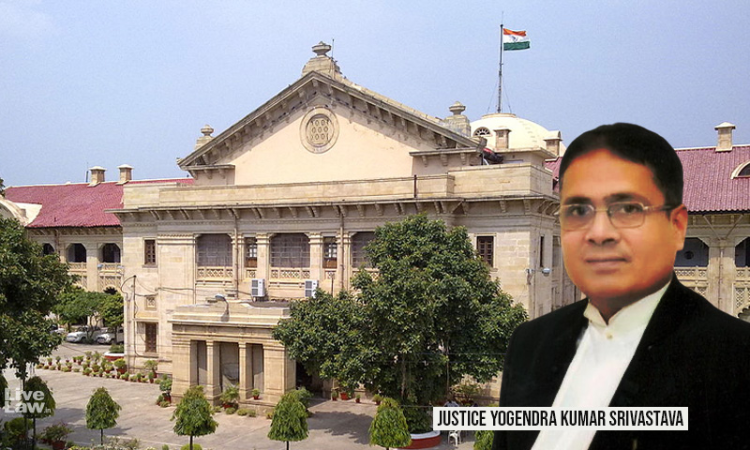
Justice Dr. Yogendra Kumar Srivastava held,
“The mere existence of a disputed question of fact, or a disagreement between the parties regarding the inference to be drawn from the evidence already on record, does not, by itself, justify appointment of a Commissioner. The proposed investigation must be shown to be requisite or proper for elucidating a matter in dispute.”
Respondent-landlords sought release of a shop in Property No. 151, Chowk Bazar, Najibabad, under Section 21(1)(a) of the 1972 Act, for a cosmetic business for the landlord's son. The Prescribed Authority allowed the release in December 2022.
In appeal before the District Judge, Bijnor, the tenant was permitted to bring on record, as additional evidence under Order XLI Rule 27 CPC, municipal tax assessment records which, according to him, showed vacant commercial shops in the same property. He then applied for appointment of a Commissioner to inspect the property, the landlords having disputed both the existence and the vacancy of those shops.
The Appellate Authority rejected the application in May 2026 as the assessment records were already available and no sufficient justification for a local investigation had been made out.
Before the High Court, the tenant pleaded that other commercial accommodation available with the landlords bore directly on their bona fide requirement, and that documentary entries and the actual physical condition of a property are distinct matters. He added that he was about 64 years of age and ran a stationery business from the shop, his family's only source of livelihood.
The landlords contended that the exercise was an attempt to collect evidence under the guise of local investigation.
The Court observed that the material founding the tenant's plea of alternative accommodation was already before the Appellate Authority and that the landlords' denial had to be adjudicated on the pleadings and evidence, not through an independent report obtained in support of one party's reading of the documents.
Relying on its recent decision in Romil Jain v. Ashok Kumar Jain and Another, it reiterated that the statutory language is enabling and confers no vested right to insist upon appointment of a Commissioner. It also noted that the release proceedings were instituted in 2017 and that an inspection now would show the position only as on the date of inspection.
Finding no jurisdictional error, patent illegality or material irregularity in the exercise of discretion by the Appellate Authority, the Court declined to interfere under Article 227 and dismissed the petition. It expected the Appellate Authority to decide the 2017 proceedings expeditiously without unnecessary adjournments, and clarified that it had expressed no opinion on the merits.
Tags


