



- Home
- /
- High Courts
- /
- Allahabad High Court
- /
- Does Anyone Still Call Advocacy A...
Does Anyone Still Call Advocacy A Noble Profession?: Allahabad High Court Orders Perjury Action Against Lawyers For Playing Fraud On Court
Sparsh Upadhyay
31 July 2026 5:34 PM IST
In a stern order passed on Thursday, the Allahabad High Court ordered initiation of criminal proceedings for Perjury against 2 lawyers after finding that they had secured a favourable order by "playing fraud on this Court".Making strong observations on the general public perception of the legal profession nowadays, it remarked that the Bar must introspect on "whether anyone other than the...
This is a premium content
Available exclusively to
Our subscribers
Subscribe Premium 
INR 1099+GST
Your support helps us to bring you more content at
an affordable subscription scheme !!!
All payment options available
In a stern order passed on Thursday, the Allahabad High Court ordered initiation of criminal proceedings for Perjury against 2 lawyers after finding that they had secured a favourable order by "playing fraud on this Court".
Making strong observations on the general public perception of the legal profession nowadays, it remarked that the Bar must introspect on "whether anyone other than the members of the Bar refer to the profession of advocacy as a noble profession anymore?"
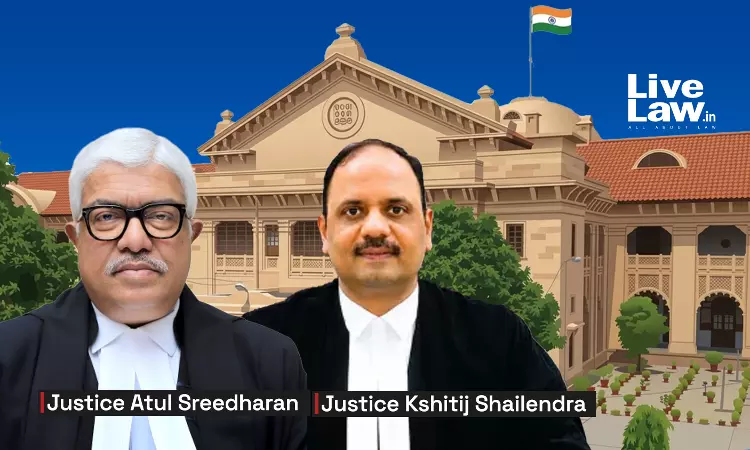
A Bench of Justice Atul Sreedharan and Justice Kshitij Shailendra made this observation while allowing a review petition filed by the Bareilly Development Authority (BDA) against a 2024 order of the HC directing payment of interest in a land acquisition matter.
Case in brief
The dispute arose from the acquisition of land belonging to the respondents. In an earlier writ petition, they had sought payment of interest in terms of an award dated April 26, 2016, passed by the Special Land Acquisition Officer.
The High Court had, on May 24, 2024, directed the BDA to pay interest at the rate of 9% for the first year and 15% thereafter until declaration of the award.
However, in the present review plea, the BDA pointed out that while the original award merely stated that interest would be payable "as per rules" from the date possession was taken until the award, the typed copy filed before the Court had inserted an entirely new clause providing for interest at 9% for the first year and 15% thereafter.
The writ petition itself also asserted entitlement to interest at those specific rates. The Court noted that it was this typed copy with the "unlawful addition", which was considered to be an honest and genuine reproduction of the original award, that the co-ordinate bench had passed the order under review.
High Court's observations
Though the advocates concerned argued before the division bench that the discrepancy was merely an inadvertent typographical error, the Justice Sreedharan-led bench rejected this explanation, observing that “a typographical error stands out from an act of deception”.
“Typographical errors may result in spelling mistakes or mistakes in calculation or numerical errors but where the interest @9% and 15% was never mentioned in the original award of 2016, adding the same in the typed copy was not an inadvertent error, it was misfeasance by the counsels,” the bench remarked.
It added that the advocates "knew exactly what they were doing" and had inserted the clause "to benefit monetarily and to secure for their clients, relief that they were not entitled to under the law."
The Bench further noted that had the advocates themselves approached the Court seeking correction upon noticing the mistake, the Court would have viewed the matter differently. It said that remorse arising from penitence for a wrong act is different from the fear of retribution from the Court upon discovery.
"Today the apologies are forthcoming only because the bluff of the counsels for the Respondents has been called and they fear of what may befall them and therefore, the prayer for mercy is rejected", the bench remarked.
Expressing deep concern over this matter, the Bench further observed thus:
"It is often said that the profession of advocacy is a noble profession however, a deep introspection is required by the Bar whether anyone other than the members of the Bar refer to the profession of advocacy as a noble profession anymore?"
The Bench noted that litigants approach courts out of "sheer exasperation, desperation and helplessness" because they have no alternative, and repose complete faith in their advocates to act with diligence and integrity.
The Court stated that if the counsel are let off at this point by merely accepting their apology, it would send the wrong message that "sharp practice is acceptable as long as it remains undetected and if caught, the court shall be forgiving".
The Court also referred to the 153-year legacy of the Allahabad High Court Bar Association and stressed that those indulging in such conduct must be dealt with severely to preserve the institution's traditions of integrity.
Against this backdrop, the bench refused to accep their apologies while holding that the earlier judgment had been obtained by fraud. The Bench, therefore, recalled the May 24, 2024 order.
It further directed the Bareilly Development Authority to initiate proceedings before the revenue authorities to recover the excess interest already paid to the beneficiaries as arrears of land revenue and commence the recovery process immediately.
Taking a serious view of the advocates' conduct, the Court held that their actions prima facie constituted an offence under Section 199 of the Indian Penal Code, punishable under Section 193.
Accordingly, it directed the Registrar General of the High Court to initiate proceedings under Section 340 CrPC, conduct the necessary inquiry and thereafter file an appropriate complaint before the competent Magistrate.
The Registrar General was also directed to file a complaint with the Bar Council of India and the State Bar Council, seeking cancellation of the licences of these counsel for their unpardonable conduct.
The Bench further directed that in all other writ petitions where the earlier May 24, 2024 judgment had been relied upon to claim similar relief, a copy of the present order be placed before the concerned courts along with appropriate applications.
Case title - Bareilly Development Authority vs. Ram Pal And 4 Others 2026 LiveLaw (AB) 502
Citation : 2026 LiveLaw (AB) 502
Tags

Sparsh Upadhyay
Sparsh Upadhyay is an Associate Editor with LiveLaw.

