'Attempt To Grab Publicity': Allahabad High Court Dismisses PIL Challenging Constitutional Provisions On Reservation For SCs & STs
Sparsh Upadhyay
20 Nov 2026 11:39 AM IST
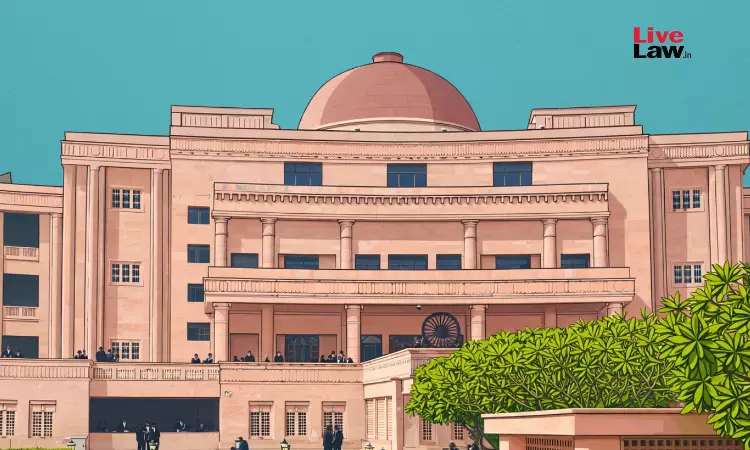
Reservation promotes equality by bringing underprivileged SC/ST sections at par with other citizens, says Allahabad HC
The Allahabad High Court on Tuesday dismissed a Public Interest Litigation (PIL) plea challenging several constitutional provisions relating to reservation for Scheduled Castes (SCs) and Scheduled Tribes (STs).
The Court observed that the petition, filed by a practising advocate, appeared to have been filed merely to grab unwarranted publicity and amounted to an attempt to "soil the solemn instrument of a PIL".
A Bench of Chief Justice Arun Bhansali and Justice Jaspreet Singh held that the petition was misconceived and suffered from several defects, including the absence of adequate disclosure of the petitioner's credentials, vague pleadings and improper impleadment of parties.
The petitioner in person (Mahendra Pratap Singh) approached the High Court seeking a writ of prohibition restraining the Union Government and all State Governments from operating Articles 15(4), 16(4A), 16(4B), 330 and 334 of the Constitution of India.


It was his case that Article 15(4), inserted through the First Amendment to the Constitution, was contrary to the Preamble's principle of equality and ought to be declared unconstitutional.
He also questioned the nomenclature of Scheduled Castes, describing the expression as defamatory and contrary to the spirit of Article 17 of the Constitution.
The petitioner further argued that reservation, which had initially been introduced for a limited period, had continued to be extended over the years and, therefore, the relevant constitutional provisions should be declared ultra vires.
At the outset, the Court noted that the petitioner had sought a writ in the nature of prohibition against the Union Government and all State Governments.
Rejecting the maintainability of such a prayer, the Bench observed that a writ of prohibition was not maintainable against the Union Government or a State Government, as it could only be issued against a judicial or quasi-judicial authority.
The Court also observed that Article 15(4), introduced by the First Amendment, could not be challenged in view of the protection afforded under the basic structure doctrine, as explained by the Supreme Court in Kesavananda Bharati v. State of Kerala.
It further noted that Article 330 was part of the original Constitution and the same was incorporated by the Constituent Assembly and hence, it was immune from challenge for that reason.
The Bench also took note of the fact that the petitioner had impleaded only the Union of India through the Ministry of Law, even though the relief sought was directed against all States as well.
The Court observed that the States against whom the relief had been claimed had not been impleaded as parties.
It further found that the petitioner's submissions concerning the use of the expression 'Scheduled Caste' were vague and unsupported by any material.
It noted that the petitioner had also not indicated whether he had raised or conveyed his views on the issue to the concerned government authority.
While addressing the petitioner's challenge to the reservation framework, the Court emphasised that the constitutional principle of equality of status and opportunity included the advancement of underprivileged sections, including Scheduled Castes and Scheduled Tribes.
The Bench observed thus:
"These are lofty and fine principles which have to be understood in the constitutional scheme and not to be treated as a paradox for raising frivolous challenge to the said provisions".
The Court noted that the provisions were incorporated to create an environment in which persons who had remained outside the mainstream could receive benefits to bring them at par with other citizens.
The Bench also took note of the petitioner's failure to disclose his credentials beyond stating that he was a practising advocate.
It observed that the mere fact that a person appeared in person and was a practising advocate did not, by itself, establish his credentials for maintaining a PIL.
In this regard, the Court referred to the Supreme Court's judgment in State of Uttarakhand v. Balwant Singh Chaufal, which laid down guidelines for preserving the purity and sanctity of public interest litigation and discouraging petitions filed for extraneous considerations.
In that case, the Top Court had said that courts must verify the credentials of PIL petitioners, examine the correctness of the information supplied and ensure that substantial public interest was involved.
It had also cautioned against allowing the PIL jurisdiction to be used for personal gain, private motives or publicity.
The High Court further referred to Chapter XXII Rule 1(3-A) of the Allahabad High Court Rules, 1952, which requires a PIL petitioner to specifically disclose their credentials, the public cause being espoused and the absence of any personal or private interest in the matter.
The Bench observed that the petitioner had not established his credentials in accordance with the requirements of the Rules.
Taking note of the manner in which the petition had been filed, the Court observed that it appeared to be “merely an attempt to grab some unwarranted publicity”.
It added that the petitioner, despite being a practising advocate with considerable experience, had failed to examine the principles and ethos underlying the constitutional provisions he sought to challenge.
Concluding that the petition was misconceived and appeared to have been filed to seek publicity, the Court observed dismissed it.