



- Home
- /
- High Courts
- /
- Allahabad High Court
- /
- Employer Can't Convert Duly...
Employer Can't Convert Duly Selected Employee Against Sanctioned Post Into 'Perpetual Contractual Employee' By Nomenclature: Allahabad High Court
Upasna Agrawal
25 Sept 2026 12:10 PM IST
The Allahabad High Court has held that where a person is selected through an advertisement for a regular vacancy against a sanctioned post under the applicable service rules, the employer cannot later treat him as a contractual employee merely by describing his engagement as ad hoc or contractual in successive orders. It held that an employee who accepts consolidated remuneration out of...
This is a premium content
Available exclusively to
Our subscribers
Subscribe Premium 
INR 1099+GST
Your support helps us to bring you more content at
an affordable subscription scheme !!!
All payment options available
The Allahabad High Court has held that where a person is selected through an advertisement for a regular vacancy against a sanctioned post under the applicable service rules, the employer cannot later treat him as a contractual employee merely by describing his engagement as ad hoc or contractual in successive orders. It held that an employee who accepts consolidated remuneration out of economic necessity does not thereby give up his statutory right to the prescribed pay scale.
The Court directed that a House Matron of U.P. Sainik School, Lucknow, who retired in 2024 after serving for around 26 years on a consolidated salary, be given the regular pay scale, increments, arrears and refixed pension.
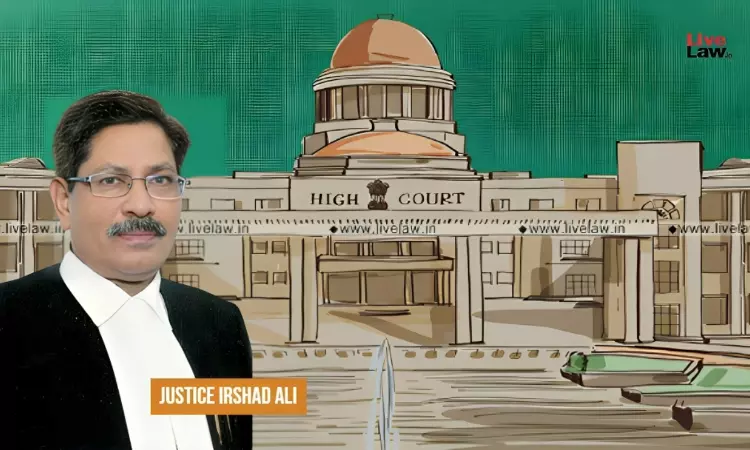
Justice Irshad Ali held,
“If the original appointment was made pursuant to a regular recruitment process against a sanctioned vacancy and the governing Rules did not provide for contractual appointment to the post, repeated descriptions of the petitioner as an “ad hoc” or “contractual” employee cannot, by themselves, alter the legal character of the appointment. The nomenclature employed by the employer cannot override the statutory Rules.”
Petitioner, who had retired from the Indian Navy, applied pursuant to an advertisement published in 1998 for the single vacant post of House Matron at U.P. Sainik School, Sarojini Nagar, Lucknow, run by the U.P. Sainik School Society which is funded by the State Government. The advertisement mentioned the regular pay scale for the post and did not state that the appointment would be contractual or for a fixed period. He was selected by a Selection Committee and appointed in June 1999, but on a consolidated salary of Rs. 3,600/- per month for a fixed term.
Over the next four years, his engagement was renewed through a series of orders describing it variously as temporary, ad hoc and contractual, several of which left gaps of a few days between terms. On 09.05.2003, his services were terminated on grounds that there was no further need for them. About a month later, the school advertised the post of House Matron. This advertisement and termination order was challenged before the High Court
In July 2003, the High Court stayed the termination and allowed the petitioner to continue on the consolidated wages he was drawing. The Society's special appeal against the interim order was dismissed. Petitioner continued as House Matron till he superannuated on 08.10.2024, claiming that he was paid only Rs. 6,000/- per month till then.
Counsel for petitioner submitted that the challenge to the 2003 advertisement had lost its relevance after his retirement, and the surviving dispute concerned the nature of his appointment, the consolidated salary and his entitlement to pay scale and pension. It was argued that the U.P. Sainik Schools (Ministerial Establishment) Service Rules, 1970 provided for direct recruitment to the post of Matron, prescribed the pay scale under Rule 20 even for temporary appointees and made no provision for contractual appointment.
It was argued that lapses in the selection were attributable to the employer, and acceptance of the consolidated salary by an unemployed candidate could not bar his challenge.
Counsel for the respondents argued that petitioner was never appointed on a regular basis or placed on probation, and was engaged purely on contract for specified periods. It was argued that his continuation was only due to the interim order, which gave him no right to the benefits of a regular employee. Reliance was placed on earlier decisions of the High Court concerning other employees of the school.
The Court observed that long service on a temporary or contractual basis does not by itself confer a right to regularisation. However, it found that Rule 3 read with Appendix I of the 1970 Rules included five posts of House Matron in the sanctioned establishment, the advertisement was issued under Rule 12 and carried the prescribed pay scale, and there was no allegation of fraud or misrepresentation by the petitioner. It held that the objections to the composition of the Selection Committee and the absence of a written test related to how the employer conducted the recruitment, over which the petitioner had no control.
“The petitioner was not a back-door entrant seeking regularisation after merely securing employment without any selection. He responded to a published advertisement for a sanctioned post, was subjected to a selection process, was found suitable and was thereafter appointed by the authority competent to make the appointment.”
Distinguishing Rajasthan State Roadways Transport Corporation v. Paramjeet Singh and Chief Executive Officer, Zila Parishad, Thane v. Santosh Tukaram Tiware, the Court noted that in those cases the appointments were contractual or stopgap from the outset, without any regular selection.
On State of Karnataka v. Umadevi, the Court held that there can be no regularisation of a person whose entry into service was illegal or made without a fair selection, but observed,
“The Constitution Bench decision cannot, however, be understood to confer upon a public employer an unrestricted power to convert an otherwise duly selected employee into a perpetual contractual employee contrary to the statutory Rules.”
Relying on Rule 20, the Court held that the Rules did not permit a person selected for a cadre post to be paid a consolidated sum in place of the prescribed scale indefinitely. It held that the condition of consolidated pay could not survive merely because the petitioner accepted it out of economic necessity.
“The subsequent acceptance of such remuneration does not constitute a waiver of a statutory right.”
Referring to Somesh Thapliyal v. Vice Chancellor, H.N.B. Garhwal University and Bhola Nath v. State of Jharkhand, the Court observed that an employee in public employment lacks bargaining power equal to the employer, and that the State cannot use its superior position to force terms contrary to the statutory scheme.
The Court held that the artificial breaks could not defeat the substance of the relationship, since the petitioner was re-engaged each time for the same duties against the same post. “The work itself did not disappear”, it observed.
It observed that the termination on grounds that his services were no longer needed was difficult to reconcile with the advertisement for the same post issued shortly thereafter.
Noting that there was nothing on record to show that the petitioner's probation under Rule 18 was extended with recorded reasons, and that his service was consistently appreciated, the Court held
“In these circumstances, the respondents cannot indefinitely postpone the statutory consequences of appointment by simply avoiding the formal order of confirmation.”
The Court clarified that its interim order was not the source of the petitioner's rights, but held that the period served under it could not be excluded.
Accordingly, the writ petition was allowed and the termination order dated 09.05.2003 was quashed. The challenge to the advertisement was disposed of as infructuous. The Court directed that petitioner be treated as having continued against the sanctioned post from his initial appointment, with his pay notionally fixed in the prescribed scale along with increments and pay revisions, after giving credit for amounts already paid.
Case Title: Pradeep Kumar v. State of U.P. Through Special Secy. Govt. of U.P. Civil Sece 2026 LiveLaw (AB) 751
Citation: 2026 LiveLaw (AB) 751
Tags


