



- Home
- /
- High Courts
- /
- Allahabad High Court
- /
- 'Highly Reprehensible': Allahabad...
'Highly Reprehensible': Allahabad High Court Imposes ₹1 Lakh Costs On UP Govt For Denying Minimum Pay To Forest Dept Daily Wagers
Upasna Agrawal
30 Oct 2026 1:10 PM IST
Court expressed "anguish" at the State for making poor daily wagers run from pillar to post for their rightful claim.
The Allahabad High Court has held that a writ court may grant relief at the interim stage which amounts to the final relief, where the legal position has already been settled by the Supreme Court and there is nothing on record to show that the petitioner would not ultimately succeed.Dismissing two State appeals against interim orders directing payment of the minimum pay scale to daily wagers...
This is a premium content
Available exclusively to
Our subscribers
Subscribe Premium 
INR 1099+GST
Your support helps us to bring you more content at
an affordable subscription scheme !!!
All payment options available
The Allahabad High Court has held that a writ court may grant relief at the interim stage which amounts to the final relief, where the legal position has already been settled by the Supreme Court and there is nothing on record to show that the petitioner would not ultimately succeed.
Dismissing two State appeals against interim orders directing payment of the minimum pay scale to daily wagers of the Forest Department, the Court imposed costs of Rs. 1,00,000.
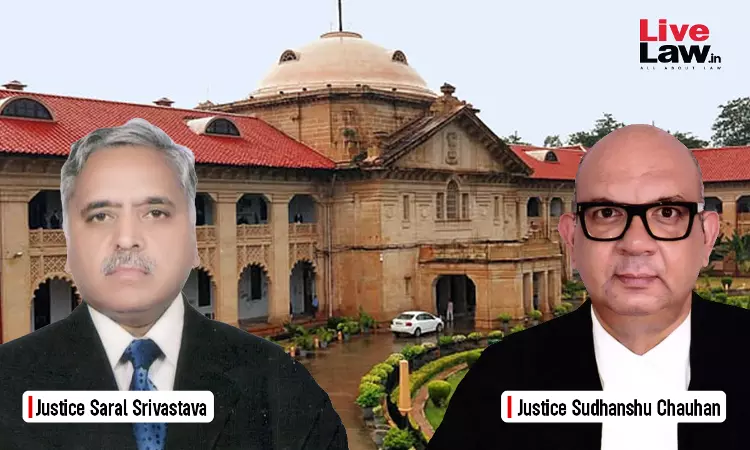
The bench of Justice Saral Srivastava and Justice Sudhanshu Chauhan held,
“Further the denial of such benefit at the interim stage, and providing the same at the stage of final hearing after exchange of pleadings would have caused severe hardship and injury to the petitioner-respondent, by denial of a claim to which he was legally entitled and there is nothing on record to demonstrate that the petitioner-respondent would not have ultimately succeeded in the writ petition.”
Respondent claimed that he had been working as Chowkidar/ Watcher/ Prabhari in the Divisional Forest Office, Obra, District Sonebhadra since July 2009, and was being paid Rs. 6,162 per month instead of the minimum pay of a Class IV employee in the Forest Department, which is Rs. 18,000 per month.
By order dated 08.07.2026, the Single Judge directed payment of the minimum pay admissible to a regular Class IV employee of the Forest Department, on a month to month basis, with a rider that the respondent would get no allowances or increments. Reliance was placed on an earlier order of the Court in Keshav Prasad v. State of U.P. The State filed Special Appeals.
Appellants argued that the guidelines dated 24.09.2024 framed by the Forest Department on wages to daily wagers had not been declared illegal in Pavneesh Giri v. State of U.P., where a Co-ordinate Bench held them to be administrative instructions and not a government order, leaving their validity to a pending writ petition. It was also argued that the order was passed without hearing them, that final relief could not be granted at the interim stage, that Keshav Prasad had no precedential value, and that the respondent was engaged only for short seasonal spells against no sanctioned post.
Per contra, respondent argued that the guidelines stood declared illegal, and that in Putti Lal, this Court had required the State to pay the minimum pay scale to every daily wager discharging duties identical to those of a regular Class IV employee. It was submitted that the order was passed after hearing the State on its own instructions, and that the same benefit had been extended to Keshav Prasad.
The Court recorded that on 30.09.2026 it had asked the Principal Secretary, Forest, to explain why the appeal had been filed when the controversy stood settled by the Apex Court. His affidavit of 06.10.2026 described the respondent as a casual plantation protection worker.
Tracing the history of the dispute, the Court noted that the direction to pay daily wagers the minimum of the pay scale without allowances or increments was issued in Putti Lal and affirmed by the Apex Court. It observed that contempt proceedings in Hari Shankar v. State of U.P. rejected the Department's attempt to confine the benefit to those eligible for regularisation.
Further, in Deputy Director Social Forestry Division v. Lakshmi Chandra, the Apex Court affirmed those orders and directed that the Principal Secretary, Forests and the Principal Chief Conservator of Forests would not draw their salaries if the orders went unimplemented.
It also referred to State of Punjab v. Jagjit Singh and Sabha Shankar Dube v. Divisional Forest Officer, where the Apex Court held temporary employees entitled to the minimum of the pay scale applicable to regular employees in the same post.
The Court held that the guidelines of 24.09.2024, being contrary to Putti Lal, were clearly illegal and could not be relied on to deny the claim. The plea of denial of hearing was found contrary to the record, the appellants having filed instructions, twice sought time and never filed a counter affidavit.
Turning to the grant of final relief at the interim stage, the Court observed,
“despite the passage of about 30 years, the daily wagers working in the Department of Forest, Government of U.P. are being made to run from pillar to post for their rightful claim of minimum pay scale and the appellants have left no stone upturned to deny the said legitmate claim to the daily wagers including the petitioner-respondent on one flimsy pretext or the other.”
Relying on Ashok Kumar Bajpai v. Dr. (Smt.) Ranjana Bajpai and Deoraj v. State of Maharashtra, the Court noted that interim relief amounting to the final relief may be granted in rare and exceptional cases, where a prima facie case of a much higher standard exists and withholding it would leave nothing to grant at the end of the hearing.
Keshav Prasad having been granted the very benefit denied to the respondent, the Court held that the appellants were acting in a pick and choose manner, arbitrarily and illegally, and contesting such cases to the hilt.
The plea of intermittent engagement was held to be frivolous on the appellants' own material, the chart annexed to the Principal Secretary's affidavit showing between five and twelve months of work in every year from 2019 to 2025, and two months up to February 2026. In Bhagwan Dass v. State of Haryana, the Court noted, the temporary nature of a scheme or appointment was held irrelevant once the work is shown to be similar.
Before parting, the Court recorded,
“Before we part we express our anguish and displeasure in the manner in which the State-appellants have been contesting the claims of the poor daily wagers in the Department of Forest, Government of U.P., despite the controversy being settled long ago up to the stage of the Apex Court. Such an act on the part of the State Authorities is not only arbitrary and illegal but smacks of mala-fides. This is a very highly reprehensible situation, wherein despite repeated directions of this Court and the Apex Court, the Forest Department refuses to pay the minimum pay scale to the daily wagers engaged on one frivilous pretext or the other.”
Accordingly, both the appeals were dismissed with costs quantified at Rs. 1,00,000, of which Rs. 50,000 is payable to the respondent in each appeal, within one month.
Tags


