



- Home
- /
- High Courts
- /
- Allahabad High Court
- /
- 'Helpless Girl' Allegedly Murdered...
'Helpless Girl' Allegedly Murdered By Own Family: Allahabad High Court Denies Anticipatory Bail To Aunt, Uncle In 'Honour Killing' Case
Sparsh Upadhyay
4 Aug 2026 11:03 AM IST
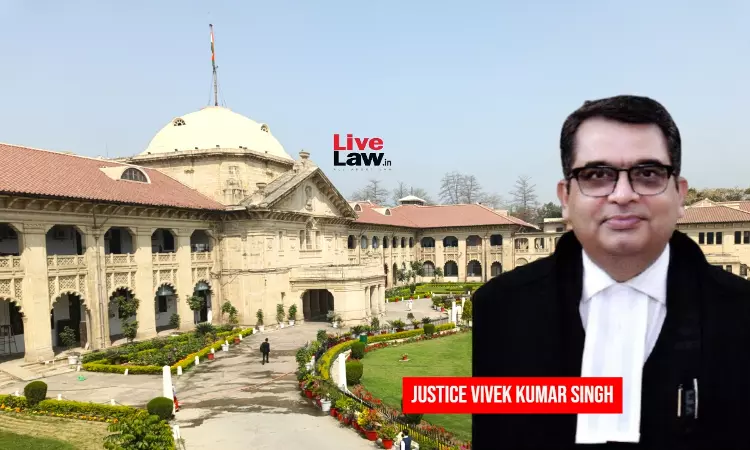
The Allahabad High Court last week refused anticipatory bail to the aunt (bua) and uncle (fufa) of a woman allegedly murdered in an 'honour killing' in Agra, observing that the case involved serious allegations and that the applicants' custodial interrogation was necessary to unearth the truth.The Court also noted that the applicants had allegedly remained absconding for the past 7 months...
This is a premium content
Available exclusively to
Our subscribers
Subscribe Premium 
INR 1099+GST
Your support helps us to bring you more content at
an affordable subscription scheme !!!
All payment options available
The Allahabad High Court last week refused anticipatory bail to the aunt (bua) and uncle (fufa) of a woman allegedly murdered in an 'honour killing' in Agra, observing that the case involved serious allegations and that the applicants' custodial interrogation was necessary to unearth the truth.
The Court also noted that the applicants had allegedly remained absconding for the past 7 months despite the issuance of non-bailable warrants.
Rejecting the plea, Justice Vivek Kumar Singh observed that the power to grant anticipatory bail is an extraordinary discretionary remedy and should be exercised sparingly, only in exceptional cases.
"At this stage, there is no material on record to hold that a prima facie case is not made out against the applicants. The material that has come on record and the preliminary investigation, appear to establish a reasonable basis for the accusations", the Court further remarked.
Case in brief
As per the prosecution's case, the informant and the deceased (Anshu Yadav) were in a relationship, which was opposed by her family members.
The FIR, lodged against 7 named persons including the applicants, alleges that on October 24, 2025, a day before the alleged incident, the deceased sent a 29-second video to the informant stating that her family members wanted to kill her.
It is further alleged that she was murdered on October 25, 2025, and that her dead body was carried in a car and was thrown into the Yamuna River near the Bhind Bypass, Village Sunwara, District Etawah.
According to the investigation, the victim's body was recovered on the pointing out of the co-accused (Ranveer Singh Yadav), the deceased's father, who happens to be a retired SHO with the UP Police.
Since the cause of death could not be ascertained; therefore, the bones and hair of the deceased were sealed and sent to Forensic Science Laboratory, Agra, for DNA examination. The investigation is presently under progress.
Applicants' case
The applicants contended that they had been falsely implicated merely because they were relatives of the deceased's father.
They argued that the allegations in the video were vague and that there was no evidence connecting them with the alleged murder.
It was also contended that the recovered remains had not yet been identified through DNA testing and there was neither any forensic report establishing the authenticity of the video nor any call detail which could place the applicants at the scene.
They also claimed that one of the applicants, a serving Sub-Inspector, was on official duty on the date of the alleged incident.
Opposing the plea, the State and the first informant submitted that the deceased herself had specifically named the applicants in the video recorded before her death.
The bench was also apprised that the investigation revealed that the applicants were also present on the Yamuna Bridge, from where the dead body of the deceased was thrown into the river.
It was also submitted that Applicant no. 1 is a police officer and that he would misuse his position and tamper with the evidence if anticipatory bail is granted to him.
Lastly, it was also stated that the applicants were not cooperating with the investigation, and that non-bailable warrants had already been issued against them.
High Court's observations
While considering the submissions of both sides, the High Court referred to the Supreme Court's decision in Bhagwan Dass v. State (NCT of Delhi) 2011, wherein the apex court took a serious view of honour killing cases.
The High Court observed that the investigating officer was still collecting evidence to connect the applicants with the alleged crime and that granting anticipatory bail at this stage would hamper the investigation.
It also noted that the deceased had allegedly named the applicants in the video recorded before her death and that they had continued to evade the process of law despite non-bailable warrants having been issued against them.
The Court further relied on Supreme Court judgments in Srikant Upadhyay vs. State of Bihar, P. Chidambaram vs. Directorate of Enforcement, Kishor Vishwasrao Patil vs. Deepak Yashwant Patil and Sushila Aggarwal vs. State (NCT of Delhi), to reiterate that anticipatory bail is an extraordinary remedy and is not to be granted as a matter of rule, particularly where the accused is absconding or not cooperating with the investigation.
Distinguishing the Supreme Court's judgment in Bhadresh Bipinbhai Sheth vs State of Gujarat, relied upon by the applicants, Justice Singh observed:
"In the present matter, a helpless girl was allegedly murdered by her own family members in her house. Before her death, she allegedly made a video nominating the applicants and other co-accused".
Concluding that the investigation was still at a preliminary stage, the Court held that custodial interrogation of the applicants was necessary to unearth the truth.
It found no material to conclude that the applicants had been falsely implicated and observed that the preliminary investigation appeared to establish a reasonable basis for the accusations against them. The anticipatory bail application was accordingly dismissed.
Case title - Murari Lal And Another vs State Of U.P. And 3 Others 2026 LiveLaw (AB) 519
Case Citation: 2026 LiveLaw (AB) 519
Tags

Sparsh Upadhyay
Sparsh Upadhyay is an Associate Editor with LiveLaw.

