



- Home
- /
- High Courts
- /
- Allahabad High Court
- /
- Indefinite Blacklisting Violates...
Indefinite Blacklisting Violates Articles 14 & 19(1)(g): Allahabad High Court Quashes Order Passed Without Considering Defence
Upasna Agrawal
19 Jan 2026 4:08 PM IST
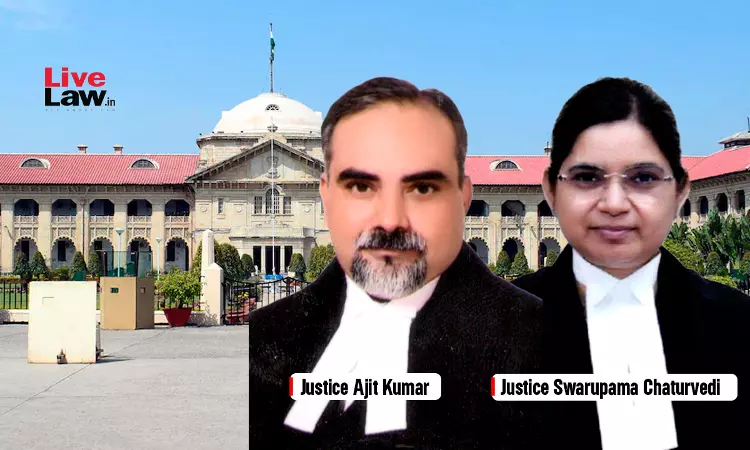
Holding that an administrative order cannot be "excessively punitive nor devoid of reasoned legal justification", the Allahabad High Court recently quashed a blacklisting order passed by a District Basic Education Officer (BSA) against a service provider.The bench of Justice Ajit Kumar and Justice Swarupama Chaturvedi held “Debarment has been recognized as a method of disciplining...
This is a premium content
Available exclusively to
Our subscribers
Subscribe Premium 
INR 1099+GST
Your support helps us to bring you more content at
an affordable subscription scheme !!!
All payment options available
Holding that an administrative order cannot be "excessively punitive nor devoid of reasoned legal justification", the Allahabad High Court recently quashed a blacklisting order passed by a District Basic Education Officer (BSA) against a service provider.
The bench of Justice Ajit Kumar and Justice Swarupama Chaturvedi held
“Debarment has been recognized as a method of disciplining deviant suppliers, however, an order of debarment can never be for an indefinite period…the Court must balance the need to protect public interest with procedural fairness, ensuring that administrative measures such as blacklisting are neither excessively punitive nor devoid of reasoned legal justification. Indefinite blacklisting order cannot be legally justified as it carries serious civil consequences and therefore, it must be based on clear reasons, a defined duration, and adherence to principles of natural justice.”
The bench also ruled that indefinite blacklisting amounts to a "civil death" and is legally unsustainable, as it is arbitrary, disproportionate and violative of Articles 14 and 19(1)(g) of the Constitution.
The Petitioner (M/S Wizitec Pvt Ltd) participated in a tender issued by the State Government under the Samagra Shiksha Abhiyan and was selected for the execution of training-related work (specifically supplying 168 ECCE Educators).
Certain issues were raised regarding the candidates supplied by the petitioner and an alleged expansion of scope requiring a merit list of 504 candidates.
After seeking replies from the petitioner, the impugned order was passed in November 2025 by Respondent No. 4 (District Basic Education Officer), blacklisting the petitioner for an indefinite period. Accordingly, the petitioner approached the High Court.
The Court observed that the impugned order did not consider the replies and supporting documents filed by the petitioner and also did not mention the duration for blacklisting.
Relying on various Supreme Court judgments wherein it has been held that permanent debarment or debarment for an indefinite period was unlawful, the Court held
“The respondents assert that blacklisting was taken in public interest, but absence of any document to provide basis for such extreme action, failure to consider petitioner's defense, and indefinite nature of the blacklisting order indicates towards the arbitrariness and unfairness in action, which cannot be permitted in law. The blacklisting order impugned in the petition does not disclose any duration and therefore the order is legally unsustainable and liable to be quashed as arbitrary, disproportionate, and violative of Articles 14 and 19(1)(g) of the Constitution.”
Holding that the District Basic Education Officer did not have the power to order the petitioner's debarment, as his role is limited to forwarding complaints to the District Magistrate, who is designated as the decision-making authority, the Court quashed the order of blacklisting.
It directed that if the petitioner moved the representation before the District Magistrate, the same may be considered and decided after giving due opportunity of hearing to the petitioner.
Case Title: M/S Wizitec Private Limited Versus State Of Uttar Pradesh And 3 Others 2026 LiveLaw (AB) 28 [WRIT - C No. - 44710 of 2025]
Citation: 2026 LiveLaw (AB) 28
Tags


