



- Home
- /
- High Courts
- /
- Allahabad High Court
- /
- Including Dead Persons As...
Including Dead Persons As Prosecution Witness Goes To Root Of Matter, Shows Non-Application Of Mind Rendering Probe Unreliable: Allahabad HC
Upasna Agrawal
30 Dec 2025 5:30 PM IST
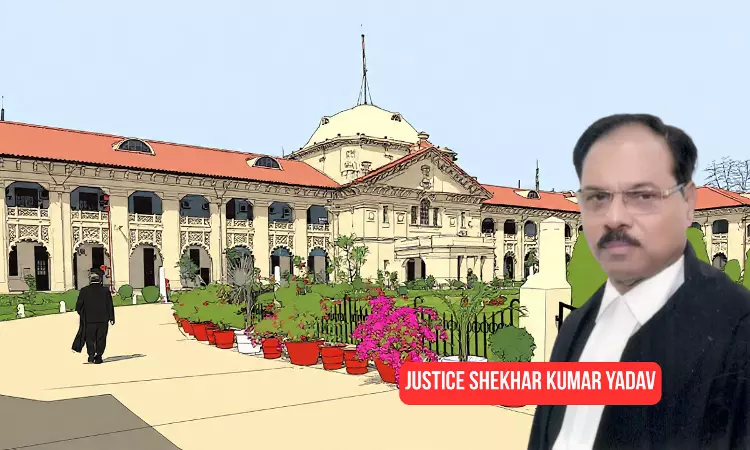
The Allahabad High Court has held that investigation is rendered unreliable and legally unsustainable if dead persons are included as prosecution witnesses without any explanation.Justice Shekhar Kumar Yadav held “The inclusion of deceased persons as prosecution witnesses, without any explanation, goes to the root of the matter and reflects non-application of mind during investigation,...
This is a premium content
Available exclusively to
Our subscribers
Subscribe Premium 
INR 1099+GST
Your support helps us to bring you more content at
an affordable subscription scheme !!!
All payment options available
The Allahabad High Court has held that investigation is rendered unreliable and legally unsustainable if dead persons are included as prosecution witnesses without any explanation.
Justice Shekhar Kumar Yadav held
“The inclusion of deceased persons as prosecution witnesses, without any explanation, goes to the root of the matter and reflects non-application of mind during investigation, thereby rendering the investigation unreliable and legally unsustainable.”
An FIR was lodged in 2022 in Gautam Budh Nagar alleging irregularities in allotment and subsequent transfer of agricultural land of village Chitahera, Tehsil Dadri. It was alleged that in 1997, 282 allottee were granted leases but some were ineligible and they had illegally executed sale deeds with third parties for these lands. It was further alleged that certain land was reserved for Scheduled Caste community and was transferred illegal, thereby invoking Section 3(1)(f) of the SC/ST (Prevention of Atrocities) Act along with offences under Sections 420, 467, 468, 471, 384 and 120-B IPC.
The proceedings pursuant to the FIR were challenged by the appellant on grounds that he was falsely implicated without any evidence against him. It was argued that the land allotment had already been through multiple judicial proceedings and had been upheld by the revenue courts. It was also contended that certain witnesses named in the chargesheet had died way before the investigation commenced.
Perusing the FIR, the Court observed that the allegations against the appellant were general and no specific role or transaction was attributed to him. Referring to Anand Kumar Mohatta v. State (NCT of Delhi), the Court held that once the titles and disputes had been settled in civil and revenue proceedings, continuation of criminal proceedings would be an abuse of the process of law.
Further, it was held that there was no evidence regarding preparation or use of forged documents by the appellant. It was also held that merely because the informant belongs to scheduled caste would not bring any offence under the SC/ST Act. It has to be shown that the acts were committed because of the SC/ST status of the victim.
Noting that the witness statements also did not attribute any role to the petitioner, the Court held that cognizance order had been passed in a routine and mechanical manner.
“Criminal prosecution cannot rest on assumptions or conjectures, particularly when the FIR itself is silent about the appellant. Record also discloses that investigation carried out in the present matter suffers from grave and fatal irregularities as the Charge sheet dated 06.02.2023 includes various witnesses out of which five witnesses had died years before the investigation commenced and this fact conclusively establishes that the investigation is faulty, unfair, and biased and continuing the case would amount to an abuse of the judicial process and result in a miscarriage of justice,” held the Court.
Noting that several other accused in the same FIR had been granted relief by the coordinate benches, the Court held that there was no case made out against appellant and the dispute was civil which was being given a criminal nature.
Holding that the SC/ST had been invoked after 2 decades (from 1997) without meeting the requirements of the statutory provisions, the Court quashed the entire criminal proceedings arising out of the impugned case crime.
Case Title: Maloo v. State of U.P. and Another [CRIMINAL APPEAL No. - 11855 of 2025]


