



- Home
- /
- High Courts
- /
- Allahabad High Court
- /
- Plea Of Lawyer's Mistake Not Enough...
Plea Of Lawyer's Mistake Not Enough To Reopen Evidence After Party Expressly Closes Its Case: Allahabad High Court
Upasna Agrawal
25 Nov 2026 3:15 PM IST
The Allahabad High Court has held that a bare plea of inadvertence on the part of counsel does not entitle a party to reopen its evidence after it has itself endorsed that no further evidence is required. It held that where the witness was named in the party's own list and was available to be produced, the party must explain why he was left unexamined despite the opportunity and why the lapse...
This is a premium content
Available exclusively to
Our subscribers
Subscribe Premium 
INR 1099+GST
Your support helps us to bring you more content at
an affordable subscription scheme !!!
All payment options available
The Allahabad High Court has held that a bare plea of inadvertence on the part of counsel does not entitle a party to reopen its evidence after it has itself endorsed that no further evidence is required.
It held that where the witness was named in the party's own list and was available to be produced, the party must explain why he was left unexamined despite the opportunity and why the lapse was not corrected before the suit reached final arguments.
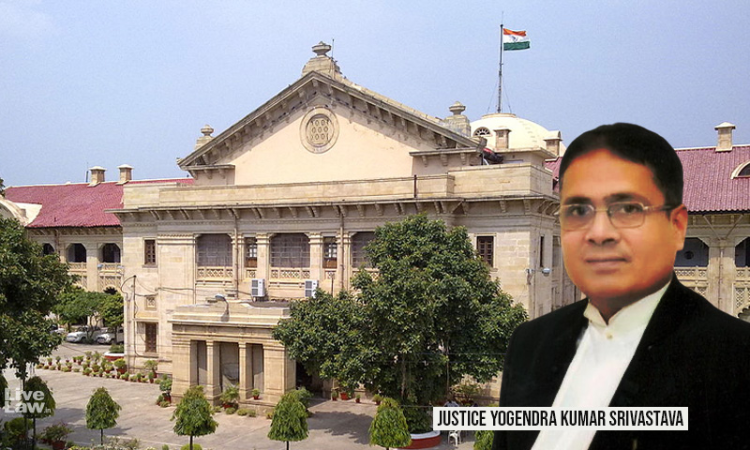
Justice Dr. Yogendra Kumar Srivastava held,
“An omission attributable to counsel cannot be rejected merely on the ground that it was a consequence of inadvertence. At the same time, the assertion of inadvertence must be examined in the context of the proceedings as a whole and the circumstances in which reopening was sought. A general assertion of mistake, without sufficiently explaining why the identified witness was not produced despite the opportunity available, and why the omission was not addressed before the matter advanced to final arguments, does not, by itself, furnish sufficient grounds for reopening the evidence.”
The landlord had sued in SCC Suit No.16 of 2015 for eviction of the tenant from a shop on Ramghat Road, Aligarh, for default in rent. The tenant named Sameer Sharma, a handwriting expert, among his witnesses on 21.04.2025 and examined D.W.-1 to D.W.-4 by 24.07.2025. On 31.07.2025 he had it endorsed that no further evidence was required; his evidence was closed and the suit fixed for arguments, the expert unexamined.
Only after the landlord's counsel had concluded arguments on 21.02.2026 and filed written arguments did the tenant apply to recall that order and examine the expert, attributing the omission to his counsel's mistake and saying the testimony would show the rent receipts to be forged. The trial court refused on 09.03.2026 and the revision was dismissed on 13.08.2026. Before the High Court he added that his advanced age and physical disability bore on the explanation, and that costs could meet any prejudice to the landlord.
Citing its decision in Dr. Ravi Bhushan v. Nitin Kumar, the Court distinguished a party denied a reasonable opportunity to lead evidence from one which, having had that opportunity, closed its evidence itself.
“An express closure of evidence does not, by itself, operate as an absolute bar to reopening, but it is a material circumstance which calls for a satisfactory explanation before the Court exercises its discretion to permit further evidence.”
Nothing showed that the need for the expert had arisen only after the closure, and the material did not explain how age or disability had stood in the way. The relevance of a disputed document, the Court held, does not by itself establish that a particular witness must be permitted once the evidentiary stage is over, and costs do not displace that threshold. The plea of inadvertence having been weighed against the whole sequence of proceedings, the discretion of the courts below could not be called arbitrary or legally unsustainable.
Finding no jurisdictional error or material illegality warranting interference under Article 227 of the Constitution of India, the Court dismissed the petition and directed the trial court to decide the suit expeditiously, uninfluenced by observations on the merits.
Tags


