



- Home
- /
- High Courts
- /
- Allahabad High Court
- /
- LPG Distributor Has No Legitimate...
LPG Distributor Has No Legitimate Expectation To Retain Customers It Enrols On Behalf Of Oil Companies: Allahabad High Court
Upasna Agrawal
11 Aug 2026 2:35 PM IST
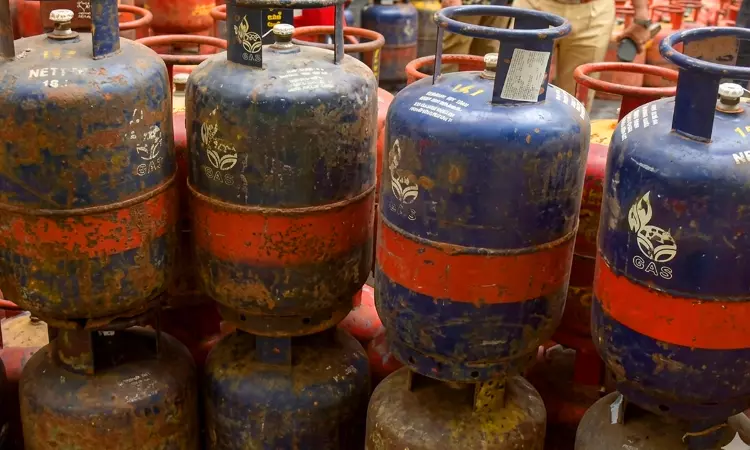
The Allahabad High Court has held that an LPG distributor has no legitimate expectation to retain customers on its rolls, as those customers are enrolled on behalf of the Oil Marketing Companies and not for the distributor itself. Upholding the Policy on Customer Transfer-Market Restructuring dated 21st Febraury 2025, the Court held that a distributor which has accepted the clauses of the...
This is a premium content
Available exclusively to
Our subscribers
Subscribe Premium 
INR 1099+GST
Your support helps us to bring you more content at
an affordable subscription scheme !!!
All payment options available
The Allahabad High Court has held that an LPG distributor has no legitimate expectation to retain customers on its rolls, as those customers are enrolled on behalf of the Oil Marketing Companies and not for the distributor itself.
Upholding the Policy on Customer Transfer-Market Restructuring dated 21st Febraury 2025, the Court held that a distributor which has accepted the clauses of the Letter of Intent, the LPG Manual and the Distributorship Agreement permitting curtailment of its area of operation and customer base cannot assail the policy without challenging those clauses.
The Unified Guidelines for selection of LPG distributorship issued by the Ministry of Petroleum and Natural Gas fix a refill ceiling limit for each market, restructuring being planned only after refill sale exceeds that ceiling by 50%. Clause 4.4 of the LPG Manual permits the oil companies to alter a distributorship's area of operation and binds the distributor to surrender, transfer or accept customers.
Clause 4.6 requires customers to be transferred on an intra or inter company basis under prevailing policy guidelines. Clause 4.7 records that the customer is enrolled by the distributor on behalf of the oil company, which is at liberty to service its customers through any distributor.
The bench of Justice Saral Srivastava and Justice Sudhanshu Chauhan held,
“Once, the distributor has agreed to Clause 4.7 of the LPG Manual which is also the part of the Distributorship Agreement, the distributor cannot claim that customers enrolled by him are his customers, and therefore, he has legitimate expectation to retain those customers.”
Petitioner, a partnership firm, was appointed a distributor of LPG cylinders by the Indian Oil Corporation Limited. The distributorship was commissioned in 1994 and restructured in 1998, the last subsisting agreement having been executed on 10th June 1998. It pleaded that it had invested heavily in infrastructure and manpower, and that it caters to about 36,000 customers with an average refill of 24,500 cylinders a month.
An earlier Market Restructuring-Transfer of Customers Policy of 2018 was quashed by the Bombay High Court in 2019, and SLP against that judgment is pending before the Supreme Court without stay.
Petitioners challenged the fresh policy of 21st February 2025 on the ground that forced transfer of customers had been retained without curing the defect pointed out by the Bombay High Court.
The Court held that the policy had been introduced to address the increase in LPG penetration following the Ujjawala Yojana of 2016, launched to supply clean cooking fuel to rural and deprived households then using firewood, coal and cow dung.
“So, the object behind issuing the New Policy is to address the increase of LPG penetration in the country after the introduction of 'Ujjawala Yojna 2016' and by implementation of New Policy, it will benefit public at large as it has been issued to smooth supply of LPG cylinders to its customer and also to save those from health hazard who are using traditional cooking fuel which is harmful to their health and is noxious to environment. Thus, the purpose of issuing New Policy is benign.”
The Court held that Clause 1(ii) of the policy retains every donor distributor at 100% of its refill ceiling limit and leaves the oil companies no discretion to go below it, while Clause 1(viii)(c) supplies the formula, with an illustration, for calculating the customers to be transferred. Counsel could not show the formula to be inaccurate, or the fixation of the ceiling and viability limits to be arbitrary or mala fide, held the Court.
Declining to follow the Bombay High Court, the Court held
“We beg to differ from the aforesaid observation of the Bombay High Court because the Bombay High Court did not notice certain relevant clauses of LPG Manual, Dealership agreement and LOI.”
The Bombay High Court, it found, had held the agreement confined to area or territory and not to customers without considering Clause 2 of the Letter of Intent, Clauses 4.4, 4.6 and 4.7 of the LPG Manual or Clause 1(a) and (b)(iii) of the agreement.
“In the absence of any challenge to various clauses of LOI, LPG Manual and Distributorship Agreement authorising OMC's to reduce the area of operation, appointment of additional distributor and reduction in customers, the distributor cannot raise a grievance with regard to reduction in customer base.”
On legitimate expectation, the Court relied on Union of India and Others Vs. Hindustan Development Corporation and Others and Ram Pravesh Singh and Others Vs. State of Bihar and Others, wherein the Supreme Court held that the doctrine is a creature of public law aimed at combating arbitrariness in executive action. It was held that a legitimate expectation is one ordinarily flowing from a promise or an established practice. Such expectation must be real, logical and founded on consistent official conduct, held the Apex Court.
The Court held that the distributors may well have invested heavily but they had always known they were enrolling customers on behalf of the oil companies, and no promise had been made that those customers would remain theirs.
“The distributor right from the inception knew that they are bound by Clause 4.7 of LPG Manual, and if the business was not viable for them, they should not have joined venture.”
The Court further held,
“Doctrine of legitimate expectation would not attract where public interest is involved. In the instant case, we have already detailed above the object for introducing New Policy which is for the benefit of the public, and for this reason also, the petitioners cannot invoke the principle of doctrine of legitimate expectation in the present case.”
The plea of prospective operation of the policy was rejected as the petitioners have no vested right to retain the customers enrolled by them. Clauses 4.4 and 4.6 of the LPG Manual were held to be independent provisions serving different objects. The Court rejected the contention that the policy benefited laggards as misconceived, as no material was placed on record to substantiate it.
Relying on Apex Court's decision in State of M.P. and Others Vs. Nandlal Jaiswal and Others and Directorate of Film Festivals & Others Vs. Gaurav Ashwin Jain & Others, the Court reiterated that the legality and not the wisdom of a policy is the subject of judicial review, interference being warranted only where a policy is irrational, arbitrary or mala fide.
The Court also concurred with the Kerala High Court in Vembanad Gas Agencies Vs. Union of India and Others, which had refused to let the distributor's business efficacy prevail over the interest of the consumer of a public utility service.
Accordingly, all the writ petitions were dismissed.
Case Title: Vikramaditya Gas Agencies vs. Union of India and 3 others 2026 LiveLaw (AB) 564
Case Citation: 2026 LiveLaw (AB) 564
Tags


