



Bigamous Marriage By UP Govt Servant Can Attract Major Penalty For Contracting It Without Govt Permission: Allahabad High Court
Upasna Agrawal
9 Oct 2026 4:10 PM IST
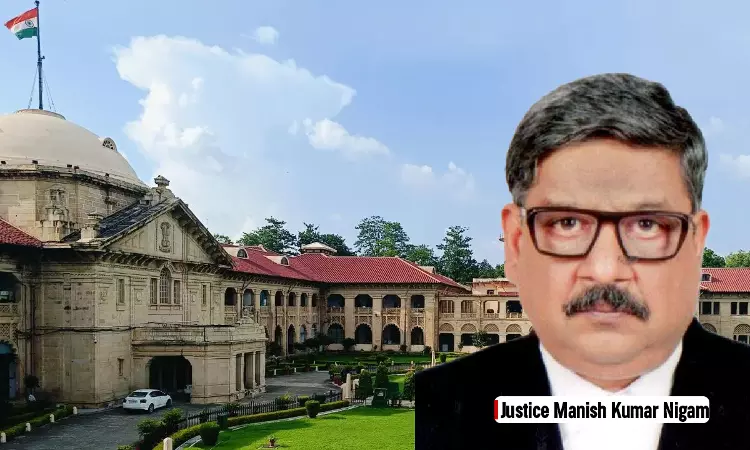
The Allahabad High Court has held that a government servant who contracts a bigamous marriage without obtaining the Government's permission can be subjected to a major penalty, as the punishment for violation of Rule 29(1) and (2) of the U.P. Government Servants' Conduct Rules, 1956, is now within the discretion of the appointing authority.
Justice Manish Kumar Nigam noted that sub-rule (3) of Rule 29, which had prescribed withholding of increments for three years as the minimum punishment for violating the prohibition on bigamous marriages, was deleted in 1976 and was never reintroduced. Accordingly, a government servant cannot claim that only a minor penalty can be imposed for such misconduct.
The judge held,
“Since Sub-rule (3) of Rule 29 of 1956 Rules has already deleted in the year 1976, it cannot be held that in case of violation of Sub-rule (1) & (2) of Rule 29 of 1956 Rules, only minor penalty i.e. stoppage of three increments can be passed. In my view, it is the discretion of the appointing authority depending upon the facts and circumstances of the case to award punishment for violation of Sub-rule (1) and (2) of Rule 29 of 1956 Rules.”


Petitioner, a constable in the U.P. Police, was served with a charge sheet dated 22.03.2025 under Rule 14(1) of the U.P. Police Officers of Subordinate Ranks (Punishment and Appeal) Rules, 1991, charging that after entering police service she married one Durgesh Kumar Gautam without divorcing her first husband, in breach of Rule 29 of the 1956 Rules. She challenged the charge sheet before the High Court.
It was argued for her that Rule 14(1) lays down the procedure for a major penalty, while sub-rule (3) of Rule 29 fixed withholding of increments for three years for breach of sub-rules (1) and (2), a minor penalty, so that proceedings could at best have been drawn under Rule 14(2). Reliance was placed on Kamaluddin Khan v. State of U.P., Prabhat Bhatnagar v. State of U.P. and Aneeta Yadav v. State of U.P.
Standing Counsel submitted that sub-rule (3) had been deleted by the U.P. Government Servant Conduct (4th Amendment) Rules, 1976, and the decisions relied upon had been delivered without noticing the deletion.
The Court traced Rule 29 through its amendments: sub-rule (2) inserted in 1956, sub-rule (3) added in 1964, and the rule substituted in 1976 with only sub-rules (1) and (2) left standing. No amendment restoring sub-rule (3) could be shown.
Each decision cited for the petitioner, the Court found, had proceeded on the unamended rule.
“Since all the judgments are passed without considering the effect of the amended provision by which Sub-rule (3) has been deleted, there is no binding of precedent.”
The Court held the challenge to the charge sheet to be misconceived for a further reason.
“Initiation of an inquiry/departmental proceedings under Rule 14(1) of 1991 Rules which prescribes the procedure for award of major penalty does not mean that the disciplinary authority is under an obligation to impose major penalty only, in case the proceedings are initiated under Rule 14(1) of 1991 Rules.”
Accordingly, the writ petition was dismissed.


