



- Home
- /
- High Courts
- /
- Allahabad High Court
- /
- Mandatory For Police To Prosecute...
Mandatory For Police To Prosecute Informants Of False FIRs; IOs To Face Contempt For Non-Compliance: Allahabad High Court
Sparsh Upadhyay
15 Jan 2026 3:11 PM IST
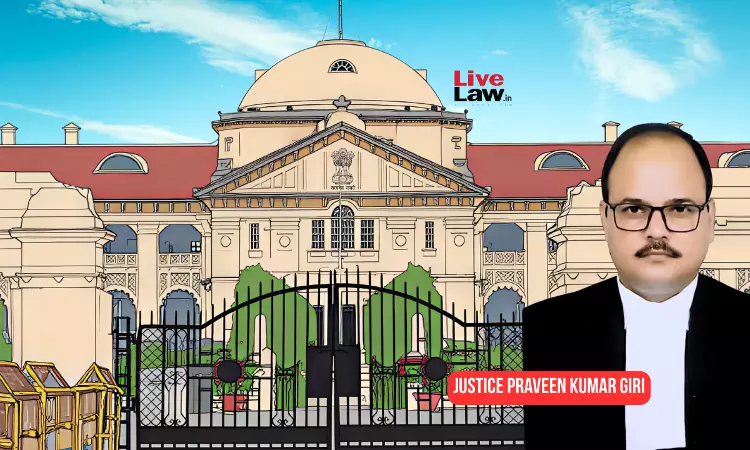
In a significant order, the Allahabad High Court has issued a strict mandamus to the police machinery in the state to mandatorily initiate prosecution against individuals/informants who lodge false or malicious First Information Reports (FIRs).A bench of Justice Praveen Kumar Giri held that if an investigation reveals that an FIR was based on false information, the IO is...
This is a premium content
Available exclusively to
Our subscribers
Subscribe Premium 
INR 1099+GST
Your support helps us to bring you more content at
an affordable subscription scheme !!!
All payment options available
In a significant order, the Allahabad High Court has issued a strict mandamus to the police machinery in the state to mandatorily initiate prosecution against individuals/informants who lodge false or malicious First Information Reports (FIRs).
A bench of Justice Praveen Kumar Giri held that if an investigation reveals that an FIR was based on false information, the IO is “statutorily obligated” to file a formal complaint against the informant under Section 215(1)(a) BNSS (corresponding to Section 195(1)(a) CrPC).
The Court also warned that failure to do so would render the police officers liable for prosecution under Section 199(b) BNS (public servant disobeying direction of law) and departmental action.
In this regard, specific directions have been issued to the Director General of Police, Commissioner of Police, Senior Superintendent of Police, Superintendent of Police, as well as all the Investigating Officers, Station House Officers and Forwarding Officers, i.e. Circle Officers, Additional SP, SP and Public Prosecutors.
Case in brief
The bench passed this order on an application filed u/s 528 BNSS by one Umme Farva. It was her case that her husband/Informant (Opposite Party No. 2) had lodged an FIR in 2023, where he alleged that after their divorce, the applicant and her partner were threatening him on Facebook.
The police registered the case against the wife-applicant under Sections 504 and 507 of the IPC.
However, upon investigation, the police found the allegations to be baseless and filed a Final Report (Closure Report) on June 19, 2024, and exonerated the wife. The husband then filed a Protest Petition.
On October 23, 2024, the Chief Judicial Magistrate (CJM) of Aligarh allowed the protest petition and rejected the closure report. The judicial officer also took cognizance of the offence under Section 190(1)(b) CrPC and summoned the wife-applicant to face trial in the “State Case”.
The applicant-wife then moved the present petition challenging the order of the Magistrate as her counsel argued that no offence was made out against her and the Judicial Officer concerned failed to appreciate the evidence collected during the course of investigation in its right perspective.
On the other hand, the counsels for the Informant-husband (opposite party no.2) argued that there was no illegality or infirmity in the cognizance-cum-summoning order as a prima facie case was made out against the applicant.
High Court's observations
At the outset, Justice Giri pointed out a fundamental procedural error made by the Magistrate. He noted that the Judicial Magistrate erroneously passed cognizance-cumsummoning order under Section 506 and 507 IPC for a non-cognizable offence in derogation of the provisions of CrPC.
The Court noted that the Judicial Magistrate had neither converted the police report disclosing 'non cognizable offence' into 'complaint' as per the provision of Explanation to Section 2(d) of CrPC, nor took cognisance under Section 190(1)(a) CrPC to proceed as a 'trial of summons-case' instituted on complaint.
“In the present matter, the learned Chief Judicial Magistrate, Aligarh has not followed the provisions of law and treated a non-cognizable offence as a cognizable offence,” the bench said.
The HC also found faults with the Magistrate's move of taking cognisance under Section 190(1)(b) CrPC and summoning the applicant-wife without affording her an opportunity of hearing provided under First Proviso of Section 223 BNSS, and also erroneously proceeded as a trial of a summons case instituted on a police report rather than a complaint.
On the other hand, the Court also noted that even the SHO had misused the process of law in the beginning by registering an FIR treating the case as cognizable offence, rather than treating it as non-cognizable report under Section 155 CrPC.
Thus, the bench prima facie opined that in the present case, there was an abuse of the process of the court as well as the code by which fundamental right provided under Article 21 of the Constitution of India had been violated.
The bench also pointed out that the IO, while filing the final report (closure report) vis-a-vis the wife/accused-applicant failed to file a written complaint against the informant-husband for offences committed under Section 177 (Knowingly furnishing false information to a public servant) and 182 IPC (False information, with intent to cause public servant to use his lawful power to the injury of another person).
The Court specifically held that Sections 177 and 182 of the IPC (corresponding to Sections 212 and 217 of the BNS) cannot be made 'redundant'. It remarked thus:
“If the police machinery has been misused by furnishing false, frivolous, or misleading information, a written complaint as per Section 215(1) BNSS... must be filed... Failure to do so will render the purpose of Section 212 and Section 217 BNS redundant.”
The Court also added that a Judicial Magistrate shall not accept the Final Report if the same is not accompanied by a written complaint, under Sections 177 and 182 IPC.
Against this backdrop, the bench issued the following directions:
- In case a final report i.e. closure report is submitted in favour of alleged accused, the Judicial Magistrates/Courts will not only receive the entire case diary along with documents and final report i.e. closure report, but also direct the IOs nvestigating for submitting written complaint against informant, as well as witnesses of the FIR as provided under section 195(1)(a) CrPC for furnishing false information.
- The Judicial Magistrates/ Courts, first of all, while taking cognizance of the offences after perusal of entire case diary and documents, if prima facie appears otherwise, invite protest petition from the informant and after hearing the informant, if find that offences is made out, take cognizance either under Section 190(1)(a) or 190(1)(b) Cr.P.C. (corresponding Section 210(1)(a) or 210(1)(b) BNSS).
- If no offence is made out, then proceeds on the written complaint, which is submitted by the Investigating Officer under Section 195(1)(a) Cr.P.C. (corresponding Section 215(1)(a) BNSS) in respect of offence of Section 177 and 182 IPC for furnishing false information against the alleged accused of the FIR to use the police his lawful power to cause injury to the alleged accused persons.
- The Director General of Police, will instruct all police officers within the State that while completing the investigation, if a final report (closure report) exonerating the accsed is submitted in the court, then in every case, where the police machinery has been misused by furnishing false, frivolous, or misleading information, a written complaint as per Section 215(1) BNSS (corresponding Section195(1) Cr.P.C.) must be filed before the competent Magistrate/Court of offence mentioned under Section 212 and 217 BNSS against the informant and witnesses of the case crime.
- In case of final report/closure report filed under section 193 of BNSS (corresponding Section 173 CrPC), the police shall also submit a report in the form of complaint as prescribed Section 215(1)(a) BNSS to the concerned Judicial Magistrate/Court for taking cognizance of offences provided under section 212 and 217 BNS against informant and witness in case the final report/closure report is accepted and the protest petition is rejected.
- If an IO does investigation and ultimately found that no offence is made out, he is duty bound to submit a written complaint for giving false information to the police under Section 212 and 217 of BNS for taking cognizance as provided under section 215(1)(a) BNSS
- Otherwise, the Investigating Officer, Station House Officer and Forwarding Authority, i.e. Circle Officer and Public Prosecutor, shall be liable for committing an offence as mentioned under Section 199(b) BNS (corresponding Section 166A(b) of IPC).
The Court further provided that if the observation made by it is not followed in letter and spirit, it would amount to contempt of court and the aggrieved person may approach this Court for appropriate action against such contemptuous conduct of the police authorities as well as the judicial officers.
All the exercise shall be done within 60 days from the date of this order by the police authorities as well as the judicial officers to regulate judicial proceedings in accordance with law, the bench added.
Importantly, the High Court expressly provided a draft template (in both Hindi and English) for police officers to use when filing complaints against false informants.
The format includes specific averments that the allegations were found "false, frivolous and malicious" and lists the necessary witnesses, including independent witnesses who negated the incident.
On the merits of the case, the Court quashed the cognizance order dated October 23, 2024, and remanded the matter to the CJM, Aligarh, to pass a fresh order within three months.
Advocate Satish Kumar Dubey, holding the brief of Advocate Manoj Kumar Pandey, appeared for the applicant.
Advocate Najam Uz Zaman Khan appeared for OP No.2
AGA Pankaj Kumar Tripathi, for the State.
Case title - Umme Farva vs. State of U.P. and Another 2026 LiveLaw (AB) 25
Citation: 2026 LiveLaw (AB) 25
Tags

Sparsh Upadhyay
Sparsh Upadhyay is an Associate Editor with LiveLaw.

