



- Home
- /
- High Courts
- /
- Allahabad High Court
- /
- 'Deeply Regrettable': Allahabad...
'Deeply Regrettable': Allahabad High Court Flags Repeated Litigation Over PwBD Eligibility For MBBS, Says Boards Can't Re-Assess Disability
Upasna Agrawal
25 Sept 2026 7:02 PM IST
The Allahabad High Court has held that the Medical Assessment Board constituted under the National Medical Commission's guidelines for admission of persons with benchmark disabilities to the MBBS course cannot re-determine the percentage of disability already certified under Section 57 of the Rights of Persons with Disabilities Act, 2016. It held that the Board's mandate is confined to...
This is a premium content
Available exclusively to
Our subscribers
Subscribe Premium 
INR 1099+GST
Your support helps us to bring you more content at
an affordable subscription scheme !!!
All payment options available
The Allahabad High Court has held that the Medical Assessment Board constituted under the National Medical Commission's guidelines for admission of persons with benchmark disabilities to the MBBS course cannot re-determine the percentage of disability already certified under Section 57 of the Rights of Persons with Disabilities Act, 2016.
It held that the Board's mandate is confined to assessing the functional competency of the candidate to pursue the course, and re-quantifying disability is an excess of jurisdiction.
Section 56 of the Act empowers the appropriate Government to notify guidelines for assessing the extent of a disability and to specify the certifying authority, and Section 57 designates that authority, which in the present case was the Chief Medical Officer of the district.
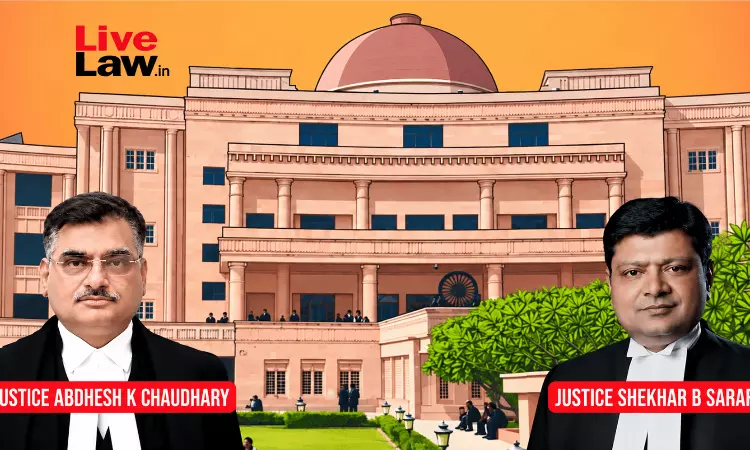
The bench of Justice Shekhar B. Saraf and Justice Abdhesh Kumar Chaudhary observed,
“It is a deeply regrettable state of affairs that, notwithstanding the statutory primacy and binding nature of the Disability Certificate issued by the Competent Authority under Section 57 of the Rights of Persons with Disabilities (RPwD) Act, 2016, this Court remains continuously inundated with repetitive writ petitions during each successive academic session.”
Shubham Mishra held a certificate from the Chief Medical Officer, Sultanpur, recording 45% permanent disability under the head of chronic neurological conditions, diagnosed as Bell's Palsy, and a Unique Disability ID card issued on 02.12.2023. He secured an All-India Rank of 948 in the PwBD category in NEET (UG) 2026. His co-petitioners were certified at 50% for profound hearing loss and 40% for blindness.
Before counselling, every candidate with a disability had to obtain an eligibility certificate on functional competency. By certificate dated 11.08.2026, the Medical Assessment Board found Mishra capable of completing the MBBS course, but scaled his benchmark disability down from 45% to 20% and held him ineligible for PwD reservation. The Appellate Medical PwD Assessment Board affirmed that conclusion on 21.08.2026.
Challenging the aforesaid, petitioner argued that the guidelines issued by the Commission on 27.07.2026 were meant only to test whether an aspirant could pursue medical education with reasonable accommodation and assistive technology, quantification of disability being the exclusive province of the certifying authority.
Respondents submitted that the prescribed format itself carries a column for the percentage of benchmark disability, and that eligibility fell to be tested under Clause 12.4 of the guidelines.
The Court held that once a certificate under Section 57 remains unrevoked, unchallenged and subsisting, the percentage recorded in it is the statutory determination of that fact and binds all authorities unless set aside by a competent forum. It observed that Clause 3.17 of the guidelines adopts the definition of PwBD under Section 2(r) of the Act and that Clause 9.1 anchors the 40% threshold in the Act itself.
“..the domain of the Board is circumscribed to the effect as to whether, notwithstanding the disability already certified and quantified under the Act of 2016, the candidate possesses the functional capacity, with or without reasonable accommodation and assistive technology, to pursue and complete the MBBS course. This is an assessment of capability to study medicine, not a re-assessment of the fact or extent of disability.”
Noting that the Supreme Court in Omkar Ramchandra Gond v. Union of India, Om Rathod v. The Director General of Health Services and Anmol v. Union of India had held that a quantified disability cannot by itself disqualify a candidate, the Court held itself bound by the coordinate Division Bench judgment in Somya Pal v. Union of India, which had taken the same view.
A column in a form, the Court held, cannot confer jurisdiction withheld by the parent statute, and any clause of the guidelines authorising the Board to re-determine the quantum of benchmark disability would be ultra vires the Act and offend Article 14. On examining Clause 12.4, it held that the clause does not authorise the Board to quantify disability at all.
“Further, we are rather surprised that when clause 12.3(b) of the guidelines in specific terms declare that 'No candidate shall be declared ineligible solely on the basis of the percentage of benchmark disability recorded in the UDID Card or disability certificate', how the Assessment Board invent some deleterious tactics to declare a candidate ineligible by reducing the percentage of disability in its eligibility certificate.”
Holding that both Boards had travelled outside the field entrusted to them and encroached on the exclusive statutory domain of the certifying authority, the Court quashed the conclusions of ineligibility recorded in the Eligibility Certificates and in the Medical Opinions on Appellate Reassessment, leaving the finding of functional competency undisturbed.
It directed that the petitioners be treated as eligible candidates under the PwBD reserved category for NEET (UG) 2026 counselling, made the interim orders absolute, and directed that seats provisionally allotted under those orders not be disturbed. The requirement of a functional competency assessment was clarified to stand undiluted, and the Commission was left at liberty to issue clarificatory instructions to all Assessment Boards.
Case Title: Shubham Mishra vs. Union of India, Thru. Secy. Ministry Of Health And Family Welfare, New Delhi And 10 Others 2026 LiveLaw (AB) 756
Case Citation: 2026 LiveLaw (AB) 756
Tags


