



- Home
- /
- High Courts
- /
- Allahabad High Court
- /
- Objective Test For Compassionate...
Objective Test For Compassionate Appointment Applicants Reasonable When Vacancies Are Limited: Allahabad High Court
Upasna Agrawal
18 Sept 2026 12:20 PM IST
The Allahabad High Court has held that where more dependants apply for compassionate appointment than there are posts earmarked for them, requiring the candidates to sit in an objective type test is not an unreasonable way of choosing between them. It rejected the challenge to the note appended to rule 5(1) of the Uttar Pradesh Sub-Inspector and Inspector (Civil Police) Service Rules, 2015,...
This is a premium content
Available exclusively to
Our subscribers
Subscribe Premium 
INR 1099+GST
Your support helps us to bring you more content at
an affordable subscription scheme !!!
All payment options available
The Allahabad High Court has held that where more dependants apply for compassionate appointment than there are posts earmarked for them, requiring the candidates to sit in an objective type test is not an unreasonable way of choosing between them.
It rejected the challenge to the note appended to rule 5(1) of the Uttar Pradesh Sub-Inspector and Inspector (Civil Police) Service Rules, 2015, which restricts such appointments to 5 per cent of the posts filled every year by direct recruitment.
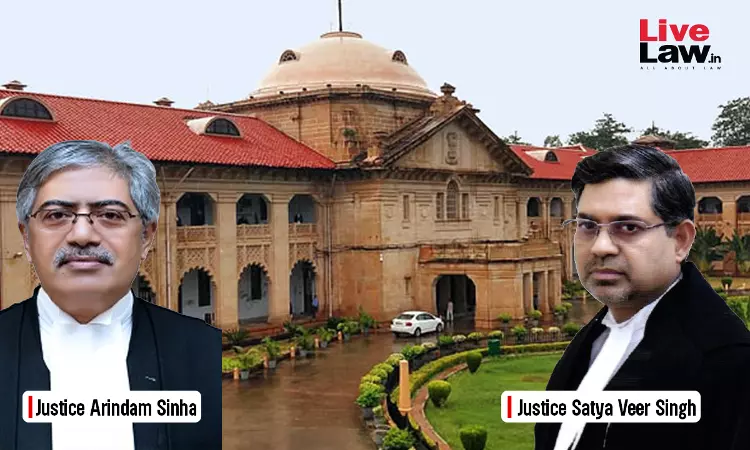
The bench of Justice Arindam Sinha and Justice Satya Veer Singh held,
“In the exercise of evaluating who amongst the candidates are entitled to compassionate appointment, as more in need of compassion, it is bound to give rise to controversy and dispute. Subjecting such candidates to objective type test, on the other hand, will not bear occasion for one candidate to complain that the other was given backdoor appointment.”
“The element of competition cannot be totally eliminated even in the matter of grant of compassionate appointment, where there are more candidates than number of the vacancies.”
Petitioners, dependants of police personnel who died in service, contended that the note was ultra vires Articles 14, 15, 16 and 309 of the Constitution. Senior Advocate Ashok Khare submitted that compassionate appointment in government service is governed by the Uttar Pradesh Recruitment of Dependants of Government Servants Dying in Harness Rules, 1974, which place no cap on such appointments.
He relied on Ashish Bahadur Singh and 4 others v. State of U.P. and 3 Others, where a Division Bench, holding that the note did not create a 5% reservation, took suo motu cognizance and directed the State Government to withdraw it. He further relied on State of U.P. and 3 Others v. Himanshu Yadav, where another Division Bench said the restriction applies against vacancies arising each year.
The additional challenge was to a Government Order dated 18th September 2015, which requires candidates in the dependants category to appear in an objective type test where they outnumber the posts earmarked for that category, and allows only one opportunity for recruitment against such a post. It was argued that a written test defeats the object of compassion, and that a candidate who fails would be treated as having exhausted that single opportunity.
Chief Standing Counsel relied on Ankur Gautamv. State of U.P. and 2 Others, where an earlier Division Bench had upheld both the note and the test as fair and reasonable, holding that an upper limit was necessary lest open market candidates be shut out, and that the test provides only for selection among those claiming compassion. He submitted the point is no longer res integra.
The Court said it had not been shown that the Bench in Himanshu Yadav had occasion to consider Ankur Gautam, in which validity of the note was clearly upheld. On Ashish Bahadur Singh, it noted the special appeal there was itself dismissed, and the direction issued in the context of the note not having provided reservation. It held that the State Government had not acted on the direction and it did not aid the petitioners' claim to relief.
Accordingly, the writ petitions were dismissed.
Case Title: Ajay Singh Yadav and 25 others vs. State of U.P. and 3 others 2026 LiveLaw (AB) 722
Case Citation: 2026 LiveLaw (AB) 722
Tags


