



- Home
- /
- High Courts
- /
- Allahabad High Court
- /
- Order VI Rule 17 CPC |...
Order VI Rule 17 CPC | Subject-Matter Jurisdiction Must Be Decided Before Application For Amendment Of Plaint: Allahabad High Court
Upasna Agrawal
12 Oct 2026 12:50 PM IST
The Allahabad High Court has held that where a defendant's application under Order VII Rule 10 and Rule 11 CPC raises the issue of subject-matter jurisdiction, it must be decided before the plaintiff's application to amend the plaint under Order VI Rule 17 CPC. It held that a court lacking subject-matter jurisdiction cannot order an amendment that would bring the suit within its jurisdiction,...
This is a premium content
Available exclusively to
Our subscribers
Subscribe Premium 
INR 1099+GST
Your support helps us to bring you more content at
an affordable subscription scheme !!!
All payment options available
The Allahabad High Court has held that where a defendant's application under Order VII Rule 10 and Rule 11 CPC raises the issue of subject-matter jurisdiction, it must be decided before the plaintiff's application to amend the plaint under Order VI Rule 17 CPC.
It held that a court lacking subject-matter jurisdiction cannot order an amendment that would bring the suit within its jurisdiction, as such an order would be a nullity.
Order VI Rule 17 CPC permits a party to alter or amend its pleadings. Order VII Rule 10 CPC provides for return of a plaint to the court in which the suit should have been instituted, and Order VII Rule 11 CPC for its rejection.
Under Section 6 of the Commercial Courts Act, 2015, a Commercial Court can try a commercial dispute only of a 'Specified Value', which under Section 2(1)(i) read with Section 12 must not be less than Rs. 3 lakhs.
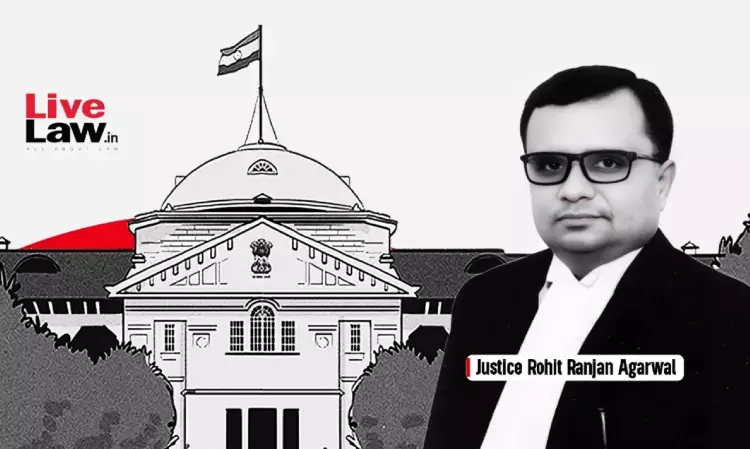
Justice Rohit Ranjan Agarwal held,
“Thus, it is well settled that where subject-matter jurisdiction has been raised, the same needs to be addressed first prior to taking up of amendment application as the court which does not have jurisdiction of subject-matter cannot pass any order for amending the plaint as it would be a nullity.”
The plaintiff-petitioner had instituted Original Suit No. 2 of 2025 before the Commercial Court, Varanasi under Section 134 read with Section 27(2) of the Trademark Act, 1999 read with Section 2(XVII) of the Commercial Courts Act, 2015, seeking a permanent injunction against the defendant's use of the trademark 'Sarkari Result' and 'sarkariexam.com' and a mandatory injunction against use of the domain sarkariresult.com.
On 23.03.2026, the defendants applied under Order VII Rule 10 and 11 CPC for return and rejection of the plaint for want of jurisdiction. While that application was pending, the plaintiff moved to amend the plaint on 09.08.2026. By order dated 13.08.2026, the Commercial Court directed the defendants' application to be decided first, and that order was challenged under Article 227 of the Constitution.
Counsel for petitioner submitted that the Commercial Court had jurisdiction and only a formal amendment disclosing the suit's specific value of Rs. 5,00,000 was required. Since a plaintiff whose plaint is returned or rejected can present a fresh suit under Order VII Rule 13 CPC, it was argued, the amendment ought to be taken up first to avoid that contingency. Reliance was placed on decisions of four High Courts taking that view.
Counsel for the defendant-respondent submitted that the application also sought return of the plaint under Order VII Rule 10 CPC, the plaint nowhere disclosing the specified value needed to attract a Commercial Court's jurisdiction. Want of territorial jurisdiction under Section 20 CPC and absence of a cause of action were also urged.
The Court noted that the specified value admittedly stood undisclosed when the suit was filed, and that the plaintiff moved to amend only after jurisdiction was questioned. Amendment applications are ordinarily dealt with liberally, but here the challenge went to the jurisdiction of the court itself.
Relying on Harshad Chiman Lal Modi v. DLF Universal Ltd., where the Apex Court set subject-matter jurisdiction apart from territorial and pecuniary jurisdiction and held an order passed without jurisdiction to be a nullity. The Court noted that a co-ordinate bench in Jai Prakash Industries Ltd. v. Lalit Bhasin had held that a court cannot confer jurisdiction upon itself by allowing an amendment.
An amendment supplying the facts on which jurisdiction rests, the Court held, is not a curing of defects, since it alters the very nature of the dispute and sets the plaint as filed apart from the plaint as amended.
“Subject-matter jurisdiction goes to the root of the case. Once there is a lack of inherent jurisdiction in the court to entertain the suit itself, it cannot make any order for amendment of plaint to bring the suit within the jurisdiction.”
Finding no interference called for, the Court held that the Commercial Court had rightly directed the application under Order VII Rule 10 and 11 CPC to be considered first, and dismissed the petition.
Counsel for Petitioner :- Devendra Kumar Misra
Counsel for Respondents :- Anoop Trivedi, Sr. Advocate assisted by Abhinav Gaur, Anurag Kumar Ojha, Shreya Trivedi, Vibhu Rai
Tags


