High Court Bars 300 Advocates From Voting In Oudh Bar Polls; Directs UP Bar Council To Develop Online COP Verification System
Sparsh Upadhyay
27 Oct 2026 1:17 PM IST
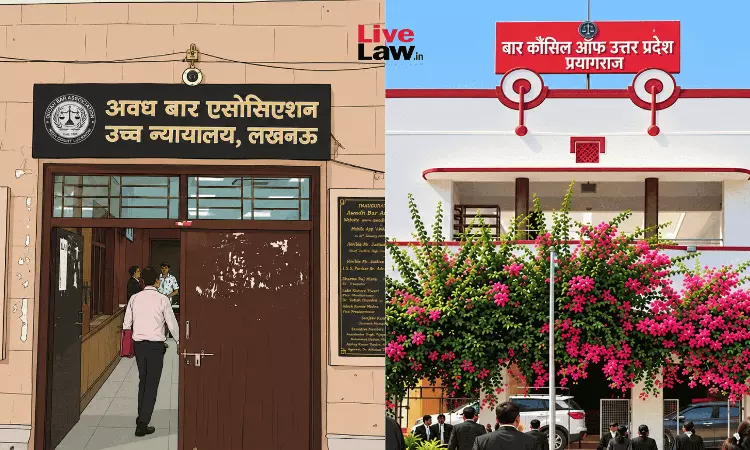
The Allahabad High Court has barred 300 advocates from voting in the upcoming Oudh Bar Association elections scheduled for October 28 over issues with their Certificates of Practice (COP).
The Court has also directed the Uttar Pradesh State Bar Council to develop an online COP verification system within six months.
A bench of Justice Rajan Roy and Justice Manjive Shukla passed the order in 3 connected petitions, including two Public Interest Litigation (PIL) pleas filed concerning the upcoming Oudh Bar Association elections.
The Court ordered that 155 advocates whose COPs mention a place of voting other than the Oudh Bar Association, Lucknow, would not be eligible to vote. Another 145 advocates whose COPs had not been renewed would also be ineligible unless they submit valid proof of renewal before the Returning Officer.
In this regard, the Court referred to the Bar Council of India Certificate and Place of Practice (Verification) Rules, 2015, and observed that unless verification takes place every 5 years and the COP is renewed, “neither the right to practice nor the right to vote is available to an advocate”.


Earlier, the Court was informed by the counsel for the UP Bar Council that 5,108 members had been found eligible to vote in the upcoming elections.
However, it was pointed out that 155 members had their voting place mentioned in their COPs as somewhere other than the Oudh Bar Association at Lucknow, while 145 others had not renewed their COPs.
In view of this, the Court directed that the 155 advocates shall not be eligible for voting in the ensuing elections.
Regarding the 145 advocates whose COPs had not been renewed, the bench said that they would also be ineligible to vote “unless they are able to submit valid proof of renewal before the Returning Officer”.
The Court accordingly observed that, subject to this qualification, the 300 advocates would not be entitled to vote in the upcoming elections. It directed that this decision be displayed on the Oudh Bar Association's notice board and other conspicuous places identified by the Returning Officer.
For the future, the High Court asked the UP Bar Council to develop a software-based mechanism to enable online verification of advocates' COPs.
It directed that a true copy of the COP be uploaded on the website so that when the registration number or name of the person is clicked, the COP is also reflected on the Bar Council of UP website.
Any subsequent changes to the COP, including the nature of the change and the date it was made, should also be reflected on the website.
The Court observed that this would eliminate the need to collect and compare voter lists from different bar associations to determine whether advocates were eligible to vote.
"This will avoid this entire exercise of collecting lists from various bar associations to ascertain as to whether the voters of the Oudh Bar Association or any other bar association have voted in any other bar association and thus have become ineligible or not, as their entitlement can be verified from the website of the U.P. Bar Council itself and if there is any discrepancy, the concerned voter can always apply to the Bar Council of U.P. for its correction as per rules," the Court said.
The bench directed the UP Bar Council to complete the exercise within six months and file an affidavit of compliance after the period expires.
The Court further directed that, in future elections, members of the Oudh Bar Association would be entitled to vote only after producing their COP certificate, rather than relying on the COP card.
It said this requirement would help ensure free and fair elections. However, the Court clarified that it would apply to future elections and not the 2026 election, unless the Returning Officer decided otherwise.
The Court also directed the High Court administration to ensure that outsiders who have nothing to do with the elections are not allowed into the election area on voting day and that persons not entitled to vote are kept out.
The petitioner had alleged that around 400 persons had already voted at the Lucknow Bar Association and Central Bar Association and should be excluded from the Oudh Bar Association's voter list.
The Court observed that this claim would require an inquiry that could not be completed within the 2 days remaining before the election. It therefore proceeded on the basis of the information provided by the UP Bar Council.
The matter has been directed to be listed after six months.