



- Home
- /
- High Courts
- /
- Allahabad High Court
- /
- Pending Departmental Enquiry...
Pending Departmental Enquiry Doesn't Bar Compulsory Retirement Of Judicial Officer Based On Overall Service Record: Allahabad High Court
Upasna Agrawal
24 Nov 2026 12:15 PM IST
The Allahabad High Court has held that the pendency of departmental enquiries into allegations placed before the Screening Committee does not vitiate an order compulsorily retiring a judicial officer. It held that compulsory retirement is not punitive but rests on an overall assessment of the officer's service record.Under Fundamental Rule 56 as applicable in Uttar Pradesh, compulsory...
This is a premium content
Available exclusively to
Our subscribers
Subscribe Premium 
INR 1099+GST
Your support helps us to bring you more content at
an affordable subscription scheme !!!
All payment options available
The Allahabad High Court has held that the pendency of departmental enquiries into allegations placed before the Screening Committee does not vitiate an order compulsorily retiring a judicial officer. It held that compulsory retirement is not punitive but rests on an overall assessment of the officer's service record.
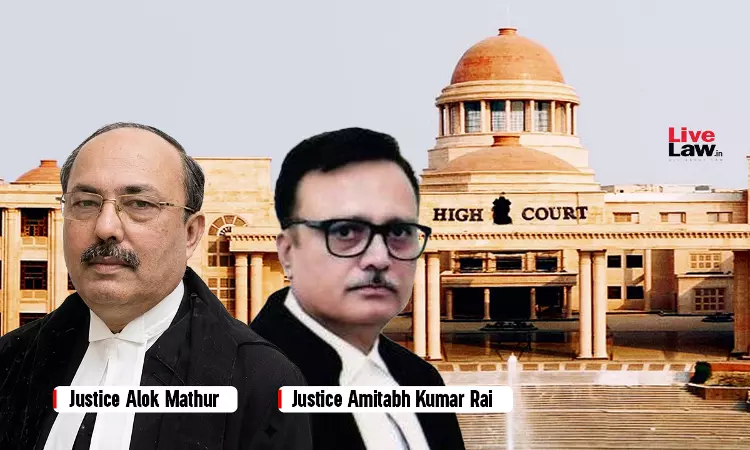
Under Fundamental Rule 56 as applicable in Uttar Pradesh, compulsory retirement is not a punishment and may be resorted to only where the appointing authority forms the opinion that it is in the public interest. Tracing the provision's evolution in the State from 1919 to the U.P. Fundamental Rule 56 (Amendment and Validation) Act, 1976, the bench of Justice Alok Mathur and Justice Amitabh Kumar Rai cautioned that rulings on provisions from elsewhere cannot be carried across.
“The general observations made by various Courts as well as Hon'ble Supreme Court in respect of employees of other States or the Government of India, who are governed by provisions which are not identical or pari materia to Fundamental Rule 56 as applicable in the State of U.P. may not provide a correct exposition of law for considering whether an order of compulsory retirement passed by an authority in the State of U.P. is valid or not.”
Petitioner was appointed as Civil Judge (Junior Division) in 2006 and promoted to the Higher Judicial Services in 2019, latterly posted as Additional District and Sessions Judge (Fast Track Court), Hamirpur. He was compulsorily retired by the State Government on 29.11.2021, on the High Court's recommendation of 26.11.2021.
Four complaints came from Amroha in 2018, that his judicial orders were not in accordance with law, that he was guilty of misconduct and foul language, and, on an affidavit, that he had made illegal demands for favourable orders in three cases. On the vigilance reports, the Administrative Committee resolved to initiate departmental enquiries. The fourth complaint, by a woman judicial officer, alleged indecent conversation and behaviour.
The Internal Committee accepted his written apology, found his conduct had caused the complainant emotional distress and created a hostile work environment though no sexual harassment allegation was made out, and warned him.
Assailing the retirement, Senior Advocate Dhruv Mathur argued that it was passed in lieu of the three pending departmental proceedings to cut them short, and was punitive. It was argued that the Screening Committee's recommendations were stigmatic, that he had been promoted on seniority-cum-merit while the complaints were already in existence, that his ACR at Amroha recorded his conduct as “Beyond Doubt” and rated him “Very Good”, and that the Internal Committee had closed the fourth complaint, vitiating the Committee's satisfaction.
Counsel for the High Court submitted that the case was considered by the Screening Committee, the Administrative Committee and the Full Court, each with the entire service record. It was submitted that no departmental enquiry need be concluded before a judicial officer is retired, and that the “washed off” theory has no application to compulsory retirement.
Referring to the guidelines laid down in Baikuntha Nath Das and another v. Chief District Medical Officer, under which compulsory retirement carries no stigma, rests on the government's subjective satisfaction and requires the entire service record to be considered, the Court observed,
“A bare perusal of the above guidelines would point to the fact that the only permissible way to interfere in an order of compulsory retirement by a writ court is when such order is directly hit by guideline (iii) i.e. when the order suffers from malafides or is based on no evidence or is perverse.”
On the washed-off plea, it relied on Pyare Mohan Lal v. State of Jharkhand and others, holding that the entire service record must be assessed despite earlier promotion, and that a single adverse entry touching integrity can suffice.
The Court noted that the Screening Committee recommended retirement in June 2020, the Administrative Committee accepted it on 18.11.2021, and the Full Court on 25.11.2021 found the petitioner had outlived his utility. It held that it could not be said there was no material to warrant retirement.
Rejecting the argument that no reliance could be placed on allegations not carried to a finding, the Court held,
“the pendency of departmental enquiries in respect of certain allegations which were taken into consideration by the Screening Committee is of no consequence, as the order of compulsory retirement is not punitive in nature but is based on an overall assessment of the service record of the officer.”
The Court relied on High Court of Judicature for Rajasthan v. Bhanwar Lal Lamror and Others, where the Supreme Court upheld the retirement of a judicial officer against whom disciplinary proceedings touching integrity were pending. Further reliance was placed on Anil Kumar v. State of U.P. and Others, a Co-ordinate Bench decision on the same Screening Committee holding that subsequent exoneration does not by itself invalidate the retirement, against which the Special Leave Petition was dismissed on 13.12.2024.
Noting that the Internal Committee's findings postdated the Screening Committee's meeting, the Court observed,
“Even then, the material available before the Screening Committee included the complaints made by the female judicial officer in August 2018.”
Holding that the recommendation rested on sufficient material in the service record and disclosed no infirmity, the Court dismissed the writ petition.
Counsel for Petitioner :- Ashok Kumar Singh, Adarsh Srivastava, Vikas Singh
Counsel for Respondents :- C.S.C., Gaurav Mehrotra, Shishir Jain
Tags


