



- Home
- /
- High Courts
- /
- Allahabad High Court
- /
- Allahabad High Court Finds PIL...
Allahabad High Court Finds PIL Petitioner Concealed Earlier Litigation, Made 'False' Declaration; Imposes ₹2L Costs
Sparsh Upadhyay
31 Aug 2026 1:58 PM IST
The Allahabad High Court recently dismissed a Public Interest Litigation (PIL) plea challenging a 2015 tender awarded to a private company for the operation of a municipal slaughterhouse, finding that the petitioner had concealed several previous proceedings concerning the same subject matter and had made a false declaration that no earlier PIL or writ petition had been filed.A Bench of...
This is a premium content
Available exclusively to
Our subscribers
Subscribe Premium 
INR 1099+GST
Your support helps us to bring you more content at
an affordable subscription scheme !!!
All payment options available
The Allahabad High Court recently dismissed a Public Interest Litigation (PIL) plea challenging a 2015 tender awarded to a private company for the operation of a municipal slaughterhouse, finding that the petitioner had concealed several previous proceedings concerning the same subject matter and had made a false declaration that no earlier PIL or writ petition had been filed.
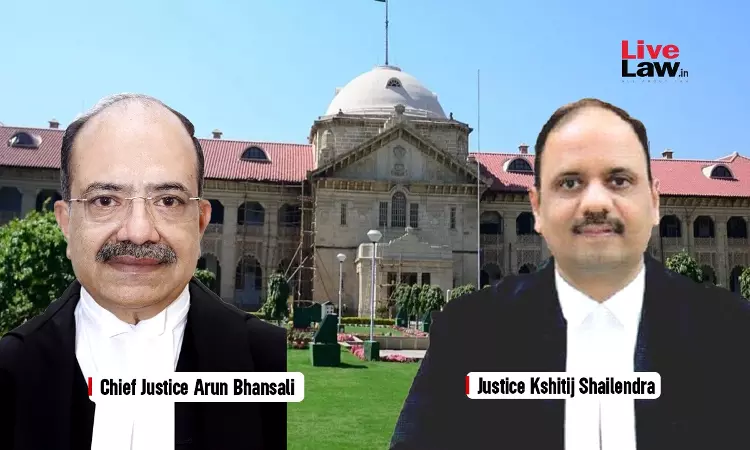
A Bench of Chief Justice Arun Bhansali and Justice Kshitij Shailendra held that the petition amounted to a “gross misuse and abuse of process of law” and imposed costs of ₹2 lakh on the petitioner.
Case in brief
The petitioner (Shailesh Singh), described himself as a public-spirited citizen, investigative journalist and the editor of Rashtriya Samasya. He approached the High Court seeking quashing of the December 11, 2015, letter approving the tender in favor of Marya Frozen Agro Food Products Pvt. Ltd. for the municipal slaughterhouse at Mohanpur Thiriya, Bareilly.
The petition alleged that the tender process was hit by Articles 14, 21 and 300-A of the Constitution of India and being based upon fraud, abuse of process, collusive bidding etc., the same is unsustainable.
He sought a fresh tender with verification of bidders' incorporation, directorship and beneficial ownership records.
The private company, however, opposed the PIL, alleging that the petition had been filed with an oblique and collateral object to unsettle a commercial concession granted more than a decade ago in favour of the Company
It was also submitted that the petitioner had not disclosed earlier litigation concerning the same subject matter and was acting as a proxy litigant at the instance of its business competitors.
High Court's observations
Taking these submissions into account, the High Court found that the petitioner had previously instituted multiple proceedings against respondent no. 4.
These included a PIL filed in 2024, which was dismissed as withdrawn and another PIL of 2024, in which the High Court had declined to examine the issues and permitted the petitioner to avail the statutory remedy before the National Green Tribunal (NGT).
The bench noted that the petitioner had also moved a plea in 2024 before the NGT, which was dismissed as withdrawn and subsequently filed another Original Application in 2025, which remained pending.
The Court also noted that the petitioner had attempted to get himself impleaded in a separate writ petition filed by the company challenging closure orders issued by the Uttar Pradesh Pollution Control Board. His impleadment request was declined, with liberty to file a PIL after proper research or to approach the NGT.
The Bench found that despite these previous proceedings, the petitioner had not disclosed them in the present PIL. The Court observed:
"Apparently, the petitioner has not disclosed in the petition, filing of any previous cases or result thereof, although the same pertain to the same subject matter, i.e. grant of contract/finalization of tender in favour of respondent no. 4 way back in the year 2015".
The bench also noted that the opening declaration in the PIL stated that it was the first petition concerning the cause of action or reliefs sought and that the petitioner had not filed any other PIL/writ petition against the same cause of action.
The High Court found this declaration to be "apparently false". It noted that the petitioner had sworn on affidavit that “nothing material has been concealed” and that no part of the affidavit was false.
After examining the previous matters, the Court concluded that the petitioner had attempted to invoke its writ jurisdiction while concealing material facts. The Bench observed thus:
"Once we are satisfied that the petitioner has attempted to obtain some order by making concealment of previous proceedings in relation to the same/similar cause of action, we are of the view that the jurisdiction of this Court has been misused…".
The Court further observed that the petitioner was “apparently acting in a proxy capacity” at the instance of competitors of respondent no. 4.
The Court emphasized that PIL jurisdiction cannot be used for personal gain, private profit, political motive or other oblique considerations.
Referring to the Supreme Court's observations in Janata Dal vs. H.S. Chowdhary, the Bench noted that PIL jurisdiction is meant for bona fide persons having sufficient interest in the proceedings and should not become a means of pursuing personal grievances under the colour of public interest.
It also relied on Dr. B. Singh vs. Union of India and others, (2004), observing that courts should filter out frivolous PILs and dismiss petitions filed with an oblique motive, including those that camouflage personal disputes or are used for publicity or blackmail.
Relying on Prestige Lights Limited Vs. State Bank of India, (2007), the Court reiterated that a litigant invoking writ jurisdiction must approach the Court with full, complete and correct facts and cannot resort to suppression or concealment of material information.
The High Court ultimately concluded thus:
"We find the instant petition a gross misuse and abuse of process of law and the same deserves dismissal with heavy cost so that it may set a deterrent example to discard unscrupulous persons from invoking Writ Jurisdiction for their vested interest under the camouflage of PIL".
The PIL was accordingly dismissed with costs of ₹2 lakh. The petitioner was directed to deposit the amount with the Legal Services Committee of the High Court within one month.
In default, respondent no. 4 could approach the Registrar General, who would forward the order to the Collector, Bareilly, for recovery of the amount as arrears of land revenue.
Counsel for Petitioner: Santosh Kumar Tiwari
Counsel for Respondent(s): R.K. Ojha (Sr. Adv.), Ashish Kumar Singh, Sitaram Yadav, Abhinava Krishna Srivastava, C.S.C.
Case title - Shailesh Singh vs. State of Uttar Pradesh and 3 others 2026 LiveLaw (B) 637
Case Citation : 2026 LiveLaw (AB) 637
Tags

Sparsh Upadhyay
Sparsh Upadhyay is an Associate Editor with LiveLaw.

