



- Home
- /
- High Courts
- /
- Allahabad High Court
- /
- UP Tenancy Act 2021 | Plaint Can't...
UP Tenancy Act 2021 | Plaint Can't Be Rejected Where Defence Raises Questions Beyond Scope Of Rent Authority: Allahabad High Court
Upasna Agrawal
12 Oct 2026 2:00 PM IST
The Allahabad High Court has held that a defendant cannot obtain rejection of a plaint by invoking the bar on civil court jurisdiction in Section 38(1) of the U.P. Regulation of Urban Premises Tenancy Act, 2021 when the defence he himself sets up raises questions which, under Section 38(2), the Rent Authority has no jurisdiction to decide.Section 38(1) of the Act of 2021 bars a Civil Court...
This is a premium content
Available exclusively to
Our subscribers
Subscribe Premium 
INR 1099+GST
Your support helps us to bring you more content at
an affordable subscription scheme !!!
All payment options available
The Allahabad High Court has held that a defendant cannot obtain rejection of a plaint by invoking the bar on civil court jurisdiction in Section 38(1) of the U.P. Regulation of Urban Premises Tenancy Act, 2021 when the defence he himself sets up raises questions which, under Section 38(2), the Rent Authority has no jurisdiction to decide.
Section 38(1) of the Act of 2021 bars a Civil Court from entertaining any suit or proceeding in so far as it relates to the provisions of the Act. Section 38(2) confines the Rent Authority's jurisdiction to the tenancy agreement submitted to it under the First Schedule, and excludes questions of title or ownership.
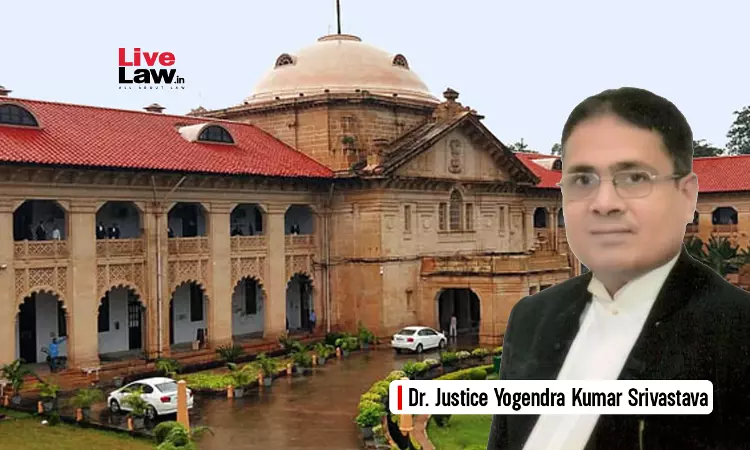
Justice Dr. Yogendra Kumar Srivastava held,
“This is not a case of conferring jurisdiction upon a Court by consent, waiver or estoppel. Jurisdiction cannot be created by the conduct or pleading of a party. The principle is narrower and more fundamental: the statutory exclusion of the jurisdiction of the Civil Court must correspond to a controversy which the statute itself places within the jurisdiction of the forum created by it. A party cannot selectively rely upon the exclusionary part of the statutory scheme while, for the purpose of resisting the suit, asserting a case which takes the controversy beyond the adjudicatory competence of that very forum.”
Plaintiffs filed four suits before the Court of Small Causes at Kanpur Nagar seeking eviction of the defendants from shops and arrears of rent. The plaints pleaded that the premises were governed by the Act of 2021, notices had been issued under that Act requiring execution of registered tenancy agreements, and that rent had been enhanced under Sections 8 and 9.
The defendants applied under Order VII Rule 11(a) and (d) read with Section 151 CPC for rejection of the plaints, arguing that once the plaintiffs had founded their claim on the Act of 2021, the remedy lay before the Rent Authority. Relying on the proviso to Section 4(3), they said the statute itself provides for a failure to agree, so the want of a written agreement could not put the tenancy outside the Act. They also denied being tenants of the plaintiffs at all, and raised questions of title, ownership and possession.
The plaintiffs replied that without a written tenancy agreement the Rent Authority could not assume jurisdiction. It was urged that want of jurisdiction would in any case attract return of the plaint under Order VII Rule 10 CPC, not rejection. The courts below rejected the applications, and the defendants came in revision under Section 25 of the Provincial Small Cause Courts Act, 1887.
Taken at face value, the Court held, the plaints set out the relationship pleaded, the default alleged, the notices and the failure to comply with them, and so disclosed a cause of action. The objection under Order VII Rule 11(a) failed.
On the missing written agreement, the Court relied on Akhilesh Kumar v. Sanjay Sahgal, where it was held that such absence does not by itself denude the Rent Authority of jurisdiction if the relationship is admitted or otherwise established, the requirement of formalising a tenancy being regulatory in character. To the extent the court below had treated an unwritten tenancy as outside the Act altogether, that was held not to be a correct statement of law.
The Court distinguished the absence of a written agreement, which leaves a tenancy within the statutory regime, from a dispute over the existence of the relationship itself. It observed that the defendants had denied the very relationship on which the applicability of the Act rested, and had raised questions of title and ownership which Section 38(2) keeps outside the Rent Authority's competence.
“Section 38(1) cannot reasonably be read as creating a complete jurisdictional vacuum in respect of a dispute which, on the defence itself, involves questions that the Rent Authority, by virtue of Section 38(2), is expressly prohibited from deciding.”
It held that who the tenant was and whether the plaintiffs held the title they asserted were matters for pleadings and evidence, not for a preliminary exercise under Order VII Rule 11.
Finding no jurisdictional error in the orders below, the Court dismissed the revisions and directed that the suits proceed in accordance with law, clarifying that the dismissal of the applications was no adjudication of the disputed questions of tenancy, title, ownership and possession, which remain open.
Tags


