



- Home
- /
- High Courts
- /
- Allahabad High Court
- /
- Police Cannot Interfere In Civil...
Police Cannot Interfere In Civil Property Disputes: Allahabad High Court Warns Deviations May Invite Departmental & Contempt Proceedings
Sparsh Upadhyay
5 Aug 2026 2:21 PM IST
The Allahabad High Court has reiterated that police authorities and Executive officers have no jurisdiction to adjudicate or interfere in civil disputes between private parties, while clarifying that any deviation may invite departmental as well as contempt proceedings.In its order passed on July 27, the Court emphasized that police can intervene only to the limited extent necessary...
This is a premium content
Available exclusively to
Our subscribers
Subscribe Premium 
INR 1099+GST
Your support helps us to bring you more content at
an affordable subscription scheme !!!
All payment options available
The Allahabad High Court has reiterated that police authorities and Executive officers have no jurisdiction to adjudicate or interfere in civil disputes between private parties, while clarifying that any deviation may invite departmental as well as contempt proceedings.
In its order passed on July 27, the Court emphasized that police can intervene only to the limited extent necessary for maintaining public peace and preventing breach of law and order, as provided under the BNSS or CrPC.
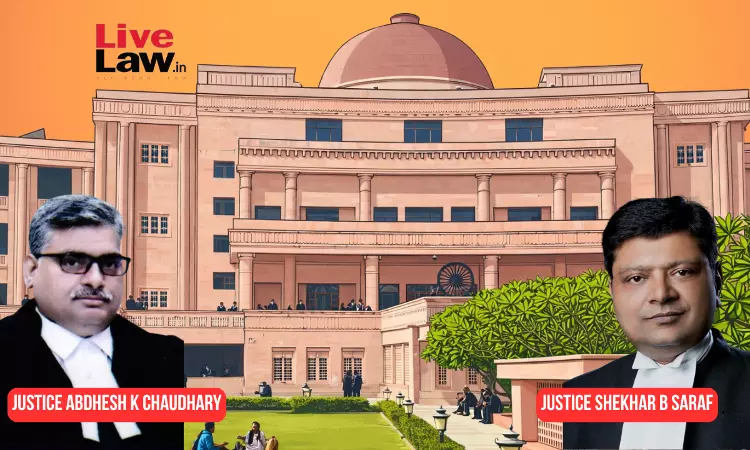
A Bench of Justice Shekhar B. Saraf and Justice Abdhesh Kumar Chaudhary made this observation while disposing of a writ petition filed by an 85-year-old woman who alleged that the police were continuously harassing her and siding with private respondents in a family property dispute.
Though the Court refused to entertain the petition under Article 226 of the Constitution on the ground that the dispute was essentially civil in nature and already pending before a competent civil court, the Bench underscored the settled legal position on police and executive interference in private property disputes.
The petitioner's counsel argued that, despite the dispute being purely civil, the police had "no business" siding with one of the parties and, in collusion with the private respondents, were creating hindrances to the legitimate construction being undertaken by the petitioner.
Observing that the issue warranted immediate interference, the Court said:
"Police authorities and Executive officers have no jurisdiction to adjudicate or interfere in civil disputes relating to title, possession, or boundaries of immovable property between private parties, except to the limited extent necessary for maintaining public peace and preventing breach of law and order, as provided under the Bharatiya Nagarik Suraksha Sanhita, 2023 (BNSS)".
The Bench further observed that disputes concerning peaceful possession and title to immovable property are squarely within the domain of competent Civil Courts.
It said that police and revenue/executive authorities cannot act as adjudicatory bodies or assist one party in dispossessing the other without a specific order from a court of competent jurisdiction.
In this regard, the Court referred to its 2020 judgment in Parmatma Saran v. State of U.P., wherein it relied upon the Government Order (of September 16, 2015) issued by the Chief Secretary, Uttar Pradesh.
This particular GO mandates that no administrative order shall be passed in matters relating to immovable property disputes between private parties where proceedings are pending before civil courts or interim orders have been passed, warning that violations would attract strict penal action against erring officers.
The Bench also relied upon Suman Singh vs. District Magistrate 2022, where it was held that such administrative intervention in a purely private dispute of title and possession is wholly without jurisdiction and contrary to the settled position of law
The bench also referred to the GO (of December 1, 2014) wherein it was provided thus:
"The administrative authorities are required only to maintain law and order and ensure compliance of Court orders, but they cannot assume an adjudicatory role or effect dispossession/restoration of possession in private title disputes".
The High Court further noted that in Prem Lata Maurya vs. State of U.P. 2024, it had directed the Director General of Police to issue a fresh circular reminding police personnel that they have no role in deciding title or possession disputes between private parties.
Pursuant to those directions, the DGP issued Circular No. 10 of 2023 reiterating that police personnel shall not deliver possession to any party or evict any person in a civil dispute, and that preventive proceedings may be initiated only where there is an imminent apprehension of breach of peace and strictly in accordance with law.
The Court also referred to its decisions in Phoolmati vs. State of UP wherein the practice of Sub-Divisional Magistrates passing orders directing vacation of premises in pending civil suits without following due process was deprecated.
Against this backdrop, the Bench directed all police officers, District Magistrates, Sub-Divisional Magistrates and other Executive authorities to strictly adhere to the Government Orders of December 2014 and September 2015, as well as the DGP Circular of March 2023.
The bench cautioned that "any deviation shall be viewed seriously and may invite departmental as well as contempt proceedings”.
The Court further directed the police authorities to ensure that no party is allowed to take law into its own hands and to maintain peace without favouring any side in the civil dispute.
Counsel for Petitioner(s): Sachin Kumar, Abhinav Sachan, Diship Kumar, Piyush Agnihotri, Shailesh Sachan
Counsel for Respondent(s) : C. S . C
Case title - Indra Pati And Another vs State Of U.P. Thru. Prin. Secy. Deptt. Home Lko. And 3 Others 2026 LiveLaw (AB) 528
Case Citation: 2026 LiveLaw (AB) 528
Tags

Sparsh Upadhyay
Sparsh Upadhyay is an Associate Editor with LiveLaw.

