



- Home
- /
- High Courts
- /
- Allahabad High Court
- /
- Detailed Recovery Memo Signed By...
Detailed Recovery Memo Signed By Accused Satisfies Requirement Of Written Communication Of Arrest Grounds: Allahabad High Court
Sparsh Upadhyay
20 Dec 2025 10:04 AM IST
The Allahabad High Court recently ruled that a detailed Recovery Memo (Fard Baramadgi), prepared contemporaneously, containing the penal sections invoked and signed by the accused, satisfies the requirement of communicating the grounds of arrest in writing under Article 22 (1) of the Constitution of India. The Court held that where such a document exists, a technical omission of grounds in...
This is a premium content
Available exclusively to
Our subscribers
Subscribe Premium 
INR 1099+GST
Your support helps us to bring you more content at
an affordable subscription scheme !!!
All payment options available
The Allahabad High Court recently ruled that a detailed Recovery Memo (Fard Baramadgi), prepared contemporaneously, containing the penal sections invoked and signed by the accused, satisfies the requirement of communicating the grounds of arrest in writing under Article 22 (1) of the Constitution of India.
The Court held that where such a document exists, a technical omission of grounds in the formal Arrest Memo would not be fatal, as the same is substantial compliance with the requirement of communicating the arrest ground and will not render the custody illegal or the remand order perverse.
"We conclude that the failure to incorporate the grounds in the Arrest Memo when the same were detailed in the simultaneously prepared and signed recovery memo is a procedural irregularity, not a fatal jurisdictional defect that would lead to the quashing of the remand order. The petitioner was apprised of his rights, and the core constitutional and statutory mandates were substantially adhered to", the HC remarked.
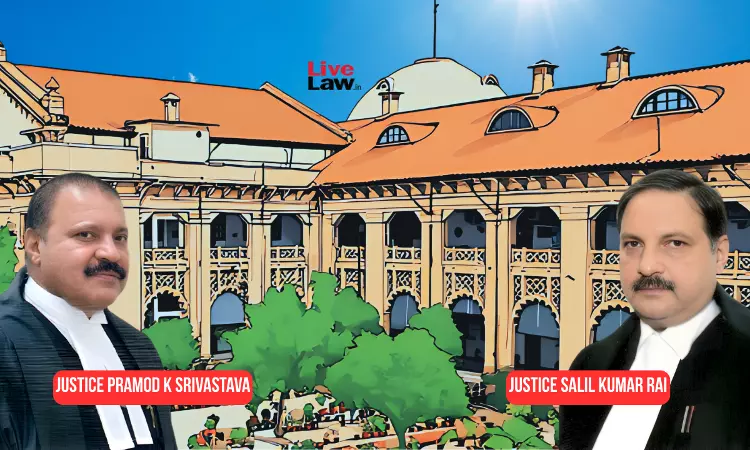
The Bench of Justice Salil Kumar Rai and Justice Pramod Kumar Srivastava thus dismissed a criminal writ petition filed by one Nitin Kumar Singh. The HC said that the judiciary must not elevate form over substance when the accused was demonstrably aware of the grounds for his detention.
Case in brief
The petitioner moved the HC seeking to quash a judicial remand order dated May 18, 2025, passed by the Chief Judicial Magistrate, Hapur.
The petitioner contended that his arrest in connection with a case involving a massive racket of fake degrees at Monad University was illegal and void ab initio.
Senior Advocate Vinay Saran, appearing for the petitioner, argued that the arrest violated the mandatory provisions of Article 22(1) of the Constitution and Section 50 of the Cr.P.C. (corresponding to Section 47 BNSS 2023) as his client was not formally informed of the grounds of arrest.
It was the primary argument that the Arrest Memo prepared by the police contained no separate column mentioning the grounds of arrest and hence, as per the SC judgments in Pankaj Bansal Vs. Union of India and Prabir Purkayastha Vs. State of (NCT of Delhi), the entire custody of the accused was vitiated and the subsequent remand order became a fruit of a "poisonous tree".
On the other hand, the State, represented by the Additional Government Advocate Roopak Chaubey, argued that the police action was pursuant to a valid search warrant executed on May 17, 2025.
It was submitted that a detailed recovery memo was meticulously prepared on the spot, which listed the recovery of fake marksheets, degrees and electronic equipment and this memo was read over to the accused persons and was voluntarily signed by them.
The State contended that this action fulfilled the mandatory requirement of Section 47 of the BNSS "in substance", as the accused were fully apprised of the authority and purpose of the action.
Reliance was placed on the Supreme Court's ruling in State of Karnataka Vs. Sri Darshan 2025 LiveLaw (SC) 801 to argue that mere procedural infirmities or a delay in comprehensively documenting the grounds, where there is clear evidence of substantial compliance, cannot warrant a declaration that the detention is illegal
High Court's observations
Writing for the Bench, Justice Srivastava referred to the interplay between Article 21 and Article 22(1) and noted that in the cases of Pankaj Bansal and Prabir Purkayastha, it was mandated that grounds of arrest must be communicated in writing to enable the accused to seek legal counsel and bail.
However, distinguishing the present case from those cases, the Bench noted that, unlike cases where no written information was provided, or where the grounds were merely oral, in the present case, a Recovery Memo was in place. The Court observed thus:
"In the present matter, the Recovery Memo, prepared contemporaneously and signed by the Petitioner, explicitly detailed the articles recovered...and listed the corresponding penal sections. This document served as a direct, written, and effective communication of the factual and legal grounds of arrest, thereby fulfilling the substantive constitutional requirement of Article 22(1)."
The High Court held that the technical omission in the Arrest Memo is a curable irregularity, not a fatal constitutional defect, where the accused has signed a document detailing the facts of the case.
The Court reasoned that the purpose of Article 22(1) is to ensure knowledge of the grounds of arrest and in this case, since the petitioner had signed the recovery memo proved, his actual knowledge of the offence as per the "spirit of the constitutional mandate" was preserved.
"The principle empowers the Courts to focus not on the letter of the procedural defect (the missing grounds in the Arrest Memo), but on the spirit of the constitutional mandate under Article 22(1). By relying on this precedent, we conclude that the petitioner's actual knowledge—demonstrated by their signature and acknowledgment on the accompanying Recovery Memo—fully satisfies the constitutional requirement, thereby rendering the defect in the Arrest Memo a non-fatal technicality that does not warrant quashing the entire detention process," the Bench concluded.
Thus, it rejected the argument that the non-disclosure of the grounds in the arrest memo's specific format ipso facto caused prejudice.
Consequently, the High Court held that the remand order passed by the Magistrate, after perusing the prosecution papers, including the recovery memo, was valid and not tainted by perversity.
The Court thus dismissed the writ petition and was asked to pursue the remedy of filing a Regular Bail Application before the competent court, which is to be decided on its own merits.
Advocates Ashutosh Mishra and Shashank Pandey also appeared for the petitioner
Case title - Nitin Kumar Singh @ Nitin Kumar vs. State of UP and 4 Others
Citation :
Tags

Sparsh Upadhyay
Sparsh Upadhyay is an Associate Editor with LiveLaw.

