



- Home
- /
- High Courts
- /
- Allahabad High Court
- /
- Remand For Fresh Adjudication...
Remand For Fresh Adjudication Doesn't Give Parties Fresh Opportunity To Reconstruct Pleadings: Allahabad High Court
Upasna Agrawal
18 Nov 2026 12:10 PM IST
The Allahabad High Court has held that an order of remand directing fresh adjudication does not, by itself, give a party a fresh opportunity to reconstruct its pleadings by introducing factual grounds which were already within its knowledge before the earlier decision was set aside. It held that a party cannot claim an unrestricted right to bring in such grounds by successive amendments...
This is a premium content
Available exclusively to
Our subscribers
Subscribe Premium 
INR 1099+GST
Your support helps us to bring you more content at
an affordable subscription scheme !!!
All payment options available
The Allahabad High Court has held that an order of remand directing fresh adjudication does not, by itself, give a party a fresh opportunity to reconstruct its pleadings by introducing factual grounds which were already within its knowledge before the earlier decision was set aside.
It held that a party cannot claim an unrestricted right to bring in such grounds by successive amendments merely because the proceedings have been restored for reconsideration.
Order VI Rule 17 of the Code of Civil Procedure, 1908 permits a court to allow either party to amend its pleadings at any stage, where it is necessary for determining the real questions in controversy between the parties, and Section 107(2) CPC confers upon an appellate court the same powers as are conferred by the Code upon courts of original jurisdiction.
The Court held that an appellate forum, including a Waqf Tribunal exercising appellate jurisdiction, may permit amendment of a memorandum of appeal, and that neither an earlier amendment having been allowed nor the appeal having once been decided exhausts that power. Its existence, however, does not decide whether it should be exercised.
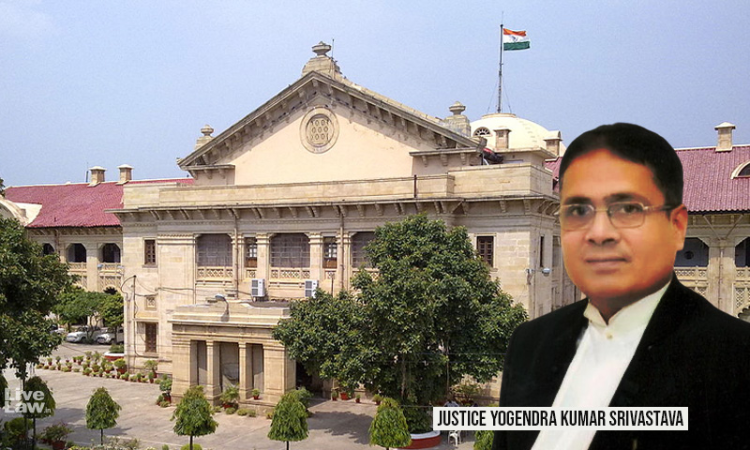
Justice Dr. Yogendra Kumar Srivastava held,
“Conversely, a remand for fresh adjudication does not automatically entitle a party to introduce every factual ground which could have been raised before the earlier decision.”
“The fact that the earlier decision has been set aside and the proceedings restored for reconsideration does not, by itself, afford a fresh opportunity to reconstruct the pleadings without regard to the stage already reached or the explanation for the earlier omission.”
The dispute concerned a Waqf-alal-aulad settled by Haji Sheikh Abdul Samad by a registered Waqf deed of 04.08.1931, which laid down the hereditary line of succession to the office of Mutawalli and the eligibility conditions for appointment from amongst the waqif's descendants. The appellant, Ahmad Jamal, was appointed Mutawalli on 04.09.2000 after the appointment of Nizam-ul-Hai alias Titu alias Farid was recalled.
Zia-ul-Islam, father of Nizam-ul-Hai, later claimed the office himself and applied to the U.P. Sunni Central Waqf Board under Section 64 of The Unified Waqf Management, Empowerment, Efficiency and Development Act, 1995 for the appellant's removal. The Board removed him on 04.04.2018. He filed Waqf Appeal No. 05 of 2018 before the U.P. Waqf Tribunal, Lucknow under Section 64(4), complaining of non-service of notice, non-supply of the inquiry report and non-compliance with Section 64(3).
Zia-ul-Islam died on 12.12.2021 while the appeal was pending, and the Board appointed his son, Firoz Adil, as Mutawalli on 18.05.2022. The appellant amended the memorandum of appeal by Paper No. ka-121, allowed on 29.12.2022, to bring the fresh appointment on record and object to Firoz Adil's lineage and eligibility under the 1931 deed.
The Tribunal dismissed the appeal on 19.11.2024, but the High Court set that judgment aside in Civil Revision No. 36 of 2025 on 17.02.2025 and remitted the matter for fresh decision within two months, directing consideration of Sections 14, 22 and 64(3) and a finding on Issue No. 6 framed earlier.
After the remand, the appellant filed a further amendment application, Paper No. ka-104, on 30.07.2026, seeking to add averments on the alleged non-service of show-cause notices dated 04.10.2017 and 15.11.2017, on the competence of the Chairman of the Board, acting singly, to appoint Firoz Adil with reference to Sections 32(2)(d), 32(2)(g) and 63 of the Act, on a notice dated 16.10.2019 issued to Zia-ul-Islam under Section 54, and on corrections to the prayer clause.
The Tribunal rejected it on 31.08.2026, holding that the amended memorandum already carried sufficient averments and grounds, and that no satisfactory explanation had been offered for not raising the fresh grounds earlier despite knowledge of the relevant facts.
In appeal under Section 83(9) of the Act, the appellant argued that Firoz Adil's eligibility under the 1931 deed was bound up with the challenge to his own removal, that the Tribunal had never framed specific issues on that appointment, which the fresh application was needed to cure, and that it had allowed Firoz Adil to file fresh objections on 06.07.2026 while refusing him the same opportunity. A direction for expeditious disposal, he contended, could not shut out a necessary amendment.
The Board and Firoz Adil replied that the appellant knew of the appointment when he moved the earlier amendment in 2022 and had offered no explanation for the delay, and that the proposed pleas on lineage, pedigree and the validity of subsequent appointments would enlarge the appeal beyond what the remand required.
The Court held that the appointment and the appellant's objections to Firoz Adil's lineage and eligibility were already on record through the earlier amendment, so that he had to explain not merely his knowledge of the appointment but why the additional pleas were omitted then. Delay was not conclusive by itself, but was material alongside the necessity of each amendment.
The Court also distinguished amending pleadings from framing issues. Where the pleadings already disclose a controversy requiring determination, it held, the omission may call for the issue to be framed or reformulated rather than for the pleadings to be amended.
“The omission to frame an issue cannot automatically be treated as justification for introducing further pleadings, just as the power to frame issues cannot dispense with the requirement of pleadings where a distinct factual case is sought to be introduced.”
It added that the leave given to Firoz Adil to file additional objections conferred no corresponding right of amendment on the appellant, and that a direction for time-bound disposal, while relevant, could not justify refusing an amendment genuinely indispensable for deciding the appeal.
Relying on its own decision in Asif Ansari v. Himanshu Sharma and Another, the Court held that an amendment merely reiterating a legal plea capable of being urged on the existing pleadings may be declined as unnecessary, and that such a refusal still leaves the party free to urge a pure question of law founded on the record as it stands. The proposed amendments, it found, were not shown to be indispensable for determining the controversy within the scope of the remand, and the Tribunal had not exercised its discretion erroneously.
Accordingly, the appeal was dismissed and the order dated 31.08.2026 left undisturbed. The Court clarified that the rejection left the Tribunal free to consider whether an issue, or a reframed one, was needed, but that this permitted neither a fresh factual case nor an enlargement of the controversy beyond the remand.
Counsel for Appellant :- Tanishk Goyal
Counsel for Respondent :- Sudhanshu Pandey
Tags


