



- Home
- /
- High Courts
- /
- Allahabad High Court
- /
- Submitting Reply To Show Cause...
Submitting Reply To Show Cause Notice Doesn't Bar Employee From Challenging Its Legality Before CAT: Allahabad High Court
Upasna Agrawal
25 Nov 2026 1:30 PM IST
The Allahabad High Court has held that a government servant who replies to a show cause notice does not thereby avail a 'remedy' under the service rules, and that Section 20 of the Administrative Tribunals Act, 1985 does not bar him from assailing the notice before the Central Administrative Tribunal before any order is passed on it.Section 20 of the Act of 1985 provides that a Tribunal shall...
This is a premium content
Available exclusively to
Our subscribers
Subscribe Premium 
INR 1099+GST
Your support helps us to bring you more content at
an affordable subscription scheme !!!
All payment options available
The Allahabad High Court has held that a government servant who replies to a show cause notice does not thereby avail a 'remedy' under the service rules, and that Section 20 of the Administrative Tribunals Act, 1985 does not bar him from assailing the notice before the Central Administrative Tribunal before any order is passed on it.
Section 20 of the Act of 1985 provides that a Tribunal shall not ordinarily admit an application unless the applicant has availed of all remedies open to him under the relevant service rules.
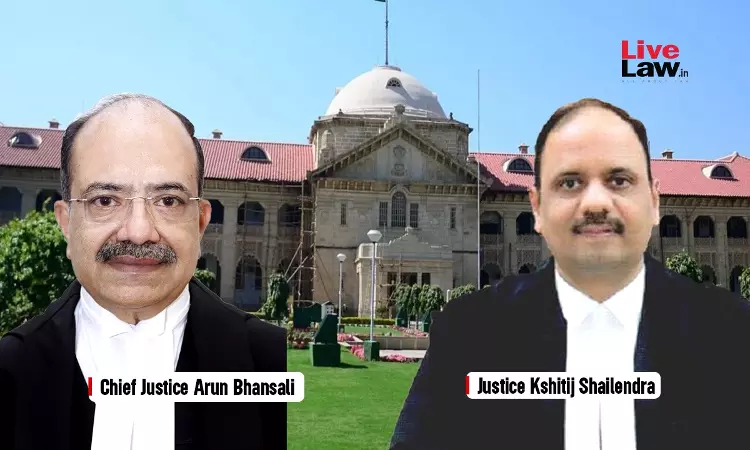
The bench of Chief Justice Arun Bhansali and Justice Kshitij Shailendra held,
“However, in exceptional circumstances, like the one involved in the present case, the Tribunal can very well entertain a challenge to the notice issued without jurisdiction. Further, in our opinion, merely because the respondent filed response to the second SCN, the same would not mean that he had availed a 'remedy against the notice' or that only passing of an order based thereupon would give rise to a cause of action to him and not prior thereto. We, therefore, hold that the OA was maintainable.”
The respondent, a Postal Assistant appointed in 1996, was suspended in 2002 and named in an FIR alleging embezzlement, in which he was later acquitted. A departmental charge sheet on the same allegations ended in his exoneration in 2008. The Director of Postal Services disagreed with the inquiry officer and ordered fresh proceedings, in which the charges were again not found proved.
On a separate charge sheet, the disciplinary authority stopped his annual increment for two and a half years by order dated 20.07.2012. He accepted the punishment and did not challenge it.
Two and a half months later, the Director issued a show cause notice under Rule 27 of the Central Civil Services (Classification, Control and Appeal) Rules, 1965 proposing a steeper stoppage of increment and recovery of Rs. 50,000/-. The respondent replied. Without passing any order on it, the Director issued a second notice dated 12.12.2012 under Rule 29 proposing compulsory retirement. The Tribunal stayed that notice in January 2013 and set it aside in September 2024. The first notice was dropped only afterwards, on 30.01.2013.
The petitioners argued that the application was premature, the reply to the second notice being still under consideration, and that Rule 29 empowered the appellate authority to enhance punishment.
The Court held that a party aggrieved by a notice contrary to the rules or issued without jurisdiction may always challenge it before the appropriate forum, and that replying to the notice was not a remedy provided under the service rules, no provision having been shown that obliged the authority to dispose of the notice on its reply.
On the merits, the Court refused to read the second notice as independent of the first, since it referred both to the earlier notice and to the reply filed against it, and held that issuing it while proceedings on the first notice were pending was without statutory sanction.
Noting that the same officer had issued both notices, had dropped the first after the stay without recording any reason, and had earlier disagreed with the 2008 exoneration, the Court observed,
“It is, thus, apparent on the face of the record that there was at least one officer, namely, Umesh Verma, who somehow intended to ensure that the respondent did not remain in service and pretended as if he was fairly exercising his statutory powers conferred by the Rules, 1965, although the situation reveals otherwise.”
Finding that the exercise had been undertaken to harass an employee cleared in successive inquiries who had already undergone a minor punishment, the Court dismissed the writ petition.
Counsel for Petitioners :- Ashish Kumar
Counsel for Respondents :- Vinod Kumar
Tags


