



- Home
- /
- High Courts
- /
- Allahabad High Court
- /
- S. 80 & 85 BNS | Can A Man In A...
S. 80 & 85 BNS | Can A Man In A Void Second Marriage Be Treated As 'Husband' For Dowry Death, Cruelty Offences? Allahabad High Court Answers
Sparsh Upadhyay
22 July 2026 8:40 PM IST
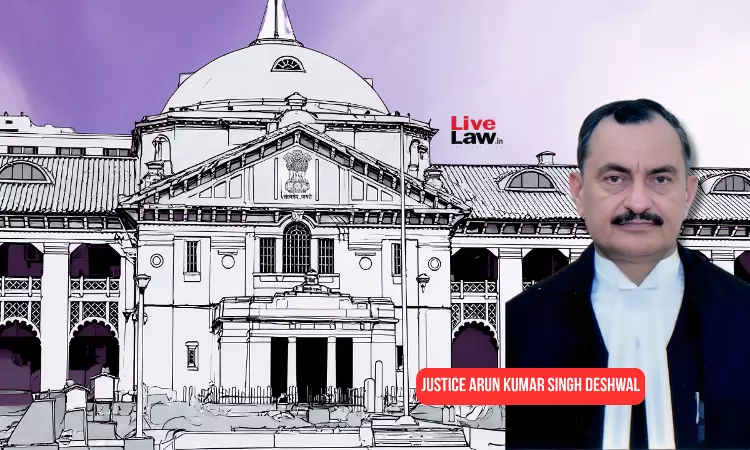
S. 80 & 85 BNS | Can A Man In A Void Second Marriage Be Treated As A 'Husband' For Dowry Death, Cruelty Offences? Allahabad High Court Answers
The Allahabad High Court has ruled that the word 'husband' under Section 80 (Dowry Death) and 85 (Cruelty) BNS will ordinarily include only a person who is legally married to the woman, and not a person whose marriage with the woman is itself void.In other words, the High Court clarified that a man whose second marriage is void owing to the subsistence of his first marriage cannot ordinarily...
This is a premium content
Available exclusively to
Our subscribers
Subscribe Premium 
INR 1099+GST
Your support helps us to bring you more content at
an affordable subscription scheme !!!
All payment options available
The Allahabad High Court has ruled that the word 'husband' under Section 80 (Dowry Death) and 85 (Cruelty) BNS will ordinarily include only a person who is legally married to the woman, and not a person whose marriage with the woman is itself void.
In other words, the High Court clarified that a man whose second marriage is void owing to the subsistence of his first marriage cannot ordinarily be treated as a "husband' for the purposes of the above-mentioned provisions.
The Court, however, clarified that the position would be different where the validity of the first marriage is itself doubtful, where the woman was induced into the marriage by concealment of the existing marriage, or where multiple marriages are valid under Muslim Personal Law.
A bench of Justice Arun Kumar Singh Deshwal made this observation while granting bail to a man whose second wife had allegedly died by suicide, and he faces charges under Sections 80 (2) and 85 BNS and Sections 3 and 4 of the Dowry Prohibition Act.
The accused contended that the deceased was his second wife as the marriage was performed while an earlier marriage of the applicant was subsisting; therefore, the second marriage was void, and he could not be treated as a 'husband' for the purposes of the penal provisions.
Considering this submission, the Court framed the following legal question:
"Whether any person who performed a second marriage during the lifetime of his first wife would come within the definition of "husband" for the purpose of Sections 80 and 85 of the Bharatiya Nyaya Sanhita, 2023 with regard to the second wife?".
The Court examined the scope of Sections 80 and 85 BNS, the definition of "dowry" under the Dowry Prohibition Act, and the Supreme Court's decisions in Reema Aggarwal v. Anupam 2004, Shivcharan Lal Verma v. State of Madhya Pradesh 2002 and P. Sivakumar v. State 2023.
The single judge noted that while Reema Aggarwal adopted a purposive interpretation to include women in void marriages within the protective object of Sections 498-A and 304-B IPC, a three-Judge Bench decision in Shivcharan Lal Verma, later followed in P. Sivakumar, held that where the marriage itself is null and void, prosecution under Section 498-A IPC would not be maintainable.
Relying on the view adopted by the Supreme Court in Shivcharan Lal Verma case and the Allahabad HC in Akhilesh Kesari and 3 others v. State of U.P. and another, the Court observed that Sections 80 and 85 BNS are penal provisions and therefore require strict interpretation.
"…the presumption of dowry death in case of unnatural death within seven years of marriage as per Section 80 B.N.S. (Section 304B I.P.C.) read with Section 118 of B.S.A. should be interpreted strictly in such a manner which favours to an accused, therefore, this Court is of the view that the word "husband" in section 80 BNS as well as Section 85 B.N.S. will cover person only when he is legally married to a women, not the person whose marriage is itself void with a women," the Court held.
The Court, however, specified the exceptions when the principle will not be applicable. The Court clarified that the above principle would not apply in two situations:
- In case there is a doubt about the first marriage, then a person living as "husband" in an alleged second marriage will be covered in the definition of husband for the purpose of section 80 and 85 BNS.
- When a person performed second marriage to a woman without disclosing his validly married living spouse and continued to live with his second wife as her husband and second wife is also not aware about this fact till commission of this offence, in that case also he will be deemed as husband as he can not be allowed to take advantage of his wrong.
The Court further clarified that a second marriage contracted during the subsistence of the first marriage is void under the Special Marriage Act, Foreign Marriage Act, Christian Marriage Act, Parsi Marriage and Divorce Act and Hindu Marriage Act.
However, it distinguished the marriages governed by Muslim Personal Law, observing:
"…if the marriage is performed as per Sharia law, second, third and fourth marriage shall also be valid and in such cases if a Muslim person is living as a husband whether with second, third or fourth wife would also cover under the definition of husband for the purposes of Section 80 and 85 BNS".
In view of the above and taking note of the facts of the case, including that the applicant's second marriage was void during the subsistence of his first marriage, the High Court granted him bail.
Case Title: Sarvesh Alias Chhotu Alias Chhotelal vs State of UP 2026 LiveLaw (AB) 451
Case Citation: 2026 LiveLaw (AB) 451
Tags

Sparsh Upadhyay
Sparsh Upadhyay is an Associate Editor with LiveLaw.

