



- Home
- /
- High Courts
- /
- Allahabad High Court
- /
- S. 14 Family Courts Act Doesn't...
S. 14 Family Courts Act Doesn't Exempt Family Courts From Fundamental Rules Of Proof & Natural Justice: Allahabad High Court
Upasna Agrawal
27 Oct 2026 10:10 AM IST
The Allahabad High Court has held that the partial freedom from the Evidence Act which Section 14 of the Family Courts Act, 1984 gives to Family Courts does not release them from the ordinary principles of proof or from the rules of natural justice. It held that custody could not be decided on an affidavit filed by the father when he never presented himself for cross-examination.Setting aside...
This is a premium content
Available exclusively to
Our subscribers
Subscribe Premium 
INR 1099+GST
Your support helps us to bring you more content at
an affordable subscription scheme !!!
All payment options available
The Allahabad High Court has held that the partial freedom from the Evidence Act which Section 14 of the Family Courts Act, 1984 gives to Family Courts does not release them from the ordinary principles of proof or from the rules of natural justice. It held that custody could not be decided on an affidavit filed by the father when he never presented himself for cross-examination.
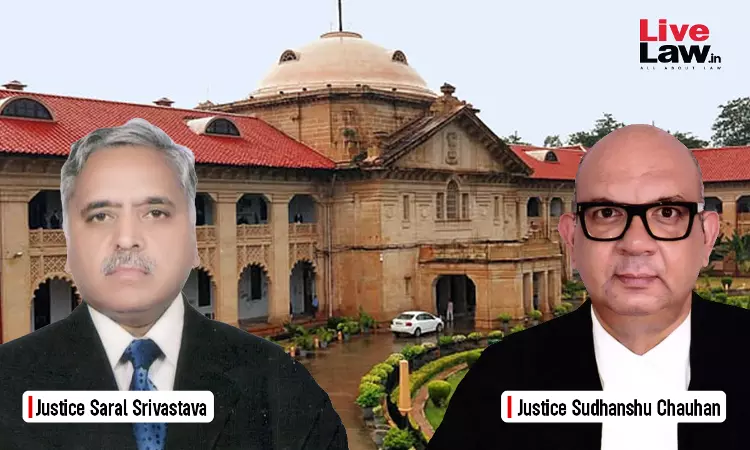
Setting aside the custody order and granting custody to the mother, the bench of Justice Saral Srivastava and Justice Sudhanshu Chauhan held,
“..the same would not absolve the Family Court from observing ordinary principles of proof and rule of natural justice, even in situations where the Family Court is not bound and governed by the Evidence Act. Section 14 of the Act, 1984 is only aimed at mitigating, under certain circumstances, the rigours of sophisticated rules of relevancy and admissibility of the Evidence Act rather than annihilating the very fundamental rules of proof and natural justice inherent in an ideal legal system.”
Denial of cross-examination, the Court held, breaches natural justice, and the trial court's approach in “accepting the statements made on the affidavit by the respondent as gospel truth without affording any opportunity for cross-examination to the respondent, is not only erroneous but suffers from patent illegality.”
The parties married on 19.02.2007 at Varanasi. Two sons were born to them, Yathartha Sharma in 2011 and Aniket @ Samartha Sharma in 2013. On 03.04.2016 the husband left his wife at her parental home in Varanasi and took the elder boy with him. His divorce petition was dismissed on 15.12.2022 and the wife's suit for restitution of conjugal rights was decreed the same day, but he neither took her back nor obeyed the decree. It was submitted that he had married one Ms. Sumanlata Sharma while the marriage between the parties subsisted.
The wife's proceedings under Section 25 of the Guardians and Wards Act, 1890, begun in 2017 before the Family Court at Azamgarh, were dismissed on 23.07.2024, with visitation granted to her. In appeal under Section 19 of the Family Courts Act, she pleaded that she had not been permitted even one meeting with her son.
The husband did not appear in the appeal, stayed away from the Mediation Centre and left his Noida address in December 2024 without disclosing a new one. The Court held that his disappearance soon after the impugned judgment was meant to defeat her visitation rights.
Nothing beyond the father's affidavit had been placed before the Family Court to show that the child's welfare was being cared for, and nothing on his income or the boy's schooling. His evidence had been closed at the trial for his own defaults. The Family Court's reliance on the mother's admission that she had not met her son for three and a half years was perverse, the Court held, as she had been kept from meeting him rather than having stayed away by choice.
The Court observed that custody had been refused mainly because the mother had no income of her own and depended on her retired father. That could not be the sole test, the Court held, noting that in Gaurav Nagpal v. Sumedha Nagpal the father was directed to bear the child's educational expenses.
It noted that in Mausami Moitra Ganguli v. Jayant Ganguli better financial resources or love of a parent were held relevant but not decisive. The father's second marriage, though not a disqualification in itself, was an important factor, as held in Athar Hussain v. Syed Siraj Ahmed and Others.
Noting that the father had flouted judicial orders and evaded process against the mother, the Court observed that the boy would “grow up with his mother, younger brother and maternal grandparents, may be with lesser physical comforts but definitely better moral and ethical values.”
The Court allowed the appeal, set aside the judgment and order dated 23.07.2024 and directed the respondent to hand over custody of the minor to the appellant within one month. The father was given visitation every Saturday between 3:00 P.M. and 5:00 P.M. at the District Legal Services Authority, Varanasi.
Counsel for Appellant :- Adeeb Anwar, Anuj Laloriya, Gaurav Tiwari, Pankaj Kumar Govil, Priyanka Singh, Rahil Anwar, Sanjay Chaturvedi, Santosh Kumar Tripathi
Tags


