



- Home
- /
- High Courts
- /
- Allahabad High Court
- /
- After 14 Years Of Service,...
After 14 Years Of Service, Allahabad High Court Quashes Appointment Made From Expired Select List; But Refuses To Recover Salary Paid
Upasna Agrawal
16 Oct 2026 1:50 PM IST
The Allahabad High Court has held that a select list prepared under Rule 14(3) of the U.P. Subordinate Civil Courts Ministerial Establishment Rules, 1947 comes to an end on the expiry of one year and that no appointment can be made from it thereafter. It held that a direction keeping such a list alive until it is exhausted amounts to legislation and cannot survive against the statutory...
This is a premium content
Available exclusively to
Our subscribers
Subscribe Premium 
INR 1099+GST
Your support helps us to bring you more content at
an affordable subscription scheme !!!
All payment options available
The Allahabad High Court has held that a select list prepared under Rule 14(3) of the U.P. Subordinate Civil Courts Ministerial Establishment Rules, 1947 comes to an end on the expiry of one year and that no appointment can be made from it thereafter.
It held that a direction keeping such a list alive until it is exhausted amounts to legislation and cannot survive against the statutory rule.
Rule 14(3) of the Rules, 1947 provides that where a candidate entered in the bound register of recruited candidates is not offered appointment in strict order of seniority within one year from the date of his recruitment, his name shall be automatically removed from the register and he must take his chance with others at a subsequent recruitment.
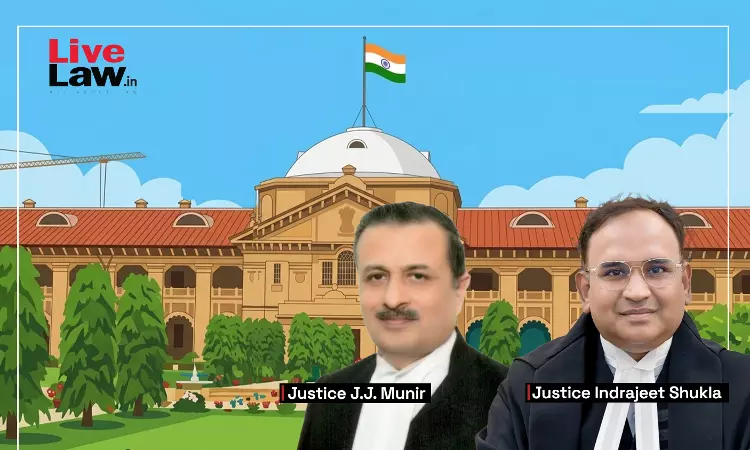
The bench of Justice J.J. Munir and Justice Indrajeet Shukla held,
“At this juncture, as we read Rule 14(3) of the Rules, 1947, it restricts the life of a select list to one year and does not permit even a fraction of a second beyond that period, as evident from the phrase “after the lapse of one year”. The names of the candidates are automatically removed from the register, and such candidates must compete with others in the subsequent year.”
An advertisement was published on 05.06.1993 in the newspaper 'Gandeev' for recruitment to Class III posts in the District Judgeship, Varanasi, with ad hoc employees of the judgeship also permitted to take part in the selection. The written examination held on 10.10.1993 was cancelled on the orders of the High Court and a fresh examination was held on 22.04.1994. A select list was prepared on 18.06.1994.
On 18.10.1995, the District Judge, Varanasi cancelled the remaining select list, taking the view that its life was spent after 17.06.1995. In the meantime, ad hoc employees of the judgeship secured a direction for consideration of their regularisation in the light of Adya Prasad Mishra v. State of U.P., and on their regularisation and posting by order dated 12.12.1995, the existing vacancies stood consumed, leaving the selected candidates without posts.
The cancellation of the select list was challenged by Manoj Kumar Srivastava and others, and by order dated 30.11.1995 the High Court quashed it and directed that the list be treated as valid up to 18.06.1997, extending its life to three years.
A Full Bench of the Court thereafter held in Devendra Nath Srivastava v. State of U.P. that the life of a select list under the Rules, 1947 is one year, and a Division Bench in Subedar Singh v. District Judge, Mirzapur held that Adya Prasad Mishra did not lay down the law correctly.
Respondent Anand Kumar Verma, whose name figured in the select list of 18.06.1994, instituted his writ petition on 18.11.1997. By judgment dated 02.03.2012, a Single Judge allowed it, following Arvind Kumar Pandey v. High Court of Judicature at Allahabad, and directed the District Judge, Varanasi to offer him appointment against a vacant Class III post within a month. The order was given effect to and he has continued in service since, having put in more than 14 years and being due to superannuate shortly.
The District Judge, Varanasi preferred this intra-court appeal under Chapter V, Rule VIII of the Allahabad High Court Rules.
It was argued for the appellant that Rule 14(3) removes the name of an unappointed candidate automatically, so that the list lapsed by operation of law and no express order was needed. Administrative circulars, being executive fiats, could not override the statutory rule, and the circular of 28.07.1994 which raised the life of the list to three years was itself withdrawn on 01.03.1997. It was further argued that the order dated 30.11.1995 bound only the parties to it, and that a selected candidate has no right against future vacancies.
For the respondent, it was submitted that the order under appeal had already been worked out, that the respondent had secured no backdoor entry but had sat in the written examination and been shortlisted on merit, and that it was for the District Judge to have challenged the regularisations which exhausted the vacancies. It was urged that a career of over 14 years ought not to be disturbed at its fag end, relying on decisions of the Supreme Court protecting long continuance in service where no fault lay with the appointee.
The Court held that Direction No. 4 in Adya Prasad Mishra, requiring appointments to be made from the select list till it was exhausted, conferred an indefinite life upon the list in the teeth of Rule 14(3), and that the Single Judge ought not to have placed reliance upon it, particularly after the Division Bench in Subedar Singh.
“Thus, the observation, particularly Direction No. 4 contained in the judgment in Adya Prasad Mishra, directly amounts to legislation by conferring an indefinite life upon the select list until it is exhausted”
On the plea of res judicata, the Court held that the principle could not be invoked, as the respondent was party neither to Adya Prasad Mishra nor to Manoj Kumar Srivastava, and the select list considered in those cases was not the one under which he claimed. It further held that the Full Bench, in reading Rule 14(3), had done no more than declare the law already contained in the rule, so that the one-year limit was operative from the date the rule came on the statute book.
The Court noted that even on the three-year life given to the list by Manoj Kumar Srivastava, the list could have remained operative only up to 18.06.1997, whereas the writ petition came to be filed on 18.11.1997, by which date the list had ceased to exist.
“Thus, writ petitioner was a complete fence-sitter, and the remedy dies for such persons, as observed by the Supreme Court.”
The Court held that the District Judge, Varanasi had done no more than follow the statutory mandate when he treated the select list as inoperative, and no direction could be issued to him to act contrary to the Rules.
“In sum and substance, what this Court finds is that the employer, in this case, cannot be held to be at fault, though it is equally correct that the respondent-writ petitioner has not indulged in any malpractice, misrepresentation or fraud. The interpretation of the Rules has led to a series of litigations and rendered the factual backdrop of the instant case rather chequered. However, we cannot subscribe to any direction issued by the learned Single Judge which is contrary to law, as it is a settled principle that equity follows the law, and the converse is not true.”
It was further held that no appointment can be made against future vacancies, such a course being destructive of rights in rem in public employment and contrary to Articles 14 and 16 of the Constitution of India. Distinguishing an illegal appointment from an irregular one, the Court held that an appointment in violation of law from its inception is void ab initio and incurable, while one suffering only procedural lapses may be regularised.
“Since the respondent-writ petitioner has rendered nearly 14 years of service and devoted almost his entire career and life to the service, the salary and emoluments already paid to him shall not be recovered by the respondents.”
Accordingly, holding that the Single Judge had committed an error of law on principle, the Court set aside the order dated 02.03.2012, dismissed the writ petition and allowed the special appeal.
Tags


