



- Home
- /
- High Courts
- /
- Allahabad High Court
- /
- Allahabad High Court Slams UP Govt...
Allahabad High Court Slams UP Govt For Acquiring Land For Ayodhya Ram Mandir Without Paying Agreed Price
Upasna Agrawal
17 Aug 2026 6:03 PM IST
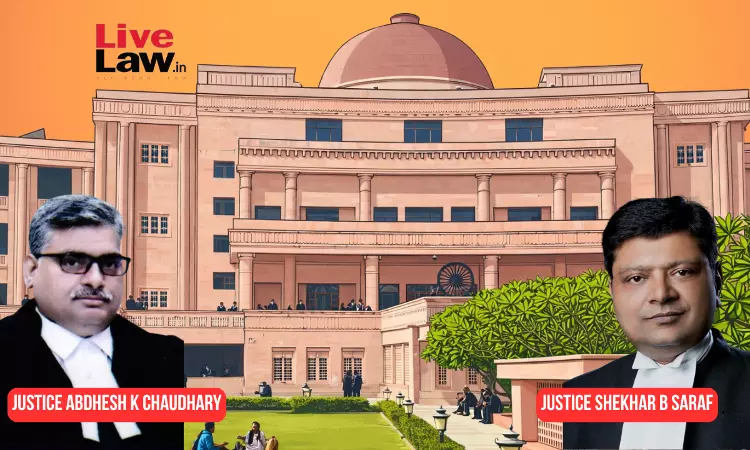
The Allahabad High Court has slammed the Uttar Pradesh government for acquiring Shri Thakur Ram Jankiji diety's land at 'Sugriv Kila' in Ayodha for development of Shri Ram Janma Bhoomi Temple, without paying sale price.The Court noted that the State was simultaneously questioning the deity's title and claiming that the land could not have been sold in the first place.Remarking that the...
This is a premium content
Available exclusively to
Our subscribers
Subscribe Premium 
INR 1099+GST
Your support helps us to bring you more content at
an affordable subscription scheme !!!
All payment options available
The Allahabad High Court has slammed the Uttar Pradesh government for acquiring Shri Thakur Ram Jankiji diety's land at 'Sugriv Kila' in Ayodha for development of Shri Ram Janma Bhoomi Temple, without paying sale price.
The Court noted that the State was simultaneously questioning the deity's title and claiming that the land could not have been sold in the first place.
Remarking that the petition raised an interesting issue of "trust, lie and red-tapism" where there appears to be "more than what meets the eye", the bench of Justice Shekhar B. Saraf and Justice Abdhesh Kumar Chaudhary held that admittedly a sale deed was executed for acquiring temple land wherein a part consideration of Rs. 1,20,96,000 relating to the cost of land has not been paid by the respondent Authorities.
"It is rather amusing that the respondent-Authorities on one hand is agitating that there is a dispute relating to the title of the land to not pay the part sale consideration, whereas, on the other hand has chosen to be in possession of the said land. We find some force in the arguments of learned counsel for the petitioner that if the title of the property is in dispute and the State Government is not convinced with the ownership of the property, then the said property ought to have been reverted to the petitioner. The very fact that the respondents have continued to be in possession of the said property and have subsequently filed a suit seeking cancellation of the said sale deed speak volumes about the conduct of the respondent-authority in the present transaction".
The court said that the conduct of the respondents-Authorities cannot be termed to be "fair, proper or reasonable" for the simple reason that the authorities had apparently "fooled the petitioner" to oust them from a portion of the temple land in the name of sale-deed. But when petitioner demanded payment, the State did a "volte-face" by claiming that the portion of temple land is Government Land and was not capable of being sold.
"The whole story seems to be well orchestrated and a product of some fertile mind to somehow delay and postpone the payments of sale consideration to the petitioner merely to take the possession in a jiffy and deny the legitimate payment of sale consideration thereafter," the court said.
The petitioner diety's temple of Shri Thakur Ram Jankiji stands within the Sugriv Kila. According to the petitioner deity, the land has been recorded in its name since the first settlement of 1858, the plot numbers changing at the settlements of 1892 and 1915 without the ownership shown in the revenue entries changing.
With development work underway in Ayodhya around the Shri Ram Janm Bhoomi Temple, the authorities approached the Sarvarahkar of the temple to buy 1512 square metres out of Khata No. 44/2, Khasra No. 246. The petitioner was reluctant to sell, it was pleaded, but did so in the name of public purpose. An MOU followed, the cost of the land and of the construction on it was worked out, stamp duty was paid, and a sale deed was executed on 22nd December 2023 for Rs. 1,38,44,559.
Counsel for the petitioner submitted that the deity was entitled to the whole price before execution, but was assured payment within 15 days through RTGS, the authorities going so far as to enter its bank account number and IFSC code in the column of the deed meant for the sale consideration. The deed was registered at 9:00 P.M. on the night of 22nd December 2023 and possession was taken the same day. The price of the land was never paid.
The petitioner sought a direction to pay, or in the alternative restoration of possession and of the constructions demolished, with damages.
For the State, the Additional Chief Standing Counsel resisted the claim on two grounds: that the Sarvarahkar had no authority to sell temple property, and that the land was 'Nazul' land vested in the Government which never had to be bought. The State had filed Civil Suit No. 680 of 2024 for cancellation of the deed, pending before the Court of Additional Chief Judge-II (Junior Division). Rs. 17,48,559/- towards the cost of construction had been paid. Rs. 1,20,96,000/- towards the land, it was argued, was not payable.
The Court noted that execution of the deed was not denied and that the land component of the price remained unpaid. It observed that a purchaser ordinarily conducts a title search before a deed is executed, caveat emptor requiring the buyer to examine the title and the chain of documents before buying. Here the sequence had been reversed: possession was taken under a sale deed without payment, and only then was the title said to have been examined and found to disclose nothing due, observed the Court.
It held that the State, having taken possession of land under a registered sale deed, cannot withhold the sale consideration on the plea that the property is 'Nazul' land vested in the Government. It held that while the title dispute so raised must be tried by the civil court the State must meanwhile deposit the consideration with interest before that court.
The Court noted that the haste in taking possession at once while deferring payment by 15 days appeared in hindsight to be a calculated move to ease the petitioner out, a step which for 'Nazul' land would ordinarily have taken years. It held,
“The said conduct of the respondents-State Authorities, which ought to be a welfare State and a model party in the sale-purchaser transaction cannot be appreciated by any stretch of imagination.”
The Court held that it could not decide who owned the property without a full trial at which the parties could lead evidence, and was constrained to relegate them to the civil court where the issue was already pending.
Referring to Dahiben v. Arvindbhai Kalyanji Bhanusali (Gajra) Dead through Legal Representatives & Ors. and to the recent decision in Raziya Begum & Ors. v. Nafisa Begum Abdul Hamid, the Court noted that the Supreme Court, interpreting Section 54 of the Transfer of Property Act, 1882, has held that payment of the entire price at the time of execution is not essential to complete a sale. Title passes on registration even on part payment, and non-payment of the balance does not invalidate the deed, the remedy being recovery of the balance rather than cancellation.
It held that the petitioner had a remedy of a suit for recovery. It noted that a suit was already pending, albeit at the State's instance.
Having regard to that, and to the clandestine manner in which possession had been taken without payment, the Court directed the State to deposit the sale consideration with interest at 8% per annum, running from the lapse of 15 days from the sale deed dated 22nd December 2023, in an interest bearing fixed deposit of a nationalised bank in the name of the Court of Additional Chief Judge-II (Junior Division), within four weeks. That Court may keep the amount subject to the outcome of the suit or release part or all of it, or the accrued interest, to the petitioner on an appropriate application.
Clarifying that it had not examined the title and had confined itself to the conduct surrounding the execution of the deed and the taking of possession, the Court left all questions of law open and directed that the trial be concluded preferably within a year.
The writ petition was disposed of.
Case Title: Shri Thakur Ram Janki Sugrivji Virajman Mandir, Thru. Sarvarahkar Swami Vishvesh Prapannacharya v. State Of U.P. And 5 Others 2026 LiveLaw (AB) 594
Citation: 2026 LiveLaw (AB) 594
WRIT - C No. - 4372 of 2026
Tags


