



- Home
- /
- High Courts
- /
- Allahabad High Court
- /
- Faulty CCTVs A 'Routine Feature' In...
Faulty CCTVs A 'Routine Feature' In UP: Allahabad High Court Deems Surprise Police Station Inspections Part Of CJMs' Official Duty
Sparsh Upadhyay
1 March 2026 6:13 PM IST
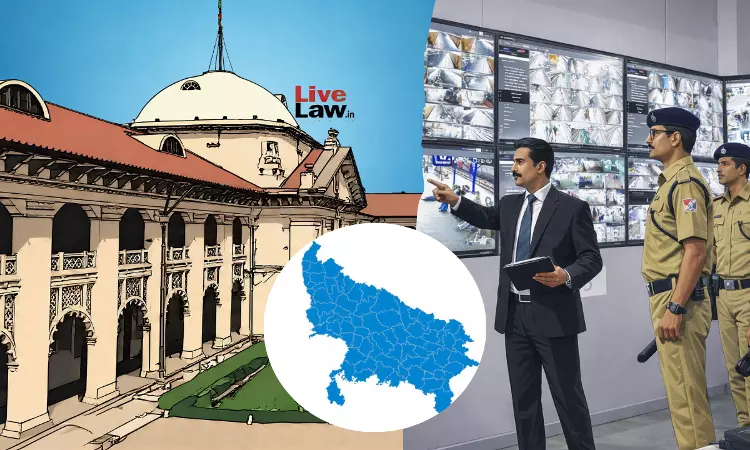
Taking a serious view of the state of CCTV maintenance and footage preservation in the Police stations across Uttar Pradesh, the Allahabad High Court recently noted that not properly maintaining CCTV cameras has become a "routine feature" across the state. To deal with the situation and ensure compliance with the directions of the Apex Court in the case of Paramvir Singh Saini v....
This is a premium content
Available exclusively to
Our subscribers
Subscribe Premium 
INR 1099+GST
Your support helps us to bring you more content at
an affordable subscription scheme !!!
All payment options available
Taking a serious view of the state of CCTV maintenance and footage preservation in the Police stations across Uttar Pradesh, the Allahabad High Court recently noted that not properly maintaining CCTV cameras has become a "routine feature" across the state.
To deal with the situation and ensure compliance with the directions of the Apex Court in the case of Paramvir Singh Saini v. Baljit Singh, the High Court has directed the Chief Judicial Magistrates (CJMs) and Judicial Magistrates across the state to conduct random, surprise inspections of police stations after court hours.
The High Court stressed that during the inspection, all the police officials will have to cooperate with the Judicial officers and any hindrance or disrespect to any judicial officer will be dealt with strictly.
Importantly, the Court clarified that while the Top Court, in its 1991 judgment, had observed that a judicial officer should not visit the police station, except in connection with his official or judicial duty and function, the inspection as ordered by the HC would be considered a part of their duties.
"…this Court is making the inspection by a Judicial Magistrate or CJM, of police stations, for checking the working of CCTV cameras, in compliance with the order of Apex Court in Paramvir Singh Saini (supra) as part of their official duty", a bench of Justice Arun Kumar Singh Deshwal said.
For context, in the Paramvir Saini case, the Top Court mandated that every police station be equipped with night-vision CCTV cameras that record audio and video, with a non-negotiable requirement to preserve footage for a minimum of one year, and ideally for 18 months.
Justice Deshwal passed this order while granting bail to Sanu alias Rashid, who was booked for the offence of cheating. In his petition, the applicant had alleged that he was kept under illegal custody by the police.
During the course of the hearing, the bench noted that the CJM Lalitpur had issued multiple stern notices/orders to the concernedStation House Officer (SHO) and the Investigating Officer (IO) seeking production of the CCTV footage of the police station for the dates of the alleged illegal detention, but the same were not produced and even the officers did not appear before the CJM.
When the HC took exception to this conduct of the cops, the concerned IO and SHO tendered unconditional apologies and claimed in their personal affidavits that their 10-terabyte CCTV storage system automatically deleted footage after two months.
The High Court, however, refused to accept this explanation and noted that the SHO and IO had deliberately not complied with the CJM's orders. The single judge added that the Court can't shut its eyes to the non-compliance of the judicial orders.
It remarked thus:
"…here the question is not only the violation of personal liberty of a person enshrined in Articles 21 and 22 of the Constitution of India, but also disregard to the order of the judicial authorities, which has effect of demeaning the authority of law".
Furthermore, referring to the Supreme Court's judgment in All India Judges Association v. Union of India, the High Court stressed that Judges are not comparable with the administrative and executive officers as they discharge sovereign state functions and cannot be equated with secretarial staff or administrative executives who merely carry out the political executive's decisions.
"While a Judicial Officer (may be the Judicial Officer of Junior Division) is discharging his judicial function, he is above to the District Magistrate or District Police Chief and even to political head of a State," the High Court remarked.
It added that anyone entering a courtroom must respect the Chair of the Judicial Magistrate, and since the district judicial officers are the first line of defence for a common person seeking relief, they form the backbone of the judiciary.
Therefore, exercising its powers under Section 10 of the Contempt of Courts Act, 1971, the High Court found both the IO and the SHO guilty of contempt for their deliberate non-compliance with the CJM's orders.
However, taking a lenient view of the quantum of punishment, the Court sentenced them to remain in custody in the courtroom until the Court rose at 4:00 PM.
In its order, the bench also noted that, since the applicant was illegally detained for three days without his family being informed, this constituted a direct violation of the Supreme Court's guidelines in the DK Basu case.
Therefore, it directed the State Government to pay the applicant Rs. 1 lakh as compensation. The State was, however, granted the liberty to recover this amount from the salaries of the responsible police personnel.
The applicant was ultimately granted bail by the High Court upon his undertaking to transfer Rs. 15 lakhs to the finance company of the first informant within 15 days.
Case title - Sanu @ Rashid vs. State of UP 2026 LiveLaw (AB) 99
Case Citation: 2026 LiveLaw (AB) 99
Tags

Sparsh Upadhyay
Sparsh Upadhyay is an Associate Editor with LiveLaw.

