



- Home
- /
- High Courts
- /
- Allahabad High Court
- /
- Tax Dispute Not Arbitrable Where...
Tax Dispute Not Arbitrable Where Statutory Determination Required : Allahabad High Court
Upasna Agrawal
31 July 2026 1:42 PM IST
The Allahabad High Court at Lucknow has recently held that a tax-related dispute between contracting parties may be referred to arbitration so long as it can be resolved through interpretation of the contract.It held that the dispute stops being arbitrable the moment its resolution turns on a determination reserved to the taxing authorities.The bench of Chief Justice Arun Bhansali and...
This is a premium content
Available exclusively to
Our subscribers
Subscribe Premium 
INR 1099+GST
Your support helps us to bring you more content at
an affordable subscription scheme !!!
All payment options available
The Allahabad High Court at Lucknow has recently held that a tax-related dispute between contracting parties may be referred to arbitration so long as it can be resolved through interpretation of the contract.
It held that the dispute stops being arbitrable the moment its resolution turns on a determination reserved to the taxing authorities.
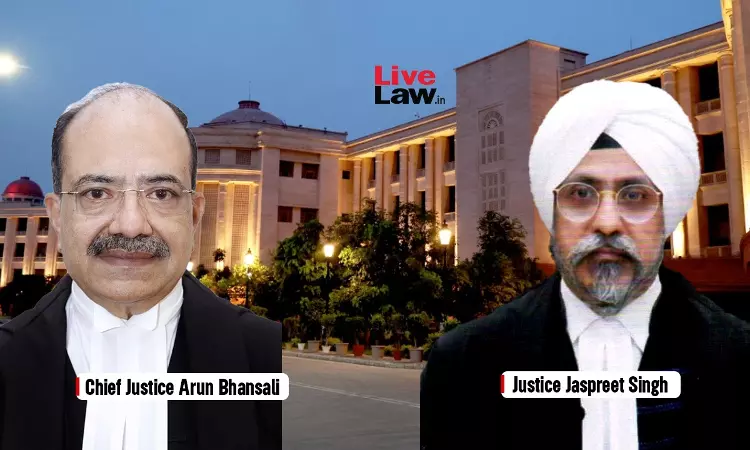
The bench of Chief Justice Arun Bhansali and Justice Jaspreet Singh held
“The Arbitrator is a creature of contract and its jurisdiction to decide the dispute may be co-extensive with the contract but if it requires any determination relating to tax rates or classification of goods under any particular entry of the taxing statute or the quantum of any tax liability or the adjudication requires referencing to any Executive Tax Notification and Statutory Tax Rates Schedules, then such disputes even though arising out of a contract ceases to be contractual in nature and it metamorphosis into a fiscal regulatory issue.”
The Court sorted such disputes into two heads. Under the first, an arbitrator may decide which party is contractually obliged to pay or deposit a tax, which is entitled to reimbursement, how a tax-sharing or indemnity clause operates, and what a phrase such as “inclusive of all taxes” covers, including whether it takes in a newly introduced levy.
Under the second head, and beyond an arbitrator's reach, are whether a transaction is taxable at all, any challenge to a statutory tax arrangement, classification or entry under a taxing statute, the rate of tax or eligibility for an exemption, and any tax dispute with the State authority, held the Court.
The Uttar Pradesh Public Works Department awarded M/s Vriddhi Infratech India Pvt. Ltd. a contract to widen and strengthen the Bilraya-Panwari Road (SH-21) and the Nepalpur-Bijwar Road (ODR) in Sitapur district from two lanes to four, at a price of Rs. 155,89,46,798.65/-. The contractor quoted its rates inclusive of the taxes then payable, which included 4% VAT, and the work was completed within an extended period.
GST came into force on 1st July 2017 and work of this description attracted 12%. The contractor sought the difference on bills for work done after 30th June 2017, calculating it under a Standard Operating Procedure issued by the Ministry of Road Transport and Highways(MoRTH) on 19.11.2018. The department refused, saying it was bound instead by State Government Orders dated 09.11.2017 and 10.12.2019.
A Dispute Review Expert found the department liable to pay GST on the price escalation but held the State Government Orders binding for working out the amount. The contractor invoked arbitration, and by award dated 27.01.2024 the Sole Arbitrator held the MoRTH procedure applicable and awarded Rs. 11,35,80,273/- with 15% penalty and 18% interest, subject to the final assessment of the GST Department.
The department's petition under Section 34 of the Arbitration and Conciliation Act, 1996 was dismissed by the Commercial Court-I, Lucknow. Thereafter, it filed an appeal under Section 37 before the High Court.
The Court held that the dispute was confined to which of the two sets of instructions governed the computation. It held that the dispute required no finding on whether any transaction attracted GST, carried no challenge to a statutory tax arrangement, involved no classification, entry or rate under a taxing statute, and was not a dispute with the State in its sovereign capacity. It therefore fell under the first head and was arbitrable.
The Court held that borrowing engineering standards does not carry tax provisions along with them.
“Taxes are governed by statutory laws and contractual clauses cannot override these laws. Moreover, the technical measures borrowed for the purposes of engineering standards cannot impose or create tax jurisdictions or obligations.”
The Court observed that Clause 3 of the special conditions applied the MoRTH specifications to the execution of the work, while Clause 45 dealt separately with tax and said only that the contractor's rates were deemed inclusive of sales and other taxes. It noted that the MoRTH document itself was never placed on record, nothing showed what its tax provisions were, and no clause gave it precedence over the contract. It held that the burden lay on the contractor to show that any MoRTH tax compliance provision had been incorporated into the contract.
“..there is a distinction between a tax liability which is squarely governed by the tax laws and a contractual liability even though related to tax would be only determinative of the fact that which of the two contracting parties is obligated to pay the tax. Any dispute in this regard may be binding between the parties but it can have no impact on the Taxing Authority.”
The two Government Orders, being executive instructions issued by the State in the course of its business, were held binding on the department, and the Arbitrator had given no reason for preferring a directory document over them. The Court observed that the SOP used the word “may” and spoke of mutual agreement, and its illustration was framed for EPC contracts, while the parties had agreed before the Arbitrator that theirs was an item rate contract. It held that the two were similar enough to be treated alike rested on no evidence and no clause of the contract.
Further, the Court held that the liability to pay GST rested on the assessee. It observed that there was no evidence which showed that a notice under Section 73 or Section 74 of the GST Act had been issued to the contractor for the period in question, and the Arbitrator had recorded no finding on the amount, the period, or on the shortfall being attributable solely to the department's default.
“Thus, the Sole Arbitrator erred by acting as an Assessing Officer.”
The Court held that the transitional provisions in Chapter XX of the GST Act, 2017 had gone unnoticed by the Arbitrator and by both parties, and Sections 142(2), 142(10) and 142(11) of the GST Act may have a bearing on the controversy. Making the award subject to a later assessment left it ambiguous and denied it finality, particularly as the contract had concluded in the financial year 2018-19 and an assessment must be completed within three years, held the Court.
“The Sole Arbitrator being a creature of the contract is bound by its terms and it cannot re-write the contract or fill in the lacunae for any party.”
The findings on issues 2 to 4 and 8 to 9 were set aside and severed. Saved were the finding on issue 1 that the contract was an item rate contract, which rested on the consensus of the parties, and the award of Rs. 66,500/- towards the department's share of the Dispute Review Expert's fee with 9% interest.
Accordingly, the appeal was partly allowed, the judgment of the Commercial Court was set aside, and the severed issues were remitted for fresh adjudication to an Arbitral Tribunal to be constituted as per law.
Case Title: U.P. Public Works Deptt. through Chief Engineer Central Zone Lko. v. M/s Vriddhi Infratech India Pvt. Ltd., through Signatory Sandeep Anne 2026 LiveLaw (AB) 499
Case citation: 2026 LiveLaw (AB) 499
Counsel for Appellant :- Pritish Kumar (AAG), Tushar Verma (ACSC)
Counsel for Respondent :- Manish Singh
Click Here To Read/Download Order
Tags


