



- Home
- /
- High Courts
- /
- Allahabad High Court
- /
- Subsequent Suit Arising From Same...
Subsequent Suit Arising From Same Document Should Ordinarily Be Heard By Court Hearing Earlier Suit: Allahabad High Court
Upasna Agrawal
31 July 2026 3:50 PM IST
The Allahabad High Court has held that where two suits between the same parties arise out of the same document and are pending before different courts of competent jurisdiction, the court in which the earlier proceeding is pending is ordinarily the more appropriate forum. It held that the subsequently instituted suit may be transferred to it under Section 24 of the Code of Civil Procedure,...
This is a premium content
Available exclusively to
Our subscribers
Subscribe Premium 
INR 1099+GST
Your support helps us to bring you more content at
an affordable subscription scheme !!!
All payment options available
The Allahabad High Court has held that where two suits between the same parties arise out of the same document and are pending before different courts of competent jurisdiction, the court in which the earlier proceeding is pending is ordinarily the more appropriate forum.
It held that the subsequently instituted suit may be transferred to it under Section 24 of the Code of Civil Procedure, 1908, unless compelling circumstances indicate otherwise.
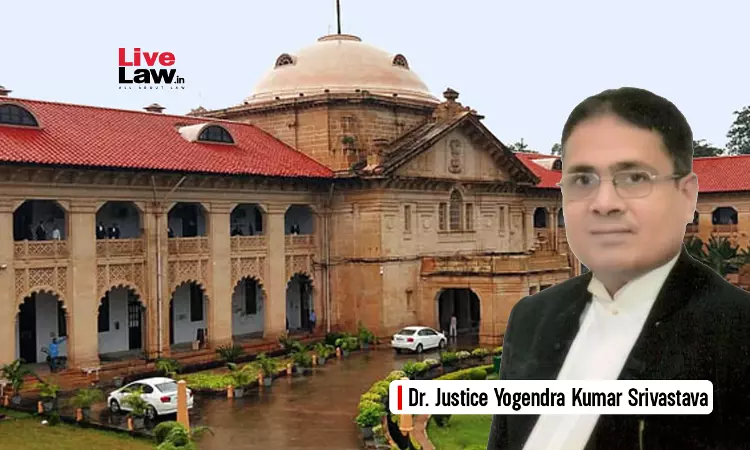
Dr. Justice Yogendra Kumar Srivastava held,
“The administration of justice requires that disputes arising out of the same transaction or document, involving substantially identical issues and evidence, should, as far as practicable, be adjudicated by the same Court. Such a course promotes judicial consistency, procedural economy and certainty in the adjudicatory process, besides avoiding unnecessary duplication of judicial effort.”
The applicants' case was that a registered adoption deed had been executed between the parties, under which a minor girl child was given in adoption to them, and that the child had since been cared for by them and had settled in their family. When the respondents allegedly began exerting pressure for the return of the child, the applicants instituted a suit at Kanpur Nagar seeking a declaration that the adoption deed was legal, valid and binding.
The respondents thereafter instituted a suit at Kannauj seeking cancellation of the very same deed. The applicants sought transfer of the later suit so that both proceedings could be adjudicated by the same court.
The Court held that the jurisdiction under Section 24 CPC is equitable in nature and “is not confined to cases where hardship or inconvenience alone is established”, but equally enables the court to regulate the course of judicial proceedings so as to secure an effective, efficient and comprehensive adjudication of the controversy. The ultimate touchstone, it said, is whether the proposed transfer would better serve the administration of justice.
Noting that the validity of the adoption deed was the foundational issue in both suits, the Court held that the evidence likely to be adduced and the questions requiring determination would substantially overlap, and that any adjudication in one proceeding was likely to have a direct and substantial bearing on the other. If the suits were allowed to continue independently before different courts, it observed, there existed a real possibility not only of duplication of evidence but also of inconsistent decrees in relation to the same document, and the avoidance of such a situation is itself a relevant consideration under Section 24 CPC.
“Ordinarily, where two suits involving substantially the same subject matter are pending before different Courts of competent jurisdiction, the Court in which the earlier proceeding is pending constitutes the more appropriate forum for continuation of the subsequent proceeding, unless compelling circumstances indicate otherwise.”
The Court also held that transfer cannot be ordered merely because the opposite side does not oppose it. Although counsel for the opposite parties, on instructions, fairly stated that they had no objection to the transfer, the Court observed that while such a categorical 'no objection' is a relevant circumstance, the exercise of jurisdiction under Section 24 CPC “cannot rest upon consent alone”. It held that the court is required to independently satisfy itself that the proposed transfer would advance the ends of justice.
“The discretion under Section 24 CPC is to be exercised not merely for the convenience of the parties but to ensure the orderly administration of justice. Where the controversy in two proceedings is substantially common and the decision in one is likely to have a material bearing upon the other, transfer of the subsequently instituted proceeding to the Court where the earlier proceeding is pending would ordinarily advance the ends of justice, unless compelling reasons exist to adopt a different course.”
Recording that the stand of the opposite parties demonstrated that no prejudice was likely to be caused to either side, the Court allowed the transfer application.
Case Title: Preeti Mishra and another v. Vishnu Kant Tripathi and another 2026 LiveLaw (AB) 501
Case citation: 2026 LiveLaw (AB) 501
Counsel for Applicants: Arvind Srivastava, Mohd. Naushad Siddiqui
Counsel for Opposite Party: Rajeev Tiwari
Tags


