



- Home
- /
- High Courts
- /
- Allahabad High Court
- /
- UP Awas Vikas Act Primarily For...
UP Awas Vikas Act Primarily For Housing Development, Land Acquisition Only Incidental; No Repugnancy With 2013 Act: Allahabad High Court
Upasna Agrawal
17 Sept 2026 11:20 AM IST
The Allahabad High Court has held that the U.P. Awas Evam Vikas Parishad Adhiniyam, 1965 is not repugnant to the Right to Fair Compensation and Transparency in Land Acquisition, Rehabilitation and Resettlement Act, 2013. It held that the Adhiniyam is, in pith and substance, referable to Entries 5 and 18 of the State List and not to Entry 42 of the Concurrent List, since its dominant purpose...
This is a premium content
Available exclusively to
Our subscribers
Subscribe Premium 
INR 1099+GST
Your support helps us to bring you more content at
an affordable subscription scheme !!!
All payment options available
The Allahabad High Court has held that the U.P. Awas Evam Vikas Parishad Adhiniyam, 1965 is not repugnant to the Right to Fair Compensation and Transparency in Land Acquisition, Rehabilitation and Resettlement Act, 2013.
It held that the Adhiniyam is, in pith and substance, referable to Entries 5 and 18 of the State List and not to Entry 42 of the Concurrent List, since its dominant purpose is development and compulsory acquisition is only incidental to it.
The Court further held that the Adhiniyam, 1965, insofar as it applies the Land Acquisition Act, 1894, does not stand impliedly repealed by the Act, 2013.
Section 55 of the Adhiniyam, 1965 read with its Schedule applies the Act, 1894, with modifications, to acquisition of land for schemes framed by the U.P. Awas Evam Vikas Parishad. Section 114 of the Act, 2013 repealed the Act, 1894. Section 103 of the Act, 2013 provides that its provisions shall be in addition to and not in derogation of any other law for the time being in force.
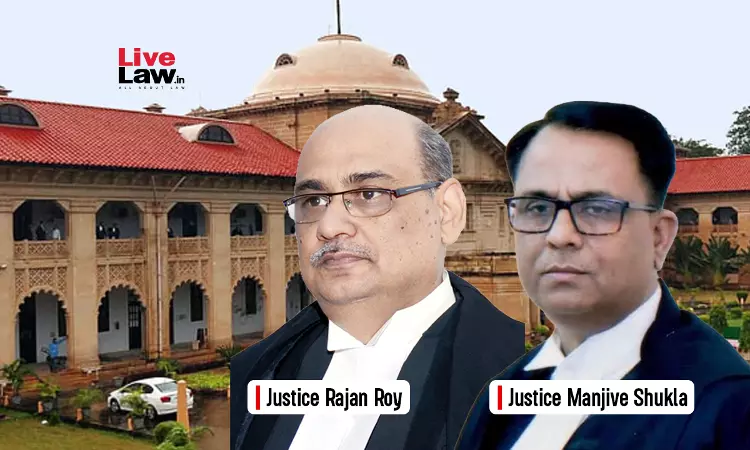
The bench of Justice Rajan Roy and Justice Manjive Shukla held,
“In view of the scheme of the Adhiniyam, 1965 taken as a whole, we have no doubt at all that the said Act was promulgated by the State Legislature primarily and essentially i.e., in pith and substance, for the purposes of development and constitution of a housing and development board in Uttar Pradesh, and, not for the purposes of land acquisition, which is merely incidental to facilitating the framing, implementation, and execution of various schemes envisioned under the said Adhiniyam 1965, therefore, it is referable to Entry 5 and 18 of the State List and and not Entry 42 of the Concurrent List. The encroachment in this regard on the subject matter of Entry 42 of the Concurrent List is merely incidental and not decisive of the nature of the enactment.”
A public interest litigation and nine writ petitions were filed challenging the vires of Sections 28, 31(1), 32 and 55 of the Adhiniyam, 1965, along with three schemes framed by the Board at Ayodhya and the acquisition proceedings taken for them.
Senior Advocate Sandeep Dixit, for the petitioner in the public interest litigation, contended that the impugned provisions were relatable to Entry 42 of the Concurrent List even if the whole Adhiniyam was not. He argued that the power to legislate for acquisition of property is a separate and independent power exercisable only under Entry 42 of List III, and not as a power incidental to another head of legislation.
He also submitted that some States had amended Section 105 of the Act, 2013 to include their enactments in the Fourth Schedule while U.P. had not, showing that the Act, 2013 applied to acquisition under any State enactment in Uttar Pradesh.
Counsel for the Board and the State, and the Amicus Curiae, submitted that the Adhiniyam, 1965 was in pith and substance relatable to Entries 5 and 18 of the State List, and that mere incidental encroachment on a field in the Concurrent List would not attract Article 254.
Examining the scheme of the Adhiniyam, 1965, it observed that framing and executing housing and improvement schemes is the primary task of the Board, and acquisition is only a means to that end.
“The dominant purpose or Scheme of the Adhiniyam, 1965 is development and not land acquisition nor compulsorily acquisition of land. Acquisition is only to facilitate the Schemes of development.”
It found the provisions and the entire scheme of the Adhiniyam, 1965 to be very similar to those of the Bangalore Development Authority Act, 1976, which the Constitution Bench in Offshore Holdings Private Ltd. vs.Bangalore Development Authority and others had held to be referable to Entries 5 and 18 of the State List and not Entry 42 of the Concurrent List.
On Section 103 of the Act, 2013, the Court held that the words used in it rule out repugnancy under Article 254, as they mean that the enactment is supplemental to and can co-exist with other laws rather than override or substitute them. Rejecting the argument built on the Fourth Schedule, it held that Sections 103 to 108 of the Act, 2013 have to be read in the context of Entry 42 of the Concurrent List, to which the Act, 2013 is referable.
“Section 103 to 108 of the Act 2013, in fact, will apply when both the enactments in question are, in pith and substance, referable to Entry 42 of the Concurrent List in the Seventh Schedule, and not otherwise.”
The Court held that the two enactments are referable to separate entries in separate lists, one being a State legislation and the other a Parliamentary one, and read as a whole they do not occupy the same field.
On the effect of the repeal of the Act, 1894 on provisions incorporated into the Adhiniyam, 1965, the Court held that the incorporated provisions survive the repeal, subject to the exceptions to the doctrine of legislation by incorporation recognised in State of M.P. v. M.V. Narasimhan and U.P. Awas Evam Vikas Parishad vs. Jainul Islam and another. Although those exceptions were framed in the language of amendment, the Court held that they apply equally where the incorporated statute is repealed.
“merely because in the exceptions word 'amendment' is referred does not mean that these exceptions will not apply to a case of repeal of an earlier statute which had been incorporated. The principle enunciated in these decisions, including the exceptions, apply to case of repeal also. A pedantic view in this regard would itself be unfair and discriminatory. It is the principle behind the exceptions which is to be considered and applied.”
The Court also rejected the contention that the Board had ceased to be a local authority once the Act, 1894 was repealed, holding that the incorporated provisions had become an integral part of the Adhiniyam, 1965 and that the Board in any case has the power of compulsory acquisition under Section 17(a) read with Section 55 of the Adhiniyam.
Having answered the questions of repugnancy and implied repeal in the negative, the Court went on to hold that Section 55 and its Schedule, if applied without the aid of the Act, 2013, would be hit by Article 14, and saved them by directing that compensation, rehabilitation and resettlement under the Adhiniyam, 1965 be on the same parameters as under the Act, 2013.
Case Title: Shri Saryu Nagar Vikas Samiti Thru. President Sri Awadhesh Kumar Singh v. State of U.P. Thru. Prin. Secy. Deptt. of Housing and Urban Planning Lko. and 5 others 2026 LiveLaw (AB) 710
Case Citation: 2026 LiveLaw (AB) 710
Tags


