



- Home
- /
- High Courts
- /
- Allahabad High Court
- /
- Bar Council Has No Power To Suspend...
Bar Council Has No Power To Suspend Advocates At Interim Stage Pending Disciplinary Inquiry: Allahabad High Court
Sparsh Upadhyay
1 Oct 2026 7:49 PM IST
The Allahabad High Court has held that the Bar Council of Uttar Pradesh has no power to suspend advocates at an interim stage pending disciplinary inquiry. The Court clarified that suspension under Section 35(3)(c) of the Advocates Act, 1961 (Punishment of advocates for misconduct) is a final order which cannot be passed during the pendency of disciplinary proceedings.A Bench of Justice...
This is a premium content
Available exclusively to
Our subscribers
Subscribe Premium 
INR 1099+GST
Your support helps us to bring you more content at
an affordable subscription scheme !!!
All payment options available
The Allahabad High Court has held that the Bar Council of Uttar Pradesh has no power to suspend advocates at an interim stage pending disciplinary inquiry.
The Court clarified that suspension under Section 35(3)(c) of the Advocates Act, 1961 (Punishment of advocates for misconduct) is a final order which cannot be passed during the pendency of disciplinary proceedings.
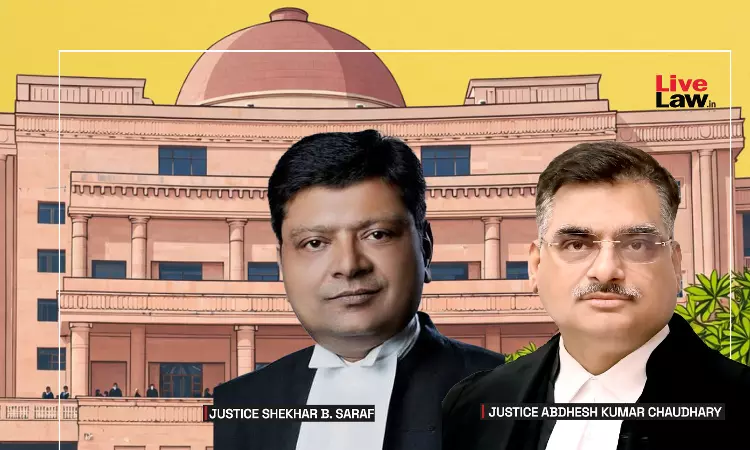
A Bench of Justice Shekhar B Saraf and Justice Abdhesh Kumar Chaudhary made the observation while quashing an order passed by the Chairman of the Disciplinary Committee of the Bar Council of Uttar Pradesh suspending the enrolment of two advocates “till further orders”.
The Court was hearing a writ petition filed by Akhilesh Jaiswal, President of the Central Bar Association, Civil Court, Lucknow, and Avnish Dixit, Secretary of the Association, challenging the September 26, 2026 order.
The impugned order recorded that the charges against the 2 advocates were serious because they had allegedly rejected a resolution passed by the Bar Council of Uttar Pradesh and an order of its Chairman, and published the same in the State's daily newspapers.
Although the matter was fixed for hearing on October 11, the Disciplinary Committee directed that, in the meantime, the enrolment of both advocates would remain suspended "till further order". It also directed that they would not appear in any court of law as counsel.
Taking note of the Council's order, the bench found it "inconsistent with the law".
Referring to Section 35(3) of the Advocates Act, the Court noted that, after affording the advocate an opportunity of hearing, the Bar Council can pass the orders specifically contemplated under the provision.
The bench said that these orders include dismissal of the complaint, reprimand of the advocate, suspension from practice for such period as it may deem fit, or removal of the advocate's name from the State roll of advocates.
The Court then examined the nature of the suspension imposed in the present case.
"In the present case, it appears that the authority has suspended the advocates/petitioners from practice till further orders", the Bench noted.
It said that the suspension, being indefinite and without specifying its duration, "appears to be unsustainable in law".
The Court clarified that the suspension contemplated under Section 35(3)(c) is a final disciplinary order.
It observed that once the Disciplinary Committee passed a suspension order, no further adverse action could be taken against the advocates without issuing a fresh notice and giving them an opportunity of hearing.
Thus, the Court found that the Bar Council could not use Section 35(3)(c) to impose an interim suspension while the disciplinary proceedings remained pending.
The Allahabad High Court also relied upon the Division Bench judgment of the Madras High Court in R. Jim v. Secretary, Bar Council of Tamil Nadu and Puducherry
In that case, the Madras High Court had held that the Advocates Act does not confer power upon a Bar Council to place an advocate under interim suspension pending disciplinary inquiry.
After considering the judgment, the Allahabad High Court said that the procedure adopted by the Bar Council of Uttar Pradesh was not in consonance with the Advocates Act, 1961 and the law laid down in R. Jim.
The Court consequently quashed and set aside the September 26 order. The Court directed the petitioners to appear before the disciplinary authority on October 11, 2026.
The Court further directed the Bar Council of Uttar Pradesh to furnish any documents the petitioners required but had not yet supplied, provided the petitioners requested them within 24 hours.
At the same time, the Court clarified that the petitioners should not seek unnecessary adjournments.
With these directions, the Court disposed of the writ petition.
Tags

Sparsh Upadhyay
Sparsh Upadhyay is an Associate Editor with LiveLaw.

